
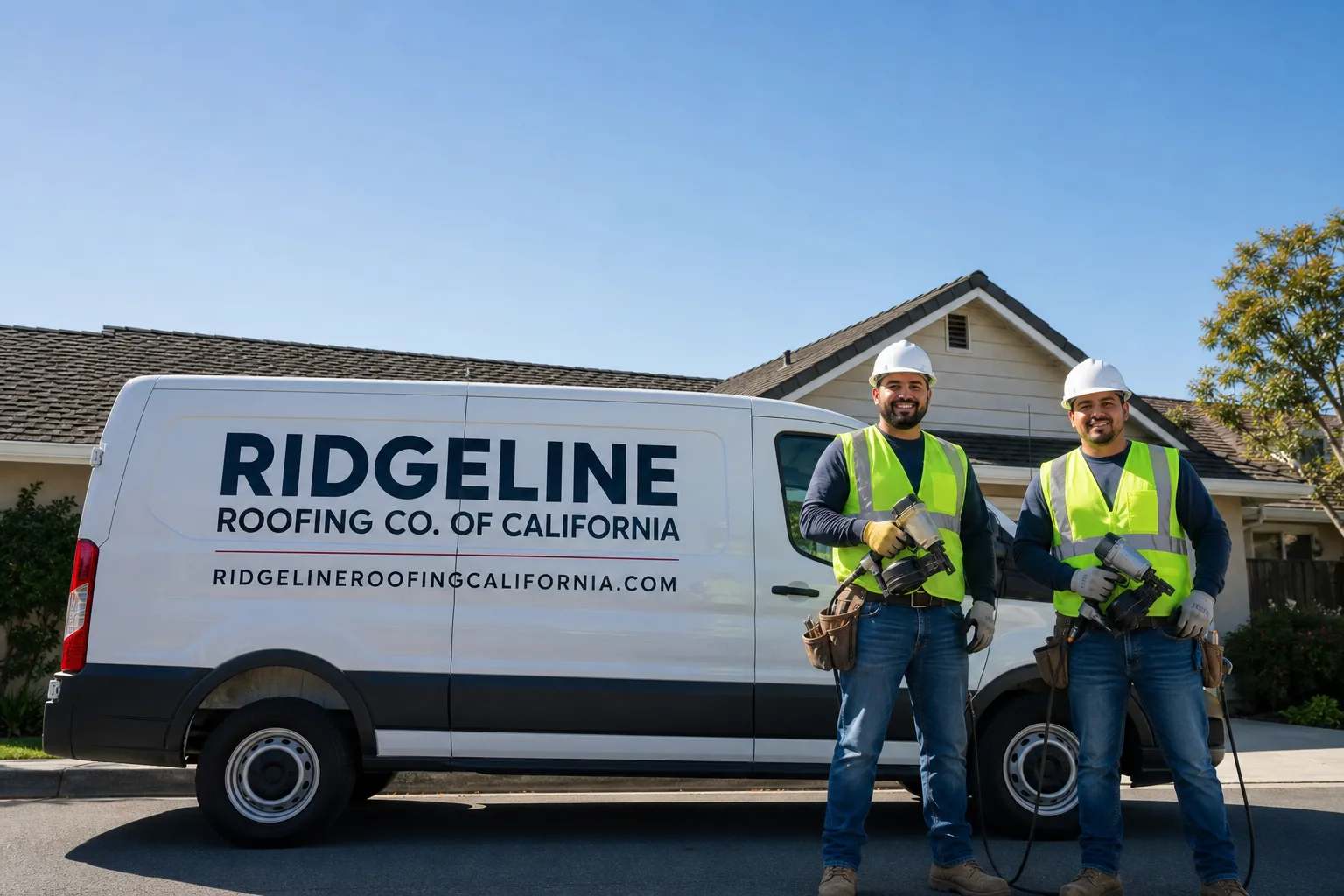
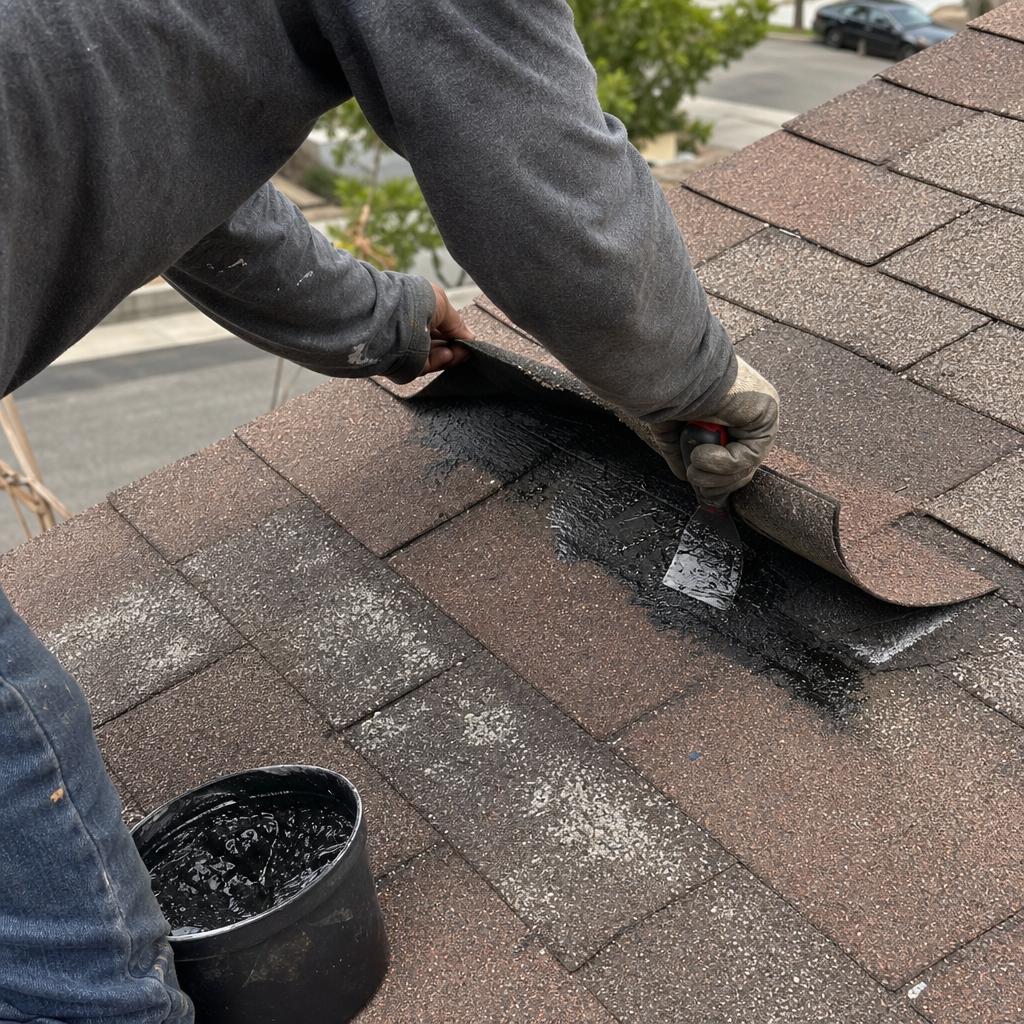
Fast, Reliable Specialty Roofing Across Santa Clara
Specialty roofing in Santa Clara runs $8,500-$24,000 depending on system type, with most TPO membrane jobs on residential low-slope sections landing between $12,000 and $18,000. We’re Ridgeline Roofing Co. of California, and we’ve been climbing Santa Clara roofs since 1984 - from the post-war ranches of 95050 to the tech campuses along North First Street in 95054. Our crews live here, know the building stock, and understand why a roof that holds up in San Jose can fail in Santa Clara’s hotter valley floor. Call (877) 367-1429 and a live person answers, day or night.
Why Ridgeline Roofing Co. of California Is Santa Clara’s Preferred Specialty Roofing Company
We’ve got over 42 years of standing behind local roofs, not chasing storms. That matters in Santa Clara, where the same contractor who fixes your TPO system should still be around when the warranty question comes up five years later.
Our technicians are background-checked, uniformed, and trained to document every inspection with photos taken from your actual roof - not a scary speech in the driveway. We hire local crews and train apprentices into journeymen. We plan to be in Santa Clara in thirty years.
A live person answers every call, 24/7, including nights, weekends, and the middle of a storm. No voicemail trees, no callback windows, no leaving a homeowner stranded after an atmospheric river blows through.
Our 90-Day Done Right Promise is a written workmanship guarantee with no paperwork, no arguing, and no runaround: if it’s not right, we come back and make it right. The price we quote is the price you pay.
Our Specialty Roofing Services in Santa Clara
TPO Roofing
TPO single-ply membrane is what we install most often on Santa Clara’s low-slope and flat roof sections - the rear additions, carports, and patio covers common on 1950s-1970s ranch homes in 95050 and 95051, plus the commercial buildings lining North First Street. Santa Clara’s valley-floor heat pushes upper 80s to mid-90s°F regularly and spikes above 100°F during heat dome events. White TPO reflects that solar load instead of absorbing it, which cuts cooling costs and slows thermal degradation. We install TPO from GAF and CertainTeed, heat-welding seams for a monolithic surface that won’t let moisture through during winter atmospheric river events.
Solar Ready Roofing
Santa Clara’s municipal utility, Silicon Valley Power, offers some of the most favorable solar buyback rates in the state. That makes solar-ready roofing a smart forward move on re-roofs, especially for homeowners who aren’t installing panels immediately but want the option open. On a 1960s ranch on Monroe Street near the Civic Center, we replaced the entire low-pitch composition roof with a solar-ready TPO system after the original ply deck showed dry-rot from decades of trapped moisture beneath failed shingles. The homeowner opted for reflective white membrane to combat the valley-floor heat, and we pre-installed conduit chases for future panels. We do the same prep work on new installs across Santa Clara - proper flashing, structural load verification, and penetration sealing that won’t leak when the panel mounts go in later.
Modified Bitumen
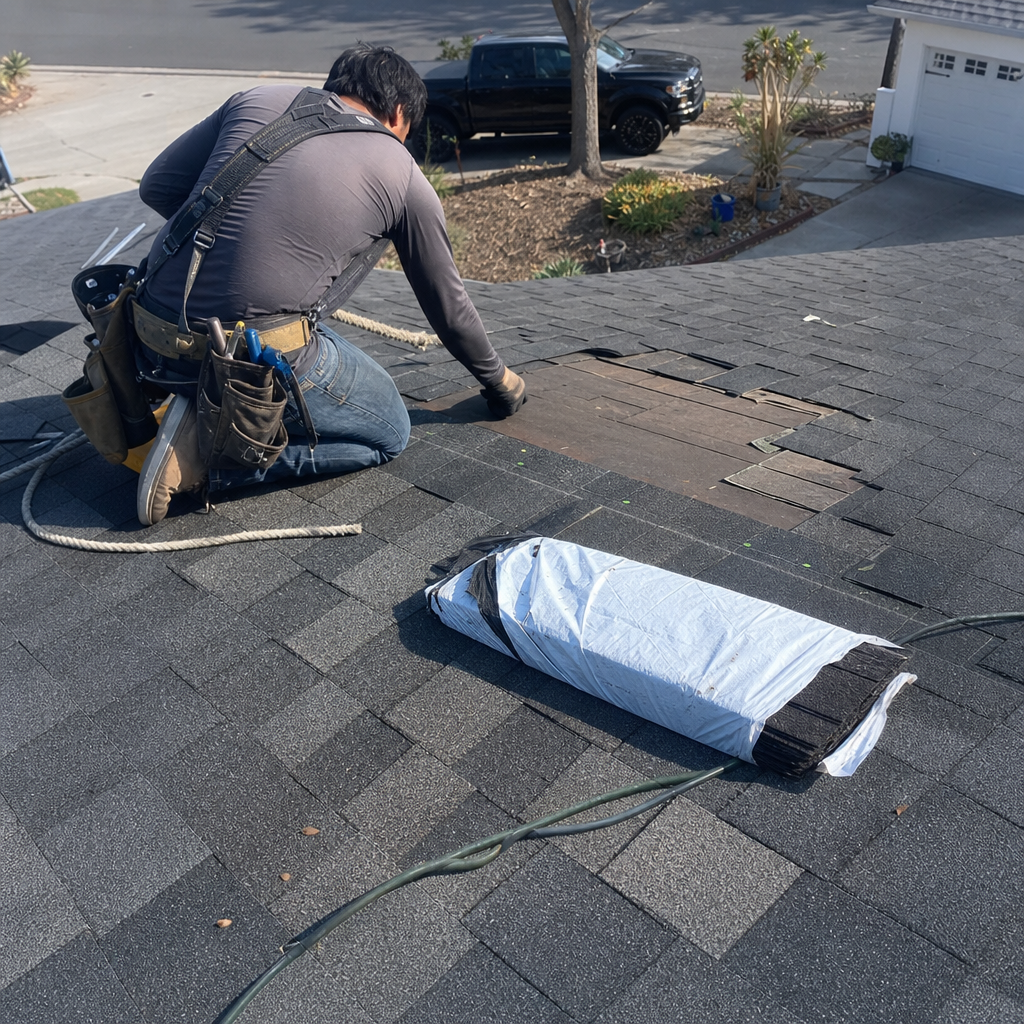
For Santa Clara homeowners with built-up roofs at end-of-life, modified bitumen offers a torch-applied or self-adhering upgrade that handles thermal cycling better than old-school BUR. The material’s rubberized modifiers stay flexible in temperature swings - important here, where a 100°F August day can drop to 45°F by January morning. We see modified bitumen as a practical bridge solution on 1960s and 1970s ranches where the deck is sound but the waterproofing layer has failed. It’s also common on the low-slope sections of HOA townhomes near Levi’s Stadium in 95054, where association rules sometimes restrict full TPO conversions.
EPDM Roofing
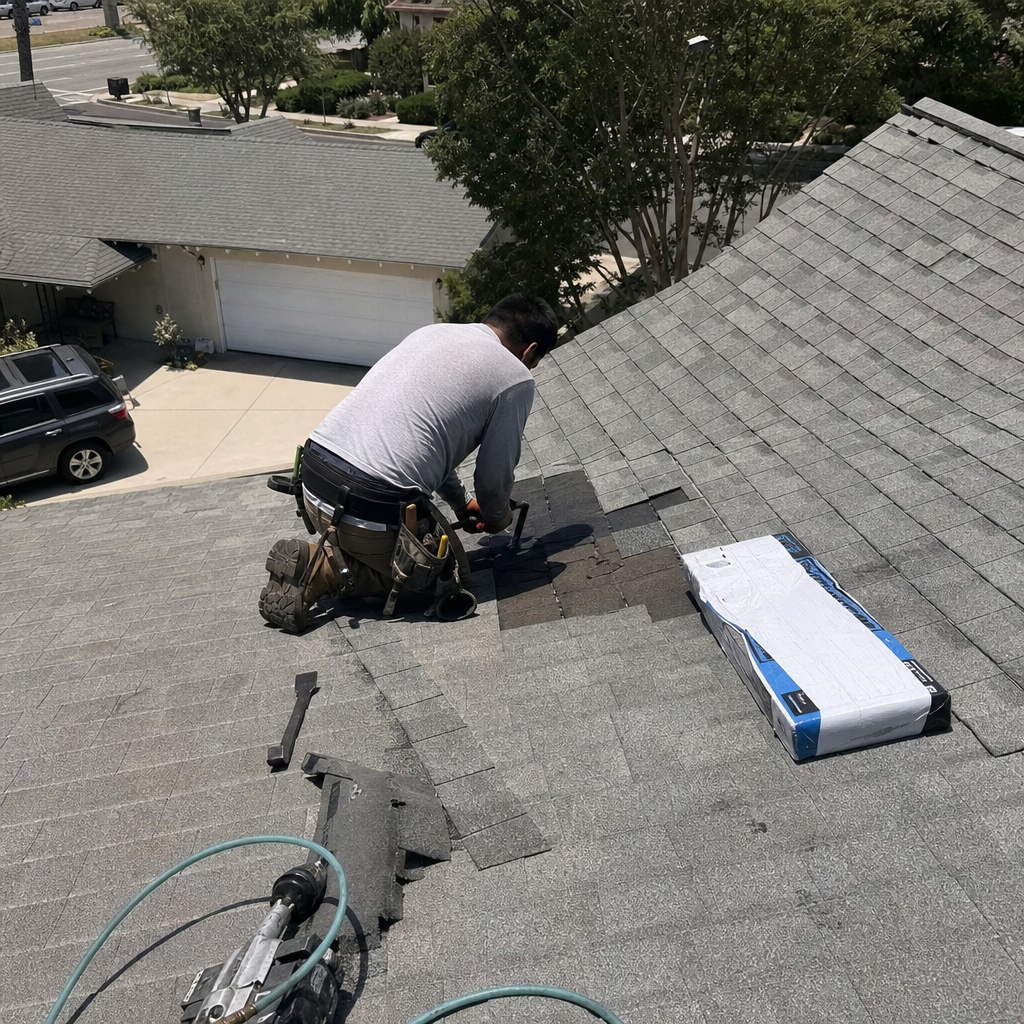
Black EPDM rubber membrane still has a place in Santa Clara, particularly on commercial buildings where first-cost matters more than reflectivity and the roof isn’t directly over conditioned space. We install EPDM from Atlas and Tamko with fully adhered or mechanically attached systems, depending on wind exposure and substrate condition. The material’s UV resistance is proven, though in Santa Clara’s intensified solar environment we often recommend a white TPO alternative for occupied structures.
What happens when you call
- 1
A real person answersNo phone trees - you reach a local pro.
- 2
You get an upfront price rangeHonest numbers before anyone is dispatched.
- 3
A background-checked tech heads outLicensed & insured, dispatched right away.
- 4
You approve before work beginsNothing starts until you say go.
Trusted Brands We Service in Santa Clara
We’re authorized installers for GAF, CertainTeed, Owens Corning, Atlas, Tamko, and Boral - seven manufacturer lines, no substitutions. For Santa Clara customers, that means we stock common membrane rolls, flashing profiles, and fastening systems locally rather than ordering from a central warehouse and waiting a week. A TPO puncture on your North First Street building doesn’t need to wait for a shipment from Fresno. We carry the patch material, have the hot-air welder on the truck, and can often complete repairs in a single visit. Same for modified bitumen cap sheets and EPDM seam tape on residential jobs across 95050 and 95056.
Common Specialty Roofing Problems We See in Santa Clara Homes
- UV embrittlement and thermal splitting on low-pitch ranch roofs. The 95050 and 95051 ZIP codes are full of post-WWII ranches with shallow pitches that bake in Santa Clara’s intensified valley heat. Asphalt shingles on these roofs often curl, crack, or split along the grain after 12-18 years, not the 25-year rating on the package. The low pitch also means water moves slower, so any gap becomes a leak faster.
- Flashing and valley seal failures after prolonged dry spells. Santa Clara’s Mediterranean pattern - eight or nine rainless months - lets caulked joints and membrane seams open gradually. When winter atmospheric rivers arrive, water finds those hairline gaps instantly. We inspect and reseal critical details before the first storm, not after the ceiling stain appears.
- Accelerated corrosion of metal flashings and fasteners in 95054’s Bayshore corridor. The dense office-park and industrial corridor along North First Street and the Bayshore Freeway sits just a few miles from the tidal marshes of the South Bay. Marine-salt air accelerates galvanic corrosion on metal flashing, fasteners, and HVAC curbs - a failure mode that catches contractors off guard because Santa Clara’s inland reputation makes no one think to spec stainless or coat fasteners the way they would on the Peninsula coast. We do.
- Trapped moisture and dry-rot beneath failed composition shingles on aging ranches. Original 1960s and 1970s roofs in Santa Clara were often built with minimal ventilation and no synthetic underlayment. When the top layer fails, moisture sits on the ply deck for years. We’ve opened roofs where the deck crumbles beneath our feet - structural damage that demands full replacement, not a surface recover.
Pricing for Specialty Roofing in Santa Clara, CA
Here’s what specialty roofing costs in Santa Clara’s current market:
| System Type | Typical Range | Best For |
|---|---|---|
| TPO membrane (residential low-slope) | $12,000 - $18,000 | Ranch rear additions, patio covers, carports in 95050/95051 |
| Solar-ready TPO with conduit prep | $14,500 - $21,000 | Forward-planning homeowners, SVP solar customers |
| Modified bitumen (torch or self-adhered) | $10,000 - $16,000 | BUR replacement, HOA townhomes near Levi’s Stadium |
| EPDM (commercial flat roof) | $8,500 - $15,000 | Non-conditioned commercial spaces, 95054 office parks |
| Built-up roof (BUR) new install | $11,000 - $17,000 | Historic compatibility, specific structural requirements |
What moves the number: roof square footage, deck condition (dry-rot repair adds $2,000-$5,000), accessibility for material hoisting, and whether we need to coordinate with Santa Clara’s building department for permit and inspection scheduling. We give you the full number upfront - the estimate price is the invoice price. Call (877) 367-1429 for a free, no-pressure inspection and written quote.
We Also Serve Cities Near Santa Clara
Our crews work daily across Silicon Valley. If you’re in Santa Clara proper, Sunnyvale, Campbell, San Jose, or Cupertino, we cover your area with the same response standards and local knowledge. Each city has its own microclimate and building-stock quirks - we know them because we’ve worked them for decades, not because we read about them online.
Serving Santa Clara, CA - Our Local Coverage Area
We’re based in the Santa Clara area and know this community well. Use the map below to see our service coverage - if you’re nearby, we can almost certainly help.
FAQs - Specialty Roofing in Santa Clara
Yes, if your roof is due for replacement and you plan to stay in the home more than five years. Silicon Valley Power’s buyback rates make solar financially attractive in Santa Clara, and retrofitting conduit and flashing after a new roof goes on means cutting into fresh membrane later. We pre-install conduit chases and verify structural load capacity during the roofing job, so panels drop in cleanly when you’re ready. Call (877) 367-1429 and we’ll inspect your roof framing and electrical service to confirm solar-readiness - estimates are free.
Marine-salt air from the South Bay tidal marshes accelerates corrosion on uncoated metal hardware in the 95054 corridor, even though Santa Clara is considered inland. Standard galvanized fasteners and aluminum flashing that last twenty years in Cupertino may show pitting in ten here. We spec stainless steel fasteners and coated flashings for North First Street and Bayshore Freeway jobs, and we inspect HVAC curbs and coping caps for galvanic corrosion during every maintenance visit. The fix is proper material specification from day one, not premature replacement.
It’s common but not acceptable. Santa Clara’s valley-floor heat runs 10-15 degrees hotter than Bay-adjacent cities, accelerating UV degradation and thermal cycling that causes curling, clawing, and granule loss on low-pitch ranch roofs. Shingle ratings are based on moderate climates; Santa Clara’s microclimate is harsher. If your roof is 15 years old and showing curl, it’s telling you the waterproofing layer is failing. We inspect for deck damage beneath and typically recommend upgrading to reflective membrane or higher-grade composite systems rated for inland heat. Call for a photo-documented inspection.
Santa Clara’s Building Division requires a roofing permit for all re-roofs, with additional HOA architectural review for properties in planned developments near Levi’s Stadium in 95054. The HOA submission typically needs manufacturer specification sheets, color samples, and our contractor license documentation. We handle the permit application and HOA packet as part of our standard workflow - most Santa Clara permits issue in 5-10 business days, and we schedule inspections around your availability. We’ll walk you through exactly what’s required for your specific association.
BUR can work if you’re matching a historic designation or specific HOA requirement, but for most Santa Clara ranches we recommend modified bitumen or TPO instead. BUR’s multiple layers of tar and gravel add significant dead load - a concern on older ranch framing - and the dark surface absorbs Santa Clara’s intense summer heat, increasing cooling costs. Modified bitumen gives similar durability at lower weight with better thermal performance. We’ll inspect your structure and discuss options honestly; if BUR truly fits your situation, we install it properly with proper venting. Call (877) 367-1429 for an assessment.
Written by Cole Drummond, Owner at Ridgeline Roofing Co., serving Santa Clara since 1984.