
Fast, Reliable Specialty Roofing Across Rolling Hills Estates
Specialty roofing in Rolling Hills Estates costs between $8,500 and $24,000 depending on system type, with most fire-rated re-roofs on peninsula ranch homes falling in the $12,000-$18,000 range. We’re typically on-site within 45 minutes for Rolling Hills Estates calls, and we carry the Class A assemblies your property requires. Call (877) 367-1429 for a free estimate with no runaround.
We’ve been climbing roofs on the Palos Verdes Peninsula since 1984, and Rolling Hills Estates presents a set of conditions we don’t see in flatland cities. The elevation, the fire zone designation, the salt air, and the mature eucalyptus canopy all demand specific material choices and installation details. Our Specialty Roofing in Rolling Hills Estates crew knows the difference between a roof that looks fine from the driveway and one that will hold up through the next Santa Ana season.
Why Ridgeline Roofing Co. of California Is Rolling Hills Estates’s Preferred Specialty Roofing Company
Forty-two years in this business means we’ve worked on homes along Palos Verdes Drive North, Silver Spur Road, and the quiet cul-de-sacs off Crenshaw Boulevard enough times to know what fails and what lasts. Rolling Hills Estates homeowners call us back because we show up when we say, document every inspection with photos from your actual roof, and stand behind the work with our written 90-Day Done Right Promise - no paperwork, no arguing, we simply make it right.
Our reviews from Rolling Hills Estates customers consistently mention the same things: live person answers the phone, even at 10 PM during a windstorm; technician arrives in uniform, background-checked, with a tablet showing photos of what they found; price on the estimate matches the invoice. We’re not the cheapest bid you’ll get. We’re the bid you won’t have to revisit in three years when the cheap flashing fails.
Response time to Rolling Hills Estates averages under 45 minutes for emergencies, and we schedule routine inspections within 48 hours. We know the 90505 ZIP code coverage area includes the steeper grades near the Portuguese Bend Reserve where access is tricky, and the flatter ranch sections near the Rolling Hills Country Club where low-slope ponding is the main enemy. That local knowledge saves time and prevents callbacks.
Our Specialty Roofing Services in Rolling Hills Estates
Solar Ready Roofing
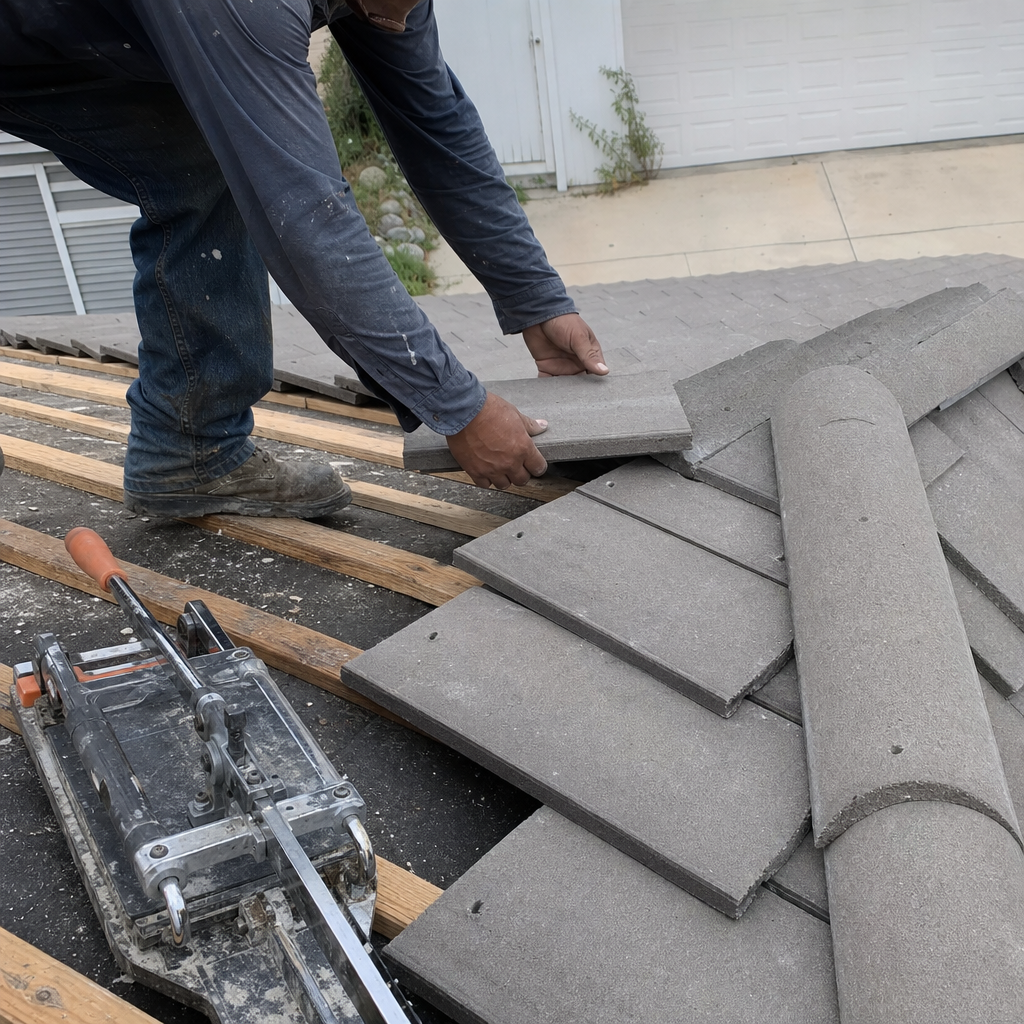
Rolling Hills Estates’s 1950s-1970s ranch homes were built before solar was a consideration, but today’s homeowners want panels without replacing the roof twice. Our solar-ready systems start with a structural assessment of your existing rafters and sheathing, many of which were sized for lighter tile loads than modern arrays require. We install reinforced decking, Class A fire-rated underlayment, and attachment points engineered for your specific panel layout. On a recent job near the intersection of Palos Verdes Drive East and Hawthorne Boulevard, we retrofitted a 1964 ranch with a solar-ready modified bitumen system that will outlast two panel generations. The homeowner’s existing concrete tile was single-course over 60-year-old felt - nowhere near current Title 24 assembly standards for this VHFHSZ zone.
Built-Up Roofing (BUR)
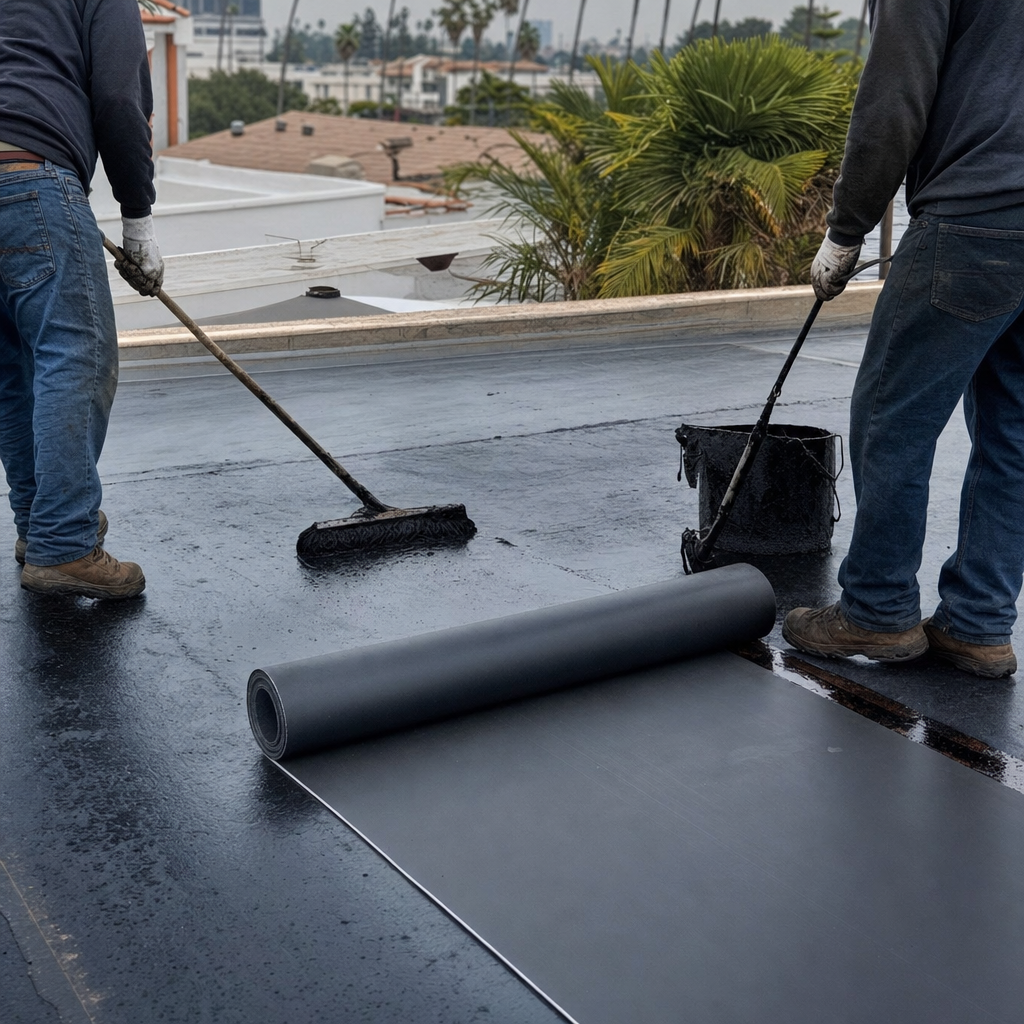
For the flat or nearly-flat sections common on peninsula ranch homes - carports, additions, and the occasional full low-slope design - built-up roofing remains our most specified system in Rolling Hills Estates. The multiple ply layers and flood coat of hot asphalt create a monolithic barrier that handles foot traffic during maintenance and resists the puncture risk from eucalyptus debris better than single-ply alternatives. We specify gravel-surfaced BUR for high-ember-exposure zones and smooth-surfaced with reflective coating for energy-code compliance on south-facing slopes. A typical built-up re-roof on a 1,200-square-foot Rolling Hills Estates ranch addition runs $12,000-$16,000 including removal of the failed original, upgraded edge metal to resist salt corrosion, and proper drainage detailing at scuppers.
Modified Bitumen
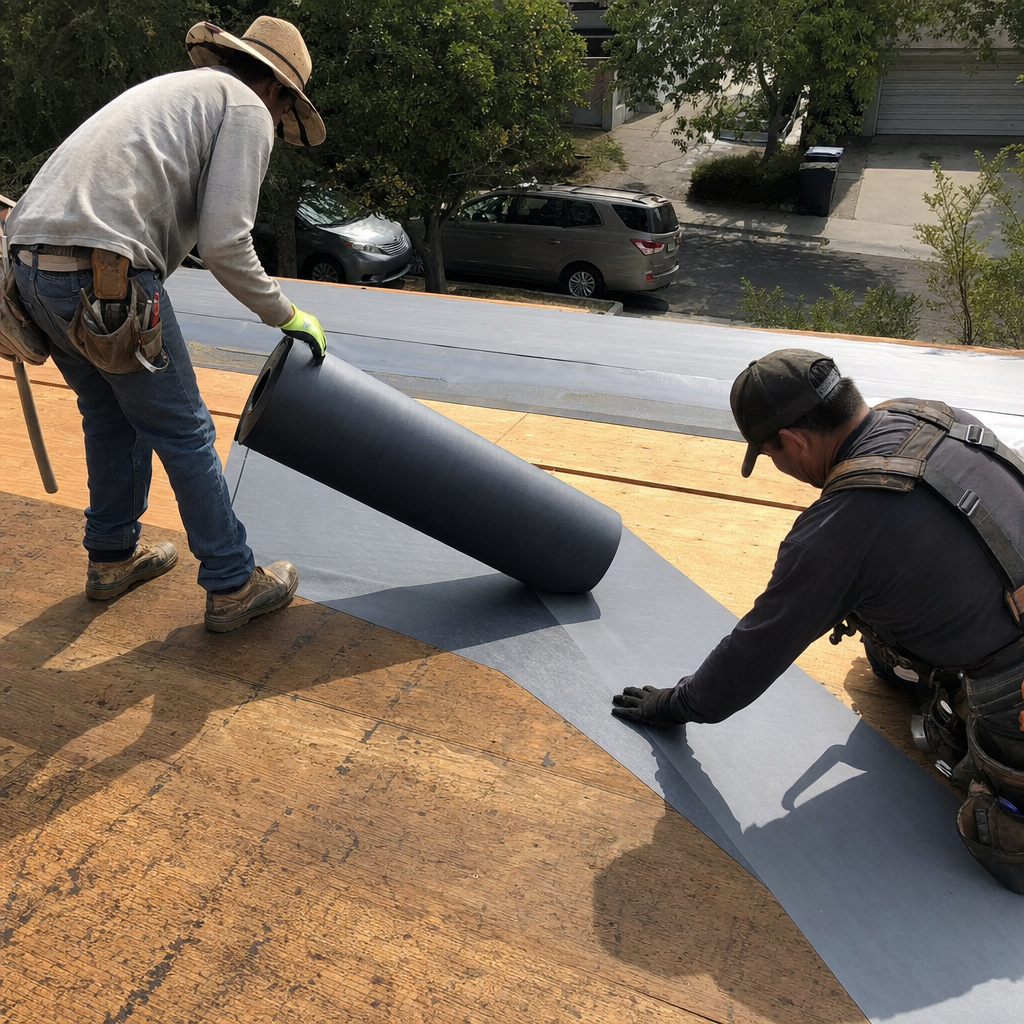
Modified bitumen bridges the gap between traditional BUR and modern single-ply systems, and it’s our go-to for Rolling Hills Estates homeowners who need fire-rated assembly with faster installation. The APP-modified sheets we install carry Class A ratings and install with torch or hot-air welding that creates seamless laps - critical in a city where wind-driven rain and ember intrusion are both real threats. The granulated cap sheet options from CertainTeed and GAF match aesthetic expectations in neighborhoods where visible roof planes matter. We see modified bitumen specified most often on garage roofs, patio covers, and the low-slope transitions between tile fields on split-level ranch homes throughout the 90505 area.
TPO Roofing
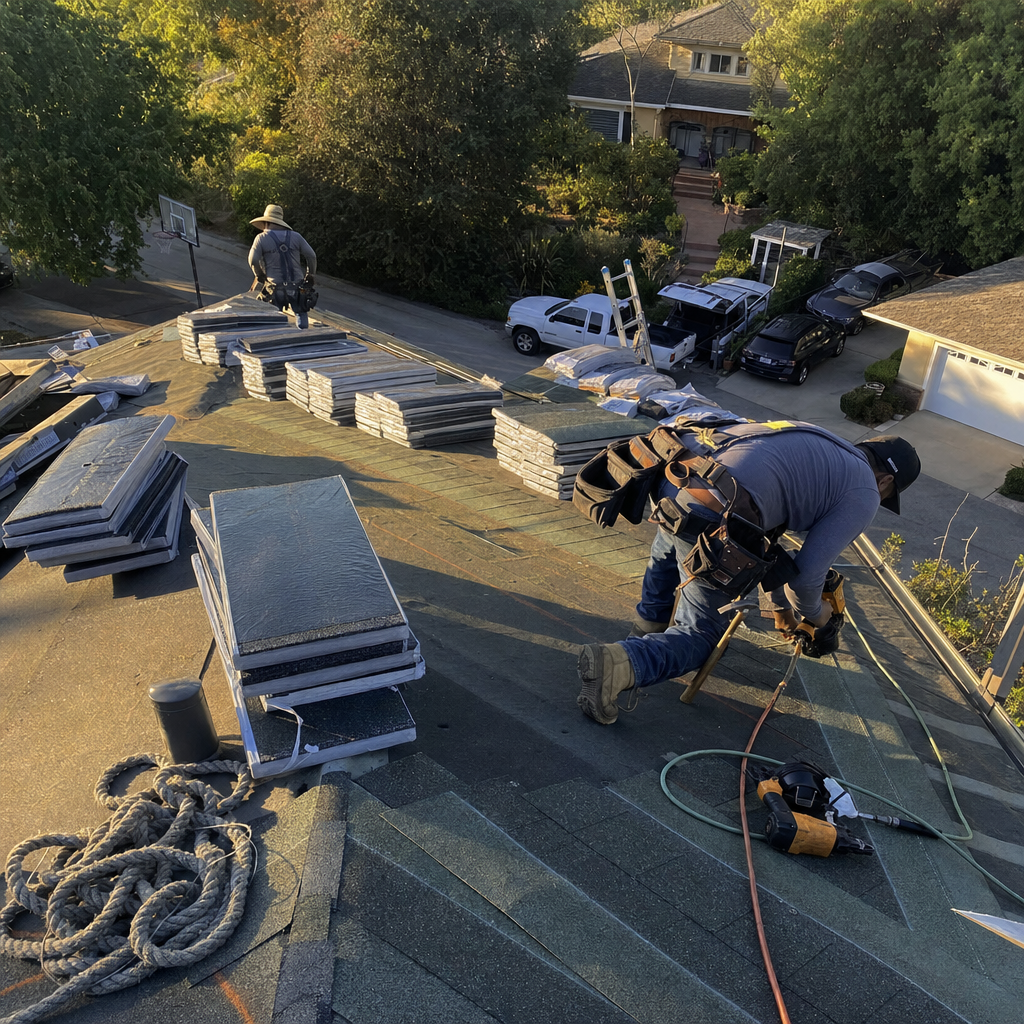
TPO’s white reflective surface helps with cooling-degree days, but in Rolling Hills Estates we specify it cautiously. The heat-welded seams perform well, but the membrane’s flexibility can be compromised by the UV intensity at 600-foot elevation combined with salt-air exposure. We recommend TPO primarily for large commercial or multi-family applications in the city, not for residential projects with complex flashing geometry. When we do install TPO in Rolling Hills Estates, we use minimum 60-mil thickness, reinforced membrane, and mechanically attached fastening patterns engineered for the local wind exposure category.
EPDM Roofing
EPDM’s long track record makes it a known quantity, but the black surface absorbs heat that accelerates aging at peninsula elevations. We occasionally specify it for shaded applications or where ballasted installation is appropriate, but for most Rolling Hills Estates homes, the fire-rating requirements and solar-reflectance preferences push us toward modified bitumen or built-up systems instead.
What happens when you call
- 1
A real person answersNo phone trees - you reach a local pro.
- 2
You get an upfront price rangeHonest numbers before anyone is dispatched.
- 3
A background-checked tech heads outLicensed & insured, dispatched right away.
- 4
You approve before work beginsNothing starts until you say go.
Trusted Brands We Service in Rolling Hills Estates
We’re authorized installers for GAF, CertainTeed, and Owens Corning, and we stock common flashing profiles, underlayment rolls, and ridge vent components at our Los Angeles County warehouse - not on a truck three counties away. That inventory position means most Rolling Hills Estates repairs don’t wait for a parts run. For specialty roofing specifically, we specify GAF’s high-temp underlayment for fire-zone applications and CertainTeed’s Flintlastic modified bitumen for low-slope residential work. Owens Corning’s Duration series integrates well with solar-ready retrofits where steep-slope tile transitions meet flat membrane sections. We don’t substitute materials without written approval. The brand on your estimate is the brand on your roof.
Common Specialty Roofing Problems We See in Rolling Hills Estates Homes
- Salt-oxidized metal at ridge and hip caps. The marine layer that rolls over the peninsula at 400-900 feet elevation carries chloride levels that pit aluminum and corrode galvanized steel within 5-7 years. We replace failed fasteners with stainless steel and specify copper or lead-coated flashing at critical junctures.
- Chronic ponding on low-slope ranch rooflines. The shallow pitches that define California ranch architecture weren’t designed with modern drainage detailing. Water sits behind tile lips, degrades felt underlayment, and breeds algae that accelerates deterioration. We correct slope with tapered insulation or reframe as needed.
- Eucalyptus debris accumulation in valleys. Those towering trees that give Rolling Hills Estates its character shed long bark strips and fine leaves that pack tight in roof valleys. The debris wicks moisture under tile laps during winter storms and serves as ready ignition fuel when Santa Ana winds arrive. Our valley detailing includes raised splash guards and removable mesh screens.
- Failed original underlayment beneath concrete tile. Many 1960s-1970s homes still have single-layer organic felt under tile that was never designed for 60 years of service. When we remove tile for re-roofing, the felt crumbles. We upgrade to double-layer synthetic underlayment with Class A fire rating as required by Title 24 in this VHFHSZ zone.
Pricing for Specialty Roofing in Rolling Hills Estates, CA
| Service | Typical Range in Rolling Hills Estates |
|---|---|
| Solar-ready roof retrofit (tile removal, structural upgrade, Class A assembly) | $14,000 - $22,000 |
| Built-up roofing (BUR), low-slope residential section | $12,000 - $16,000 |
| Modified bitumen, garage or patio cover | $8,500 - $13,500 |
| TPO, commercial or multi-family application | $10,000 - $18,000 |
| EPDM repair or partial replacement | $3,500 - $7,500 |
| Green roof system (extensive, residential scale) | $18,000 - $24,000 |
These ranges reflect the Class A fire-rated assembly requirement that applies to all Rolling Hills Estates projects but not to work in nearby Torrance. Material costs for fire-rated underlayment, upgraded edge metal, and ember-resistant vent screening add 15-25% compared to non-VHFHSZ installations. Roof pitch, access difficulty, and sheathing condition also move the number. We provide exact, itemized estimates before any work begins - the price we quote is the price you pay. Call (877) 367-1429 for your free estimate.
We Also Serve Cities Near Rolling Hills Estates
Our Specialty Roofing crews regularly work in Manhattan Beach, Torrance, Lomita, and Palos Verdes Estates. Each city has different code requirements - Torrance isn’t in a VHFHSZ, for instance, so fire-rated assembly rules don’t apply there - and we know the distinctions. Rolling Hills Estates homeowners get our full attention, but if you have family or rental properties in these neighboring cities, we handle those with the same standard.
Serving Rolling Hills Estates, CA - Our Local Coverage Area
We’re based in the Rolling Hills Estates area and know this community well. Use the map below to see our service coverage - if you’re nearby, we can almost certainly help.
FAQs - Specialty Roofing in Rolling Hills Estates
Yes. Every re-roofing project in Rolling Hills Estates must use Class A fire-rated assemblies because the entire city sits within a CAL FIRE Very High Fire Hazard Severity Zone. This Title 24 requirement applies to all roof types including specialty systems like modified bitumen and built-up roofing, not just standard shingle replacements. During your inspection, we’ll document the assembly rating and provide the certification your insurance company and LA County may request. Call (877) 367-1429 to schedule - estimates are free.
Your ranch home’s shallow roof pitch, typically 2:12 to 4:12 in 1950s-1970s Rolling Hills Estates construction, doesn’t generate enough runoff velocity to clear water before it finds seams and laps. Original tile systems on these pitches were installed with minimal underlayment drainage detail, and decades of settling have often flattened slopes further. We correct ponding with tapered insulation, crickets at obstructions, or in severe cases, reframing to achieve minimum 1/4 inch per foot drainage. The fix depends on your specific geometry - call for an inspection.
You can, but we don’t recommend it without a solar-ready roof upgrade first. Rolling Hills Estates’s original concrete tile roofs from the 1960s and 1970s often have degraded underlayment and sheathing that won’t handle the additional point loads and penetrations. We assess structural capacity, replace failing components, and install attachment points engineered for your panel layout before any solar contractor steps on the roof. This prevents the $8,000-$15,000 surprise of removing panels to fix the roof five years later.
Modified bitumen or built-up roofing outperforms single-ply membranes for most Rolling Hills Estates residential flat roofs in Santa Ana conditions. The multi-ply construction and heavy mineral surfacing resist wind uplift better than TPO or EPDM, and the heat-welded or mopped seams don’t rely on adhesive that degrades under UV and heat cycling. For the windiest exposures near the peninsula’s western ridges, we specify additional fastening patterns and gravel surfacing for ballast. Your specific location and roof geometry determine the right system - we’ll show you during inspection.
We design debris management into every Rolling Hills Estates specialty roofing system we install. That means raised valley splash guards that prevent bark strip accumulation, ridge vents with fine-mesh ember screening that sheds leaves without clogging, and annual inspection programs to clear buildup before winter moisture-wicking or red-flag fire conditions. On a 1960s ranch home on Palos Verdes Drive East, we replaced a leaking TPO roof with a solar-ready built-up system that meets the city’s fire codes. The original flashing had corroded from salt-laden winds, and debris from the towering eucalyptus had clogged the valley, causing ponding. We used GAF high-temp underlayment and installed ridge vents with fine-mesh screens to prevent ember intrusion. Call (877) 367-1429 to discuss debris detailing for your property.
Ready to protect your Rolling Hills Estates home with specialty roofing built for fire-zone compliance, salt-air durability, and the peninsula’s unique conditions? Call (877) 367-1429 now. A live person answers 24 hours a day, seven days a week - no voicemail, no callback window. We’ll schedule your free estimate at a time that works for you, provide photo-documented findings from your actual roof, and quote upfront pricing that won’t change. Ridgeline Roofing Co. has stood behind local roofs since 1984. We’ll be here to stand behind yours.
Written by Cole Drummond, Owner at Ridgeline Roofing Co. of California, serving Rolling Hills Estates since 1984.