
Fast, Reliable Specialty Roofing Across East Foothills
Specialty roofing in East Foothills runs $8,500-$22,000 depending on system type, with most Class A fire-rated re-roofs on 1950s ranch homes falling between $12,000 and $16,000. We’re usually on-site within 45 minutes for calls from the upper streets near Alum Rock Park, and we pull permits through San Jose’s building department with the FHSZ documentation already handled.
East Foothills isn’t flat San Jose. The hillside lots off Alum Rock Avenue and the steeper pitches above Capitol Avenue see wind, sun, and fire-code requirements that valley contractors rarely encounter. We’ve been climbing these roofs since 1984, and we know the difference between a standard permit and one that gets flagged for missing ember-resistant detailing. If you’re in ZIP 95127 and your roof is original or once-replaced 3-tab asphalt, it’s likely past rated lifespan and potentially out of compliance with current fire-zone requirements. Call (877) 367-1429 - a live person answers, 24/7.
Why Ridgeline Roofing Co. of California Is East Foothills’s Preferred Specialty Roofing Company
We’ve worked the East Foothills hillside long enough to know which upper-street driveways can’t handle a material delivery truck, which permits need Cal Fire FHSZ verification, and why a south-facing slope on a 1962 ranch near Alum Rock Park will granule-fail five years faster than the same shingle on a north face in Willow Glen. That knowledge matters when you’re staging a tear-off on a 6:12 pitch with Diablo winds picking up by 2 p.m.
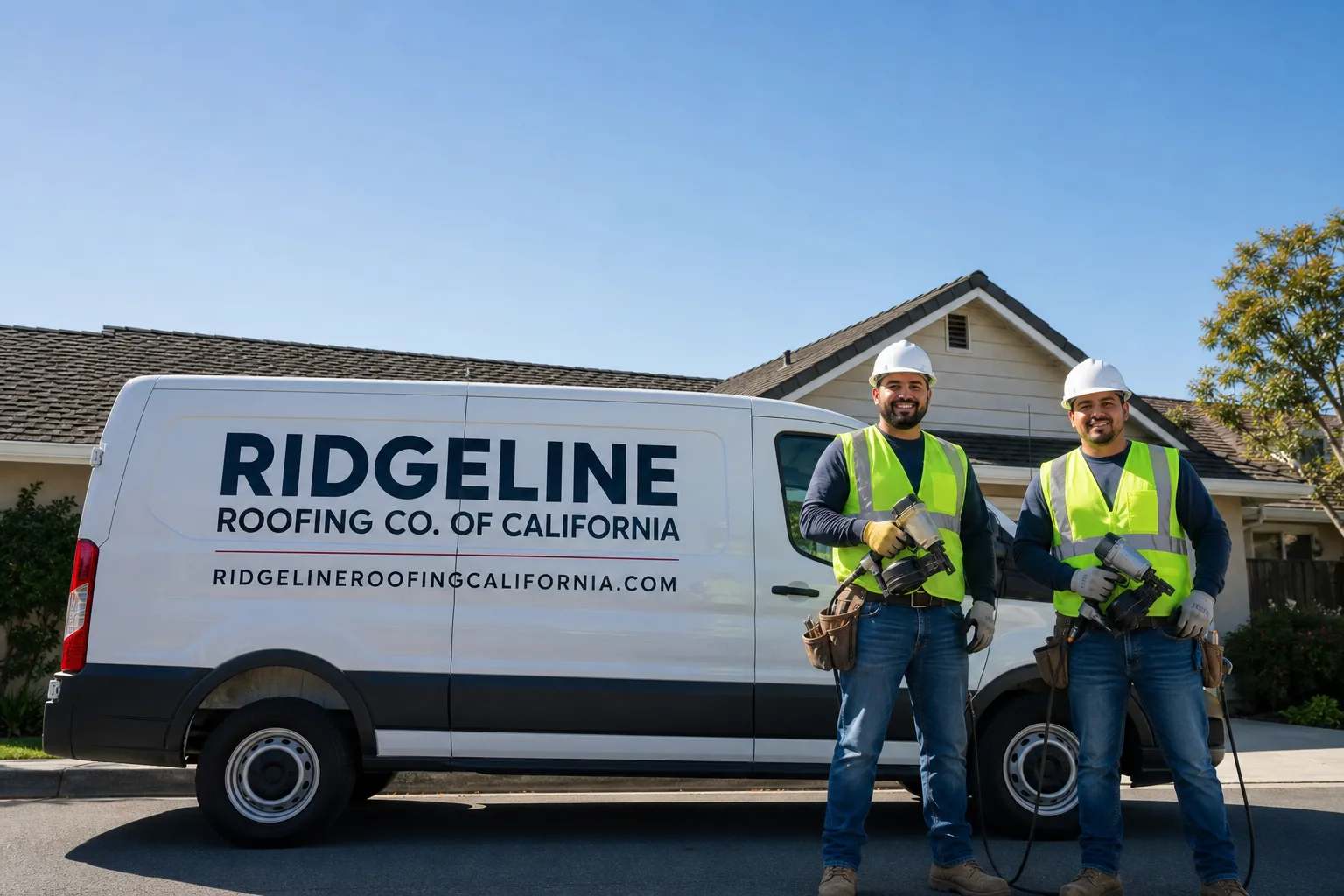
Our customers here tend to be longtime homeowners, not flippers. They remember the last contractor who quoted low and disappeared. We don’t do that. Our 90-Day Done Right Promise is written, not spoken: if it’s not right, we come back and make it right - no paperwork, no arguing. Our technicians are background-checked, uniformed, and they photograph every inspection from your actual roof, not the driveway. And when you call (877) 367-1429, a live person answers, including the middle of a Red Flag night when embers are the concern and you need someone now.
We’re not storm chasers. We hire local crews, train apprentices into journeymen, and plan to be here in thirty years. That’s why homeowners off King Road and the upper reaches of Capitol Avenue call us back, and why they send their neighbors.
Our Specialty Roofing Services in East Foothills
Solar Ready Roofing
East Foothills’s 1950s-1970s ranch stock was built before solar was a consideration, but these south- and west-facing hillside exposures are now prime real estate for panels - if the roof underneath is engineered for the load and the penetrations. We install solar-ready decking and flashing systems that anticipate array mounting, using GAF and Owens Corning products rated for both photovoltaic attachment and Class A fire compliance. On a steep 1950s ranch roof, this means reinforced nailing patterns, upgraded underlayment at penetration zones, and valley detailing that won’t leak when the panel rails go in six months later. We’ve seen too many East Foothills homeowners install panels on an aging 3-tab roof, then face a full tear-off that requires removing the entire array. Solar-ready roofing done first saves that second mobilization.
TPO Roofing
TPO’s white reflective surface makes sense for East Foothills’s hotter microclimate, especially on low-slope additions, patio covers, and garage roofs common on expanded ranch homes near Communications Hill. The material holds up well to UV but needs proper fastening to resist Diablo wind uplift on exposed hillside sites. We weld seams and secure perimeters to manufacturer specs, not shortcuts. For East Foothills’s fire-zone requirements, we specify TPO assemblies with Class A ratings and proper insulation board, not generic single-ply that might pass in flat San Jose but fail FHSZ inspection here.
EPDM Roofing
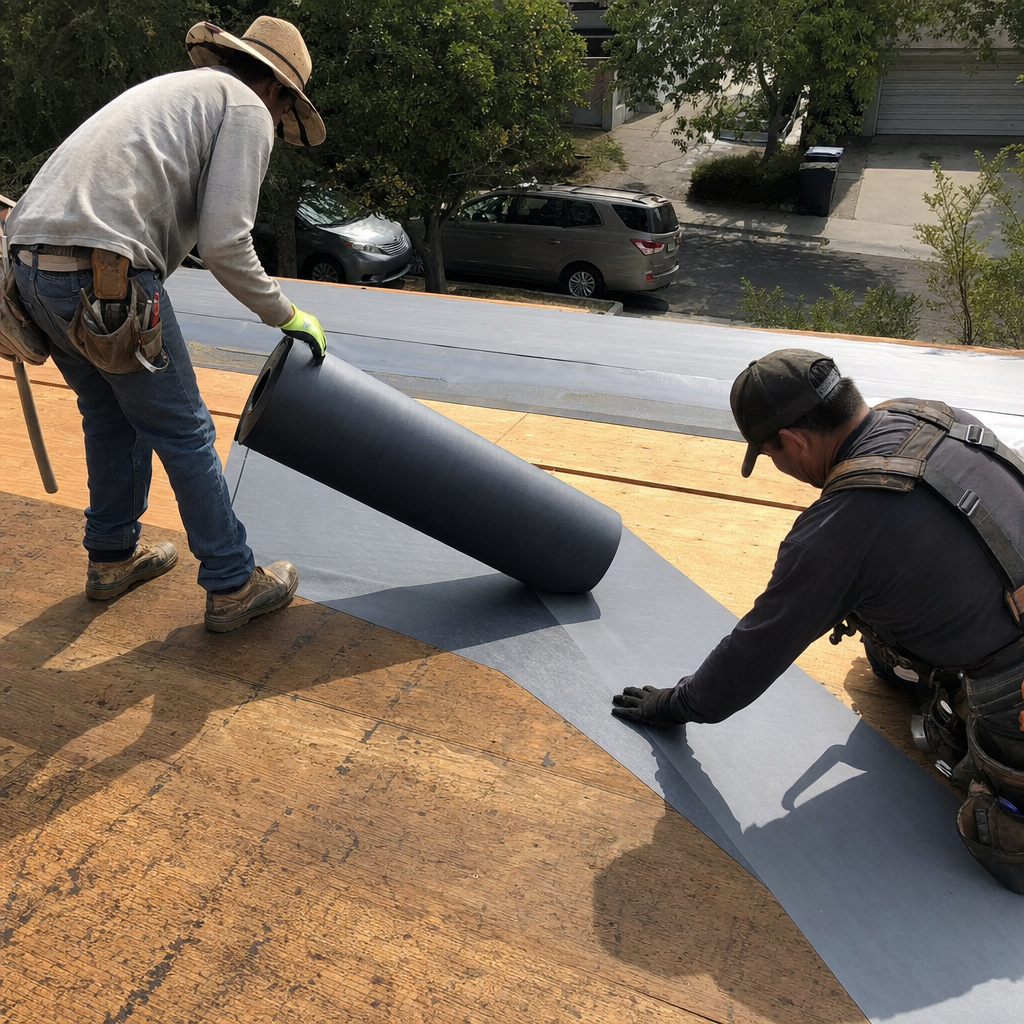
Black EPDM absorbs heat, which can be a liability on an East Foothills hillside in August. We use it selectively - typically on shaded north slopes or where the homeowner specifically requests rubber membrane performance - and we always pair it with proper insulation to manage thermal load. Ballasted systems aren’t suitable for these wind corridors; we mechanically attach or fully adhere, with reinforced perimeters at edges and penetrations. For homes near Alum Rock Park where ember exposure is real, we specify EPDM assemblies with fire-rated cover boards, not standard builds.
Modified Bitumen
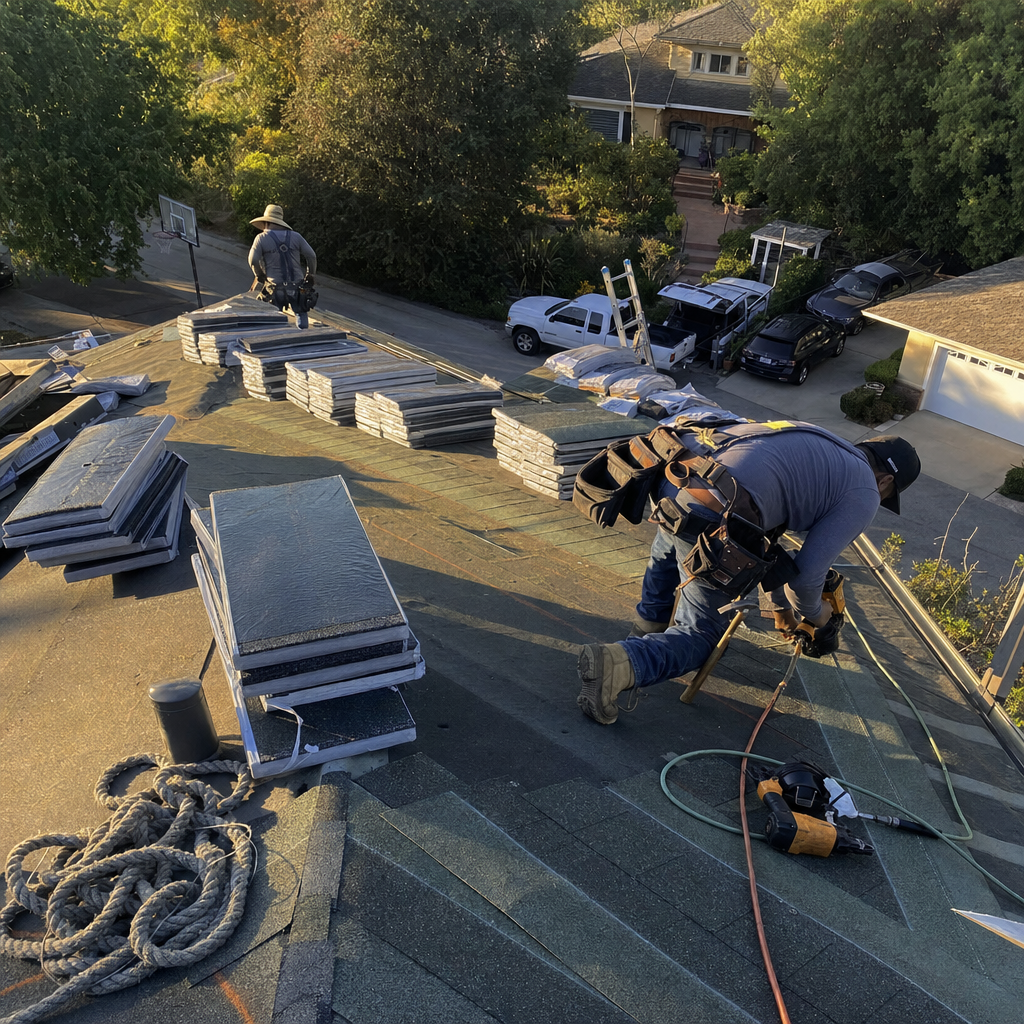
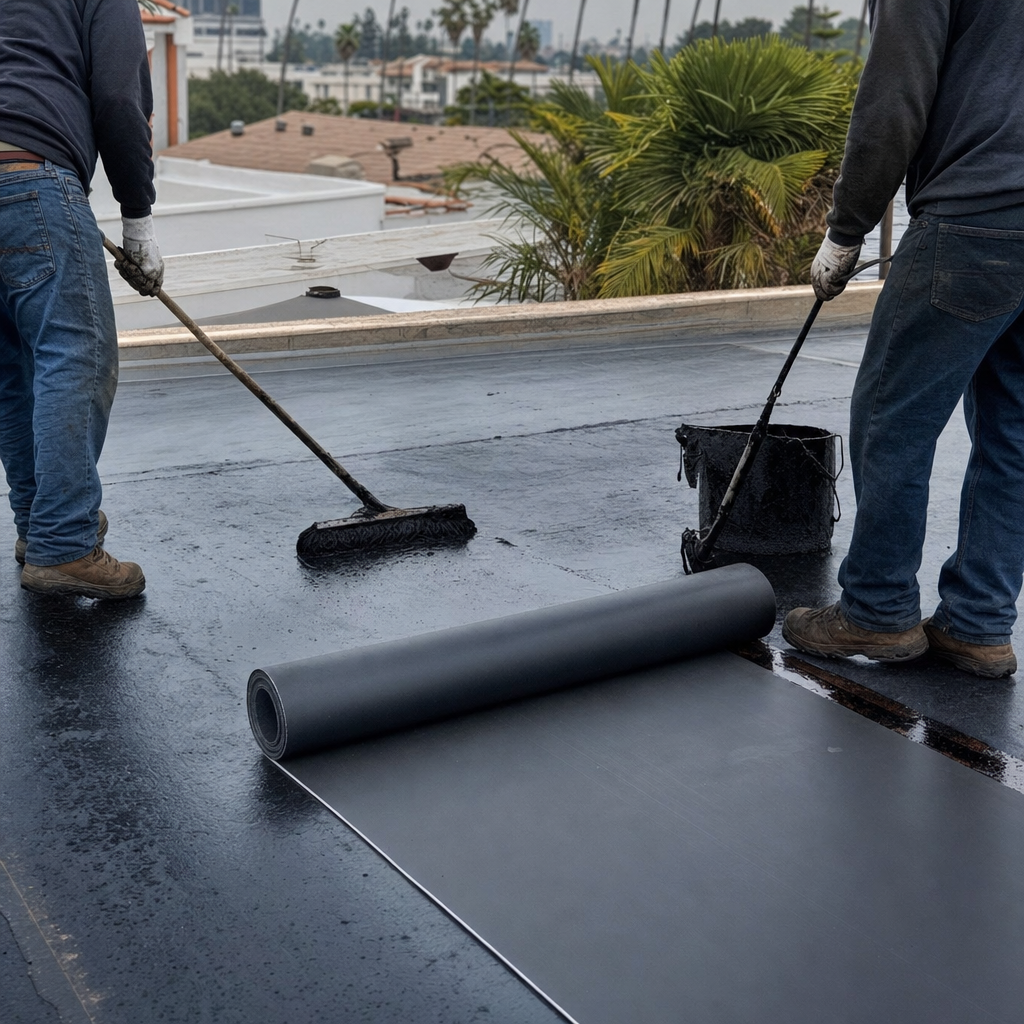
This is where East Foothills’s older housing stock and fire-code reality intersect. Modified bitumen’s layered construction and torch-applied or self-adhered installation creates a monolithic, ember-resistant surface that satisfies Cal Fire’s Very High Fire Hazard Severity Zone requirements while handling the thermal cycling these hillsides see. We’ve used modified bitumen on low-slope sections of 1960s ranches where the original built-up roofing has cracked from decades of afternoon sun, and on carport and patio roofs where homeowners need Class A compliance without the cost of full tile. The material’s toughness against foot traffic also matters on East Foothills’s steeper pitches where maintenance access is inevitable. We source modified bitumen from multiple manufacturers to match existing conditions and budget.
Green Roof
Green roofs are uncommon in East Foothills, but we’ve installed them on contemporary additions and ADUs where the homeowner wants thermal mass, stormwater retention, and the aesthetic break of living vegetation against stucco and shingle. The structural load requires engineering verification on these older ranch frames - we don’t guess. Irrigation, drainage, and root-barrier detailing must account for the dry season and the occasional heavy winter rain. For fire-zone compliance, we specify succulent-heavy plantings with low fuel load and integrate ember-resistant perimeter detailing that satisfies San Jose’s FHSZ-triggered inspections. It’s a specialty within a specialty, and we don’t take it on unless the structure and the budget support doing it right.
Built-Up Roofing
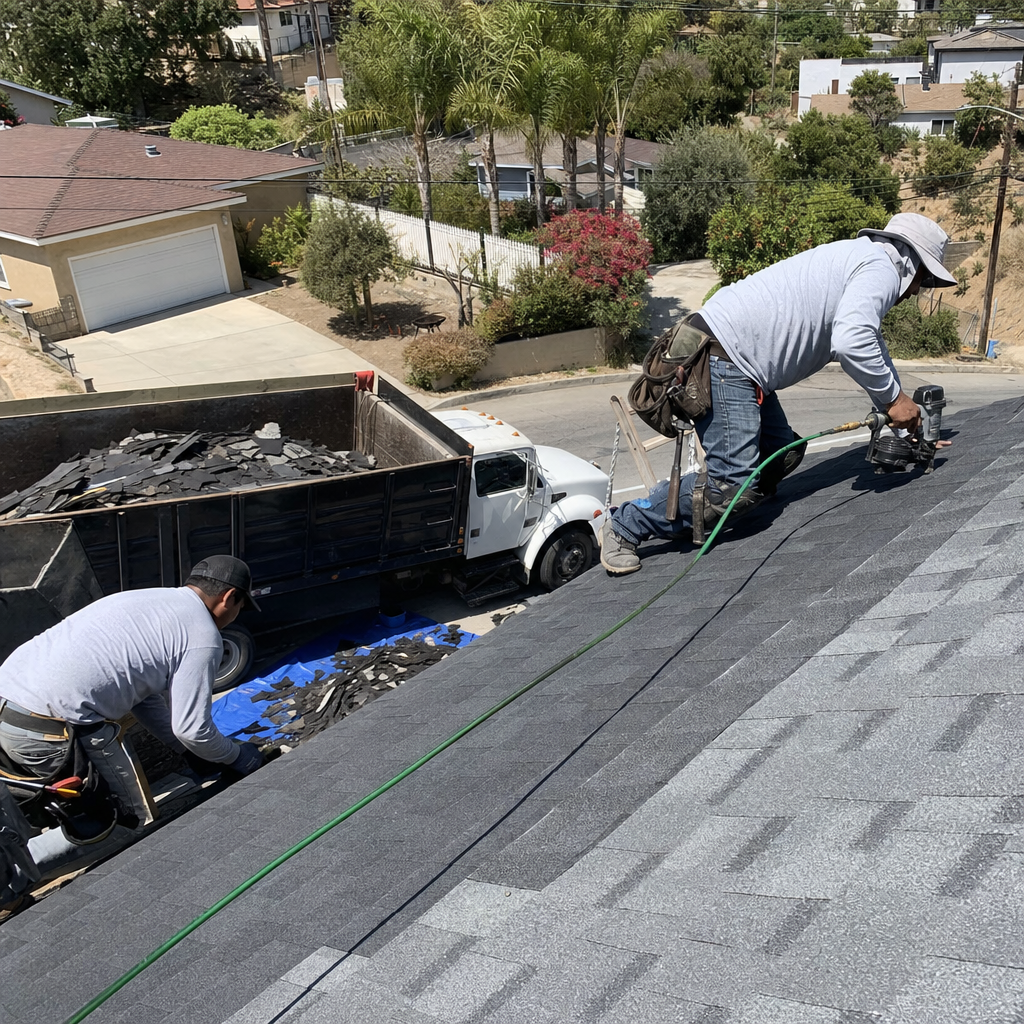
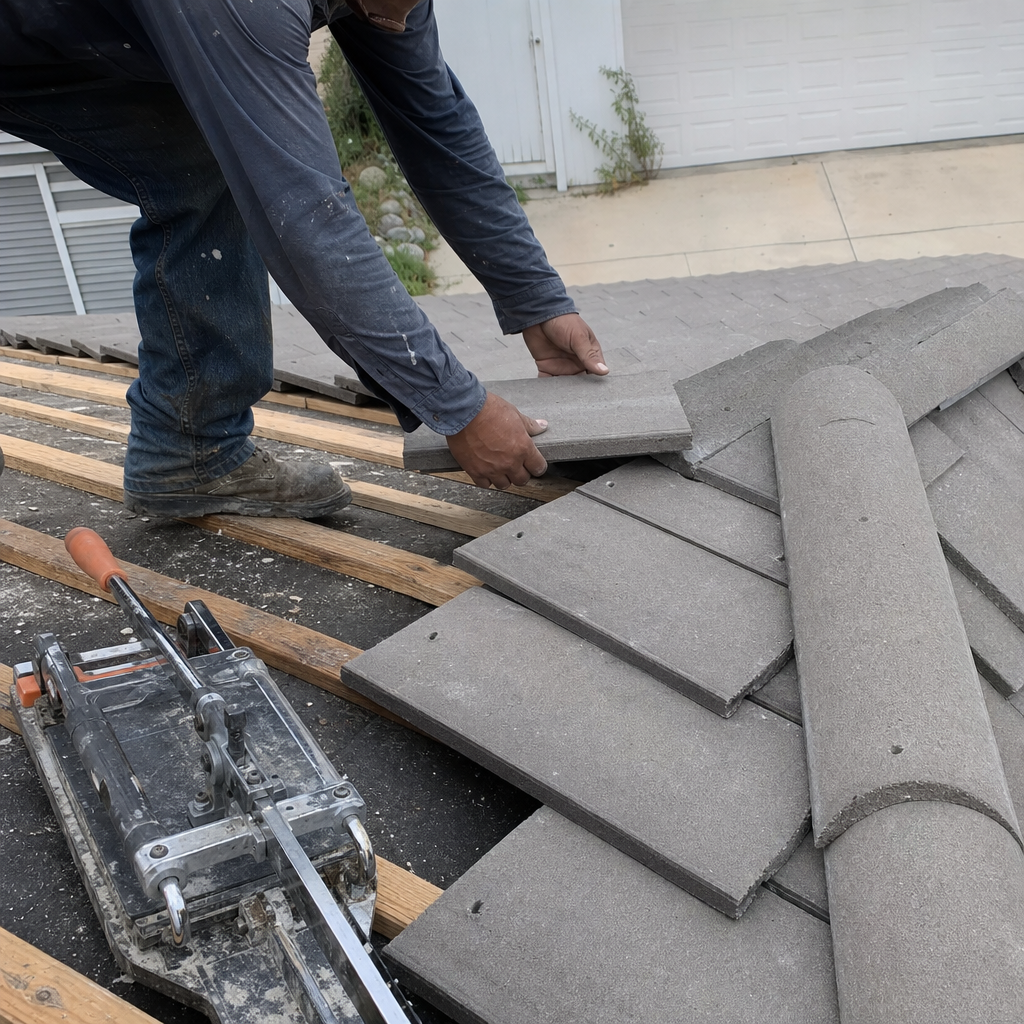
The original built-up roofs on East Foothills’s 1950s tract homes are almost universally failed by now - brittle, alligatored, leaking at flashings. We remove these systems completely rather than overlay, inspect the decking for decades of moisture damage, and replace with modern multi-ply assemblies or transition to modified bitumen where fire rating and wind resistance are priorities. The tear-off on a built-up roof is heavier and messier than shingle removal; we plan staging and debris handling accordingly, especially on hillside lots with limited access.
What happens when you call
- 1
A real person answersNo phone trees - you reach a local pro.
- 2
You get an upfront price rangeHonest numbers before anyone is dispatched.
- 3
A background-checked tech heads outLicensed & insured, dispatched right away.
- 4
You approve before work beginsNothing starts until you say go.
Trusted Brands We Service in East Foothills
We’re authorized installers for GAF, CertainTeed, and Owens Corning, and we carry seven manufacturer lines total including IKO, Atlas, Tamko, and Boral. For East Foothills’s fire-zone requirements, this matters - we stock Class A-rated products locally, not special-order after the fact. When a permit gets pulled with FHSZ documentation, we already have the right shingle, tile, or membrane on hand. No substitutions. No “equivalent” products that might not pass inspection. The GAF Timberline HDZ we installed on that hillside ranch off Alum Rock Avenue - the one where the insurer had flagged non-compliance - was in our yard the morning after the estimate was approved. Fast turnaround isn’t a slogan here; it’s how you keep a homeowner’s policy from lapsing while the roof is open.
Common Specialty Roofing Problems We See in East Foothills Homes
- 3-tab shingles baked past failure on south-facing slopes. The original or once-replaced asphalt on 1950s-1970s ranches loses granules, curls at edges, and cracks under the intensified foothill sun. We’ve stripped roofs off upper Capitol Avenue homes where the south face was bald and the north face still had five years left.
- Insurance non-renewal after aerial inspection reveals non-fire-rated roofing. In the Very High Fire Hazard Severity Zone corridor near Alum Rock Park, carriers are actively scanning for Class A compliance. A like-for-like 3-tab replacement that would pass in Willow Glen gets flagged here, and we’ve had homeowners call us in panic after receiving a 60-day non-renewal notice.
- Flashing fatigue at irregular rooflines and valleys. The hillside grading on East Foothills’s older ranches creates complex valley configurations and steep pitches that standard flashing details don’t fit. Repeated dry wind events during Red Flag conditions lift edges, drive debris, and accelerate corrosion at these vulnerable joints.
- Failed built-up roofing on low-slope additions. The original carport, patio, and garage roofs on expanded ranches were often done with economy built-up systems that have now exceeded their service life by decades. Water ponds, decking rots, and the repair patches become more expensive than replacement.
Pricing for Specialty Roofing in East Foothills, CA
Here’s what we’re seeing in the East Foothills market right now:
| System Type | Typical Range (East Foothills) | Notes |
|---|---|---|
| Class A asphalt shingle re-roof (1,800-2,200 sq ft ranch) | $12,000-$16,000 | Includes FHSZ-compliant underlayment and ember-resistant detailing |
| Modified bitumen (low-slope section, 400-600 sq ft) | $4,500-$7,500 | Self-adhered or torch-applied, Class A assembly |
| TPO single-ply (garage/patio cover, 300-500 sq ft) | $5,000-$8,500 | Mechanically attached, insulated assembly |
| Solar-ready roof upgrade (full re-roof with reinforced decking) | $14,000-$19,000 | Anticipates future array; includes penetration-ready flashing |
| Green roof (small addition/ADU, 200-400 sq ft) | $18,000-$28,000 | Structural verification, irrigation, drainage, low-fuel planting |
| Built-up roof removal and replacement | $8,500-$14,000 | Heavy tear-off; decking repair common on 60+ year old structures |
What moves the number: pitch steepness (staging cost), decking condition after tear-off, accessibility for material delivery on hillside lots, and whether the permit requires full FHSZ documentation with Cal Fire verification. We don’t guess at your price. We inspect, photograph, and deliver a written estimate with the number you’ll see on the invoice. A square deal: the price we quote is the price you pay. Estimates are free. Call (877) 367-1429.
We Also Serve Cities Near East Foothills
Our crews work the full foothill corridor, including East Foothills, Alum Rock, San Jose, Milpitas, and Communications Hill. Same 90-Day Done Right Promise, same live-answer phones, same fire-zone expertise for any address falling within Cal Fire’s FHSZ boundaries. If you’re unsure whether your property is in a High or Very High Fire Hazard Severity Zone, we’ll verify it during your estimate - it’s not always obvious from the street.
Serving East Foothills, CA - Our Local Coverage Area
We’re based in the East Foothills area and know this community well. Use the map below to see our service coverage - if you’re nearby, we can almost certainly help.
FAQs - Specialty Roofing in East Foothills
East Foothills sits within Cal Fire’s High or Very High Fire Hazard Severity Zones at the wildland-urban interface with the Diablo Range, while flat San Jose neighborhoods to the west are unclassified. Any re-roofing permit pulled in ZIP 95127 triggers California Building Code requirements for Class A fire-rated assemblies and ember-resistant detailing that valley contractors rarely encounter. This isn’t a San Jose preference - it’s state code activated by East Foothills’s specific fire-zone designation. If your contractor doesn’t know the difference, your permit gets rejected or your insurance gets flagged. Call (877) 367-1429 and we’ll verify your property’s FHSZ status during your free estimate.
Yes, increasingly. We’ve seen carriers add FHSZ riders requiring Class A-rated materials for homes in the Very High Fire Hazard Severity Zone corridor near Alum Rock Park, and non-renewal notices after aerial inspections reveal non-compliant surfaces. A standard 3-tab replacement that would pass in Willow Glen gets rejected here. We document every re-roof with manufacturer certification of Class A rating and photograph ember-resistant detailing for your insurance file. If you’ve received a notice or worry you might, call us before you sign with a valley contractor who doesn’t know East Foothills’s requirements.
Diablo wind events funnel through gaps in the Diablo Range and accelerate across East Foothills’s upper slopes, producing uplift forces that lift improperly fastened membrane edges and drive debris under flashing. Modified bitumen handles this well when torch-applied or self-adhered in full compliance with manufacturer specs; TPO needs mechanically attached or fully adhered installation with reinforced perimeters, never ballast. We’ve repaired too many East Foothills roofs where a cut-rate installer used standard fastening patterns meant for flat valley conditions. The fix costs more than doing it right the first time. Call (877) 367-1429 for an inspection if you’re unsure about your current roof’s wind resistance.
Yes, if the structure and the flashing details are engineered for it. Steep pitches common on East Foothills’s hillside ranches complicate panel mounting and increase penetration-point vulnerability, so solar-ready roofing requires reinforced nailing patterns, upgraded underlayment at future array locations, and valley detailing that won’t leak when rails are installed. We verify rafter spacing and decking condition before specifying load capacity. The solar-ready upgrade adds roughly $2,000-$3,500 to a standard re-roof but eliminates the cost and risk of removing panels later for decking repair. If you’re considering solar within five years, it pays to plan for it now. Call for a structural assessment.
They treat it like flat San Jose. They pull a standard permit without FHSZ documentation, specify materials that aren’t Class A fire-rated, and stage tear-offs without accounting for afternoon Diablo winds on exposed hillside pitches. We’ve been called in after permits were rejected, after inspectors flagged missing ember-resistant detailing, and after homeowners had to stop-work mid-project because their insurer wouldn’t certify a non-compliant installation. East Foothills’s fire-zone status, wind exposure, and older housing stock require a contractor who’s worked these specific hills. We’ve been here since 1984. Call (877) 367-1429 for a free estimate - we’ll show you the difference local knowledge makes.
Written by Cole Drummond, Owner at Ridgeline Roofing Co., serving East Foothills and the Diablo Range foothills since 1984.