
Fast, Reliable Specialty Roofing Across Chinatown
Specialty roofing in Chinatown, San Francisco demands more than standard flat-roof know-how. The 94133 zip code covers one of the densest concentrations of post-1906 earthquake construction in California, where three-to-six-story brick and wood-frame buildings share party walls and alleyways too narrow for equipment staging. We’re Ridgeline Roofing Co. of California, and we’ve been climbing these stairwells and assessing these accumulated roof loads since 1984. When a Chinatown building owner calls (877) 367-1429, a live person answers - day, night, or during a January storm rolling off the Bay. Our crews know Waverly Place, Stockton Street, and the Grant Avenue corridor. We understand that a leaking roof here doesn’t just damage one unit; it cascades through multiple occupied floors with no easy exterior access for repairs.
Why Ridgeline Roofing Co. of California Is Chinatown’s Preferred Specialty Roofing Company
We’ve served the broader San Francisco Bay Area for over 42 years, and our work in Chinatown reflects what we’ve learned from hundreds of calls in the 94133 zip code. Homeowners and building managers here remember the last contractor who underestimated the logistics. We don’t.
Our response time to Chinatown averages under 90 minutes for emergency calls, because we station crews and materials with knowledge of the neighborhood’s access constraints. We’ve learned which buildings on Jackson Street and Washington Street have freight elevators that still function, and which require hand-carrying materials up four flights of narrow stairs.
Our technicians are background-checked, uniformed, and trained to document every inspection with photographs from your actual roof - not guesses from the sidewalk. The 90-Day Done Right Promise applies to every Chinatown job: if it’s not right, we come back and make it right. No paperwork gauntlet, no runaround.
We’re also the anti-storm-chaser. Founded in 1984, we hire local apprentices and train them into journeymen. We’ll be here when the next contractor’s truck has left for Texas.
Our Specialty Roofing Services in Chinatown
TPO Roofing
TPO - thermoplastic polyolefin - has become our most specified membrane for Chinatown wind-uplift retrofits. The material’s heat-welded seams create a monolithic surface that resists the peel-back forces we see during Bay Area winter storms. Last winter, our crew worked on a three-story brick-clad building on Waverly Place where the original 1910s fir deck had been loaded with four generations of modified-bitumen. We tore off the excess layers, designed a wind-uplift retrofit using GAF EverGuard TPO mechanically fastened to meet SF DBI’s 110-mph wind rating, and hand-carried every roll up three flights of stairs. In Chinatown’s persistent summer fog, TPO’s white reflective surface also sheds moisture faster than darker membranes, reducing the moss accumulation that plagues roofs kept damp by the marine layer.
Modified Bitumen
Modified bitumen remains a practical choice for Chinatown buildings where structural dead-load limits can’t accommodate the removal of all existing BUR layers. We install APP and SBS modified systems from Atlas and Tamko, often as a cap sheet over sound existing substrate. The key in 94133 is proper edge fastening. Because so many Chinatown roofs lack structural tie-downs to resist wind uplift, we engineer attachment patterns that compensate - more fasteners at perimeters, reinforced cant strips, and membrane-to-wall terminations that won’t peel when a Pacific storm hits. SF DBI typically requires a structural engineering sign-off when we’re adding any new layer to these accumulated roofs, and we coordinate that workflow as part of our standard process.
Built-Up Roofing
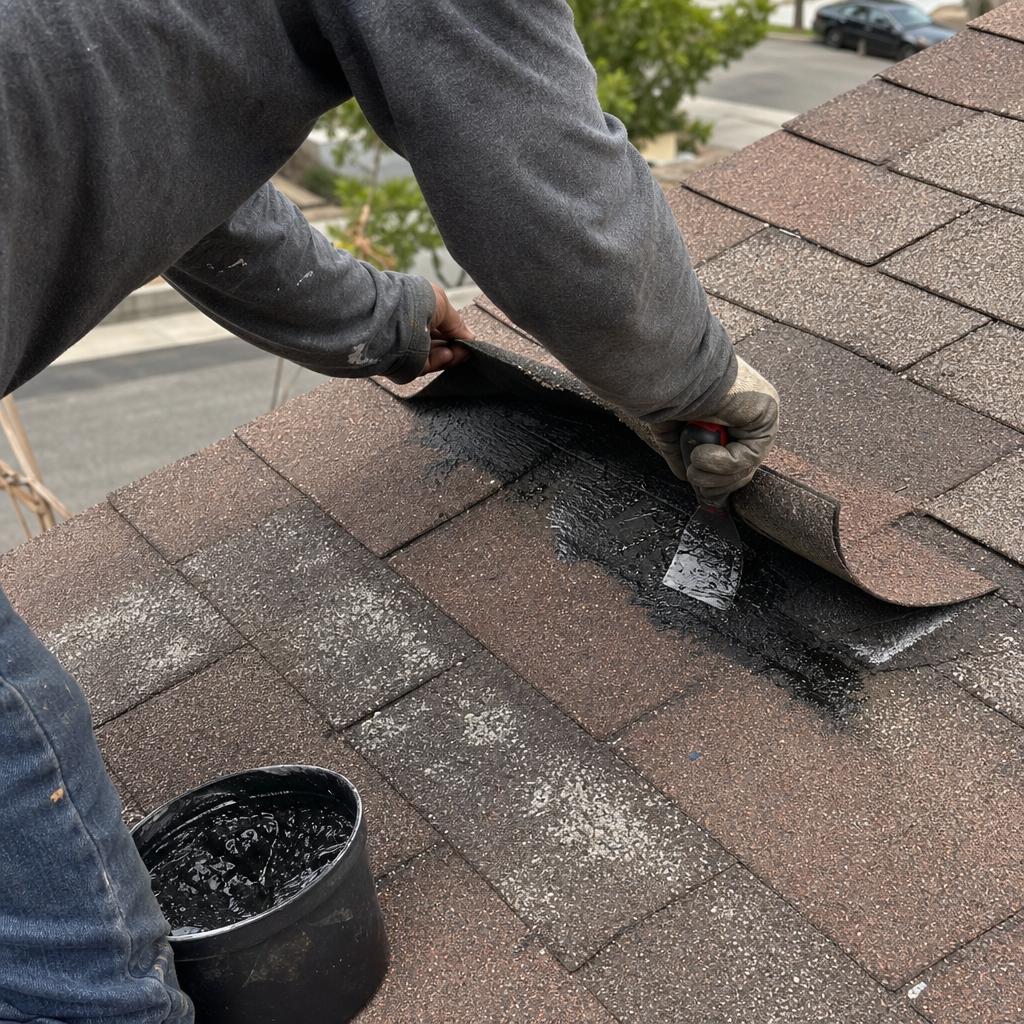
Built-up roofing - tar and gravel - is what most Chinatown buildings started with in the 1910s and 1920s. We still install BUR where historical compatibility matters or where a building’s structure demands the proven dead-load distribution of multiple plies. The challenge in Chinatown is cumulative weight. Roofers have been re-roofing in place here for a century. We’ve torn off jobs with three or four generations of BUR and modified-bitumen layers, the combined mass frequently exceeding SF DBI’s allowable dead-load limits for the original fir plank deck. Before we specify any new BUR system, we assess what’s actually up there. Sometimes the right call is full tear-off and structural reinforcement. Sometimes it’s a lightweight recovery system. Either way, the number on our estimate is the number on the invoice.
Solar Ready Roofing
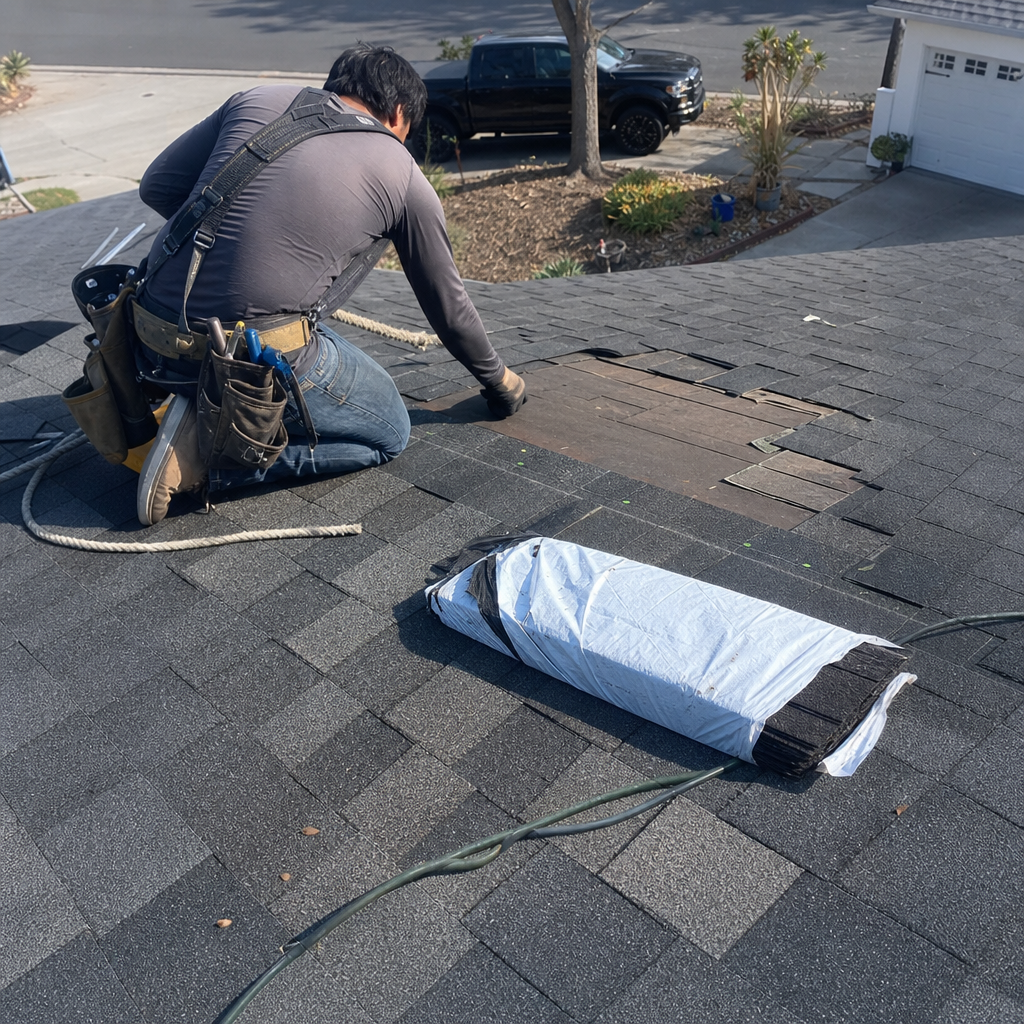
Chinatown’s flat roofs are increasingly being evaluated for solar arrays, but the structural math is unforgiving on these post-1906 buildings. Our solar-ready roofing installations specify membranes and attachment methods that accommodate future racking without compromising the waterproofing we guarantee today. We coordinate with structural engineers familiar with SF DBI’s requirements for 94133’s unreinforced masonry and wood-frame stock. The goal is a roof that supports solar if the building owner chooses it, but performs flawlessly if they don’t.
What happens when you call
- 1
A real person answersNo phone trees - you reach a local pro.
- 2
You get an upfront price rangeHonest numbers before anyone is dispatched.
- 3
A background-checked tech heads outLicensed & insured, dispatched right away.
- 4
You approve before work beginsNothing starts until you say go.
Trusted Brands We Service in Chinatown
We are authorized installers for GAF, CertainTeed, Owens Corning, IKO, Atlas, Tamko, and Boral. For Chinatown’s specialty roofing needs, we most frequently specify GAF EverGuard TPO for wind-rated retrofits and Atlas modified-bitumen systems for cap-sheet recoveries. We maintain relationships with San Francisco-area distributors who stock these lines locally, which means faster turnaround on material orders and less downtime for occupied buildings. We don’t substitute. The brand specified in your estimate is the brand installed on your roof. That’s been our practice since 1984, and it’s not changing.
Common Specialty Roofing Problems We See in Chinatown Homes
- Wind uplift peeling membrane edges. Because Chinatown’s buildings were rebuilt immediately after 1906 using unreinforced masonry and wood frames, many roofs lack structural tie-downs to resist wind uplift. We regularly find membrane edges lifting and separating from perimeters during winter storm season, creating channels for water to enter wall cavities and cascade into residential units below.
- Excessive dead load from accumulated roofing layers. The cumulative weight of three or four generations of BUR and modified-bitumen frequently exceeds SF DBI’s allowable limits for the original fir plank deck. This triggers mandatory structural engineering review before any new roofing permit is issued, adding time and cost that catches unprepared contractors off guard.
- Corroded flashing around rooftop penetrations. Chinatown’s ground-floor commercial spaces - restaurants especially - vent through dense clusters of rooftop exhaust penetrations. The persistent marine-layer fog keeps these metal flashings damp for months, accelerating rust. In high winds, the compromised metal fails and rain enters at roof-to-wall interfaces.
- Moss and biological growth on flat surfaces. Sheltered by Nob Hill to the west, Chinatown sits in a fog pocket that keeps roofing materials wetter and longer than sunnier SoMa just a mile south. This accelerates membrane degradation and creates slip hazards for maintenance workers.
Pricing for Specialty Roofing in Chinatown, CA
Specialty roofing in Chinatown runs higher than in newer San Francisco neighborhoods for structural reasons, not markup. Here’s what we typically see in the 94133 market:
| Service | Typical Range in Chinatown |
|---|---|
| TPO membrane installation (wind-rated retrofit) | $14-$22 per square foot |
| Modified bitumen cap sheet recovery | $8-$14 per square foot |
| Built-up roofing (full tear-off and replacement) | $12-$20 per square foot |
| Structural engineering coordination (SF DBI required) | $2,500-$5,500 per project |
| Wind-uplift edge fastening upgrade | $3,800-$7,200 |
These ranges reflect the hand-carry logistics, crane permits for alleyway delivery, and structural assessment workflows that are standard in Chinatown but rare elsewhere. The engineering sign-off alone - required when accumulated dead load exceeds limits - adds cost that doesn’t exist in post-war construction. We provide upfront pricing with no surprises. The number on your estimate is the number on your invoice. Call (877) 367-1429 for a free, no-obligation inspection and exact quote.
We Also Serve Cities Near Chinatown
Our crews respond throughout San Francisco and surrounding neighborhoods. We regularly work in the Chinatown area, and we also serve the Mission District, Noe Valley, and Visitacion Valley with the same live-answer phones and same-day emergency response. If you manage properties across multiple neighborhoods, one call to (877) 367-1429 coordinates everything.
Serving Chinatown, CA - Our Local Coverage Area
We’re based in the Chinatown area and know this community well. Use the map below to see our service coverage - if you’re nearby, we can almost certainly help.
FAQs - Specialty Roofing in Chinatown
Yes. San Francisco’s Department of Building Inspection requires wind-rating compliance to 110 mph for any new or recovered roofing system on commercial and multi-family buildings, which covers nearly all of Chinatown’s 3-to-6-story stock. Because so many 94133 buildings lack original structural tie-downs, we typically engineer a mechanical fastening pattern and perimeter attachment detail that satisfies this requirement. We handle the permit application and structural engineering coordination as part of our standard workflow. Call (877) 367-1429 to discuss your building’s specific requirements.
The persistent summer fog keeps roofing substrates damp for months, which can interfere with adhesive bonding and promote moss growth on any exposed membrane edges. We schedule Chinatown installations during predictable weather windows and specify moisture-tolerant installation methods - mechanically fastened TPO rather than fully adhered, for instance - when conditions demand it. The white reflective surface of TPO also sheds fog condensation faster than dark alternatives. For a site-specific recommendation, call (877) 367-1429.
Yes, but the engineering approach differs from freestanding structures. Party walls actually provide beneficial wind-load distribution when the membrane termination is properly detailed at the wall interface. We design perimeter fastening that transfers uplift forces into the masonry or wood frame without relying on open-edge overhangs. This is standard practice for our Specialty Roofing team on Chinatown’s densely packed blocks. Every installation is engineered to the specific building.
We install wind-rated systems from GAF, CertainTeed, Owens Corning, Atlas, Tamko, and Boral, with GAF EverGuard TPO and Atlas modified-bitumen being our most frequently specified lines for 94133’s wind-uplift retrofits. Each system is installed to manufacturer specifications and SF DBI requirements, not shortcuts. We are authorized installers for all seven brands, which means your warranty is valid and our workmanship guarantee applies. Call (877) 367-1429 for brand-specific questions.
The combination of dense rooftop exhaust penetrations from ground-floor restaurants and the persistent marine-layer fog creates a perfect corrosion environment. Metal flashings that would last a decade in a drier microclimate begin rusting within 18 to 24 months in Chinatown’s fog pocket. We specify copper or stainless-steel flashing upgrades in our replacement work, and we design cricket diverters that reduce standing water at penetration clusters. If you’re seeing orange streaks on your parapet walls, the flashing is already failing. Call (877) 367-1429 for a free inspection.
Written by Cole Drummond, Owner at Ridgeline Roofing Co. of California, serving Chinatown and the greater San Francisco Bay Area since 1984.