
Fast, Reliable Emergency & Storm Damage Across San Francisco
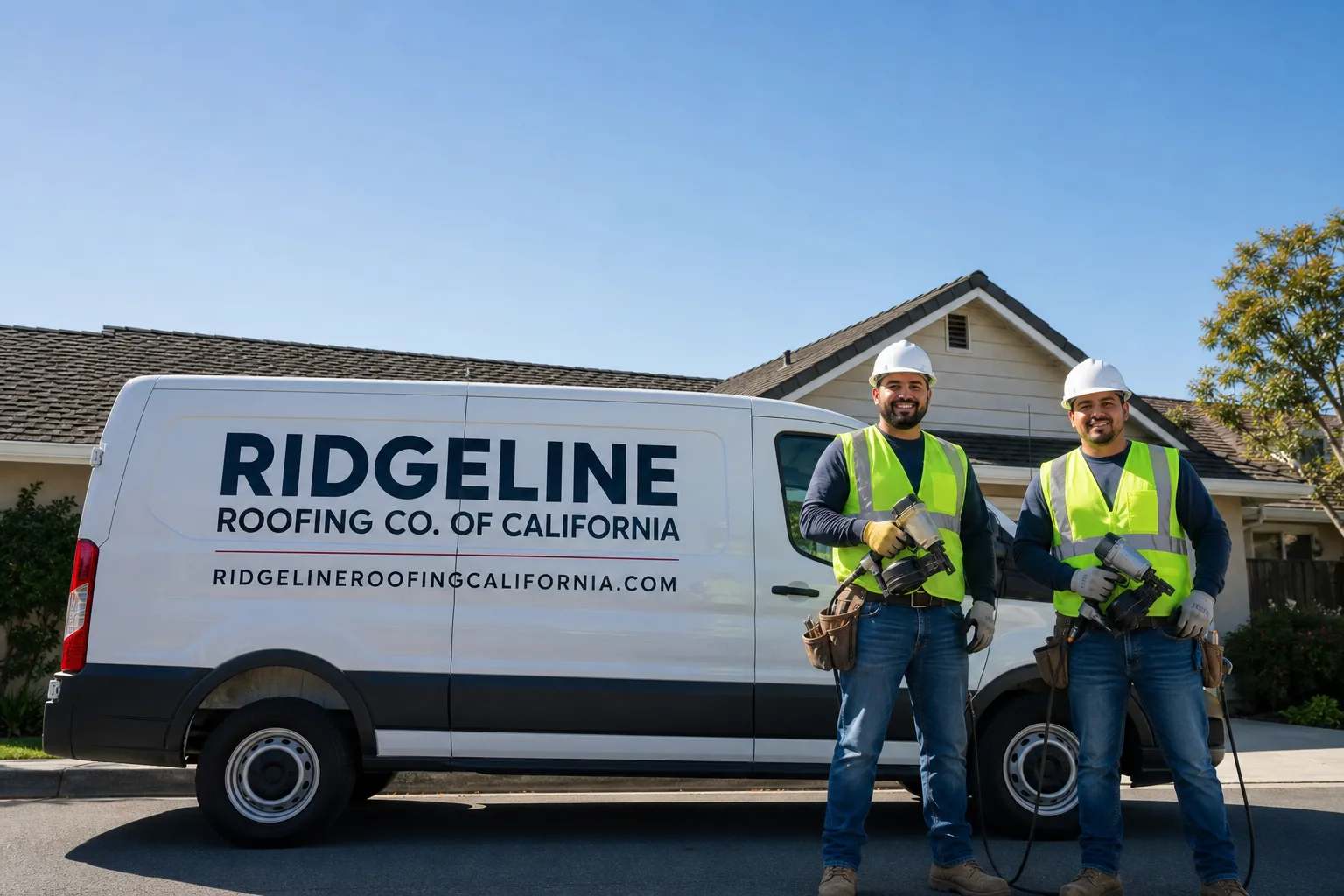
When a storm tears through San Francisco, the damage rarely waits for business hours. A lifted parapet cap on a shared Victorian rowhouse in the Mission, wind-stripped flashing on a Russian Hill flat roof, or fog-saturated membrane seams giving way in Noe Valley - we’ve handled all of it, and we know the clock is ticking. Our Emergency & Storm Damage team answers live calls 24 hours a day, and we dispatch crews from our Bay Area operations with same-day response to every San Francisco ZIP we cover, including 94127, 94101, 94102, and 94103. Call (877) 367-1429 now - the sooner we tarp it, the less you’ll rebuild.
Why Ridgeline Roofing Co. of California Is San Francisco’s Preferred Emergency & Storm Damage Company
We’ve been standing behind roofs since 1984 - over 42 years - and that longevity matters in a city where out-of-town storm chasers roll through after every major wind event, then vanish before the permits clear. We’re not that operation. We hire local crews, train apprentices into journeymen, and plan to be repairing San Francisco roofs thirty years from now.
Our technicians are background-checked, uniformed, and trained specifically on San Francisco’s building stock: the flat and minimally-sloped roofs hidden behind ornate Victorian and Edwardian facades, the shared party walls with common flashing, and the seismic details SFDBI inspectors enforce. Every inspection is photo-documented from your actual roof - not a scary speech in your driveway.
A live person answers every call, 24/7, including nights, weekends, and the middle of a storm. No voicemail trees. No callback windows. No leaving a homeowner stranded while water pools in the ceiling.
Our 90-Day Done Right Promise is written, not implied: if it’s not right, we come back and make it right. No paperwork runaround. No arguing. That’s the square deal San Francisco homeowners have come to expect from us.
Our Emergency & Storm Damage Services in San Francisco
Storm Damage Repair
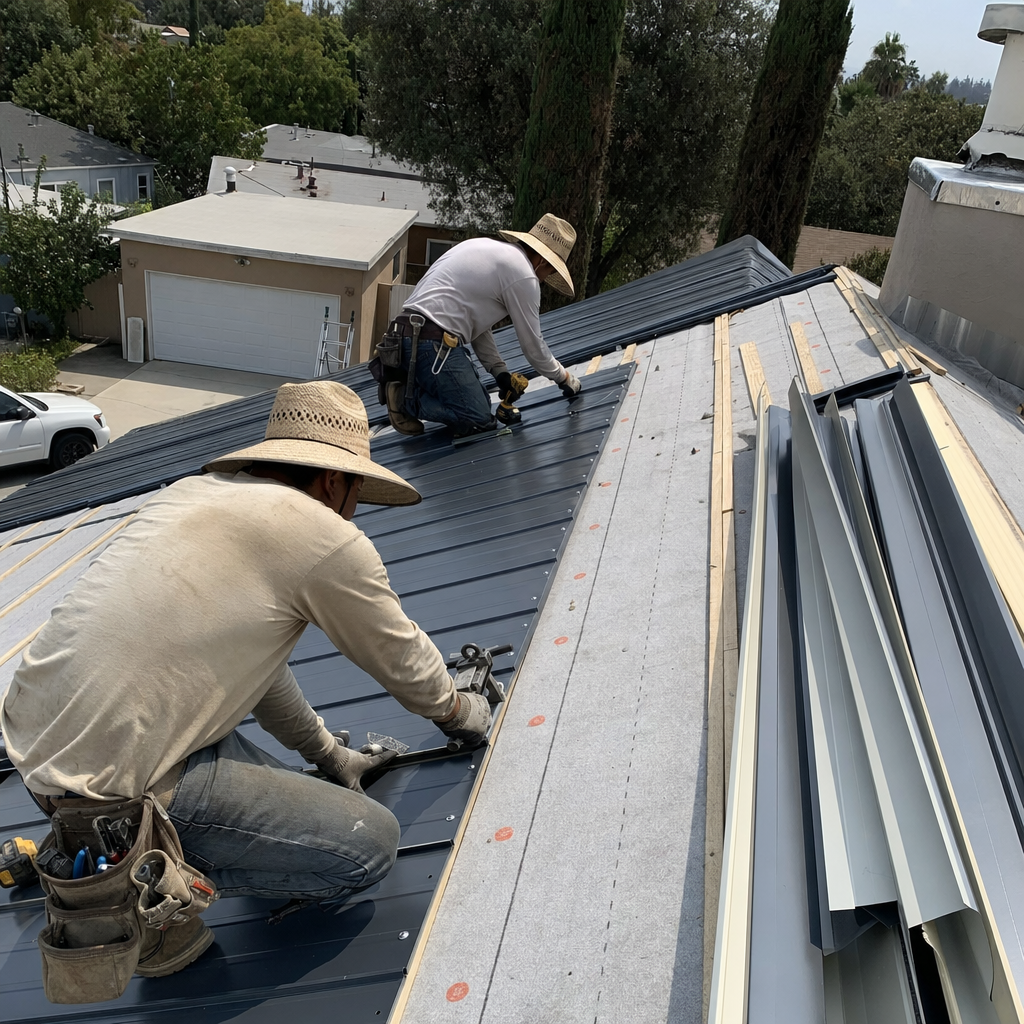
San Francisco’s storms don’t always announce themselves with drama. A February windstorm off the Pacific can lift a 12-foot section of parapet coping off a shared wall on Nob Hill, and the real damage unfolds weeks later as Karl the Fog saturates the exposed seam. After one such event near Hyde Street, our crew tarpped the gap and installed temporary metal counter-flashing to isolate the unit, then scheduled a full rebuild with seismically-rated fasteners to satisfy SFDBI’s Zone 4 requirements. We handle full tear-offs of accumulated tar-and-gravel BUR, membrane replacement with modified bitumen or TPO, and structural decking repair where water has compromised the substrate. Most storm damage repairs in San Francisco run $1,800-$4,500 depending on membrane type and whether the parapet wall requires rebuilding.
Emergency Tarp
Speed matters, but so does code compliance. An unpermitted tarp job by an out-of-town crew might stop the immediate leak, but it’ll fail SFDBI inspection if the temporary flashing attachments lack seismic accommodation. We install emergency tarps that bridge the gap between crisis and permanent repair - properly anchored, photo-documented, and designed to keep you dry through San Francisco’s fog-heavy shoulder seasons while we schedule the full restoration. Emergency tarp service in San Francisco typically costs $350-$850, including after-hours dispatch within the city limits.
Insurance Claims
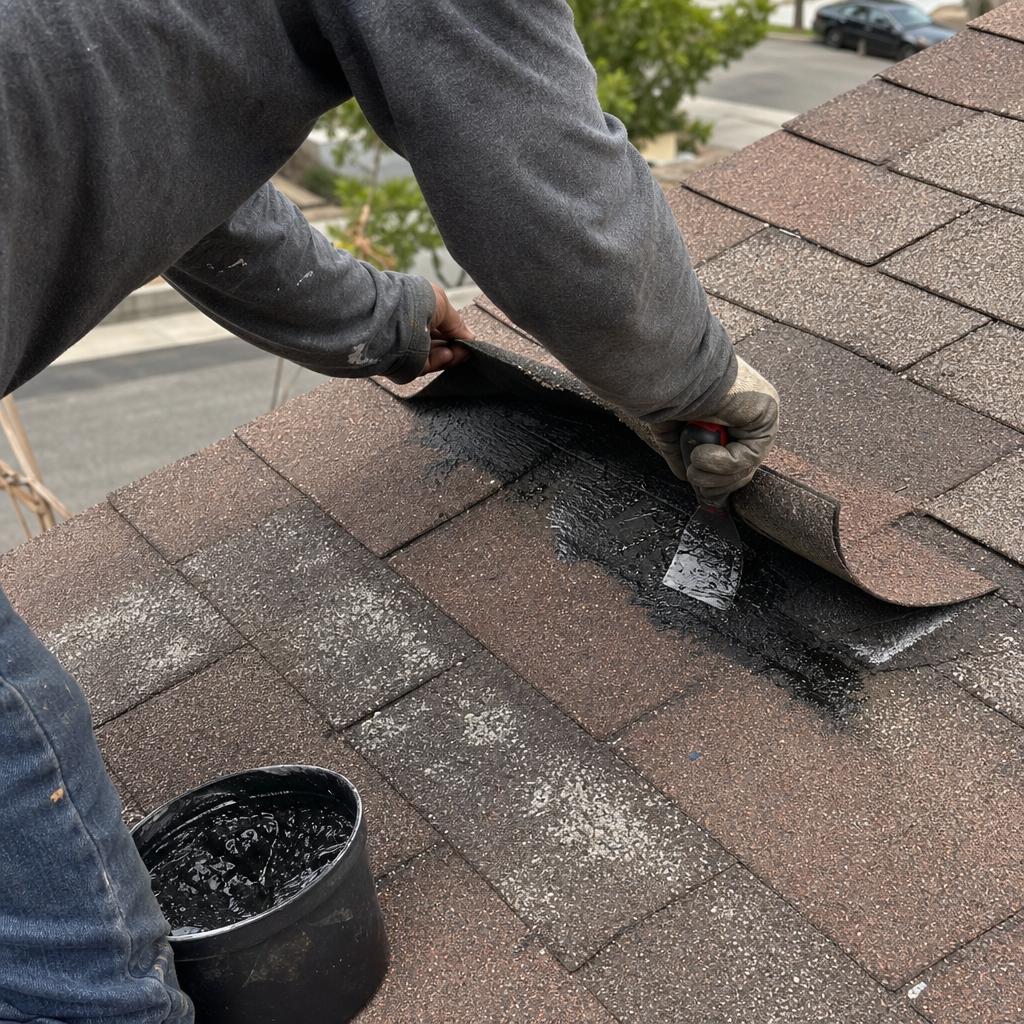
San Francisco homeowners often discover storm damage weeks after the event, when fog-wetted membrane seams finally delaminate and water stains appear on ceiling plaster. Insurance adjusters can be skeptical of delayed claims. We document everything - dated photos, moisture meter readings, membrane core samples showing the failure path - and we meet adjusters on-site to explain why San Francisco’s unique climate means damage manifests differently than in inland markets. Our claims support is included with every storm damage repair; there’s no separate fee for our advocacy.
Wind Damage
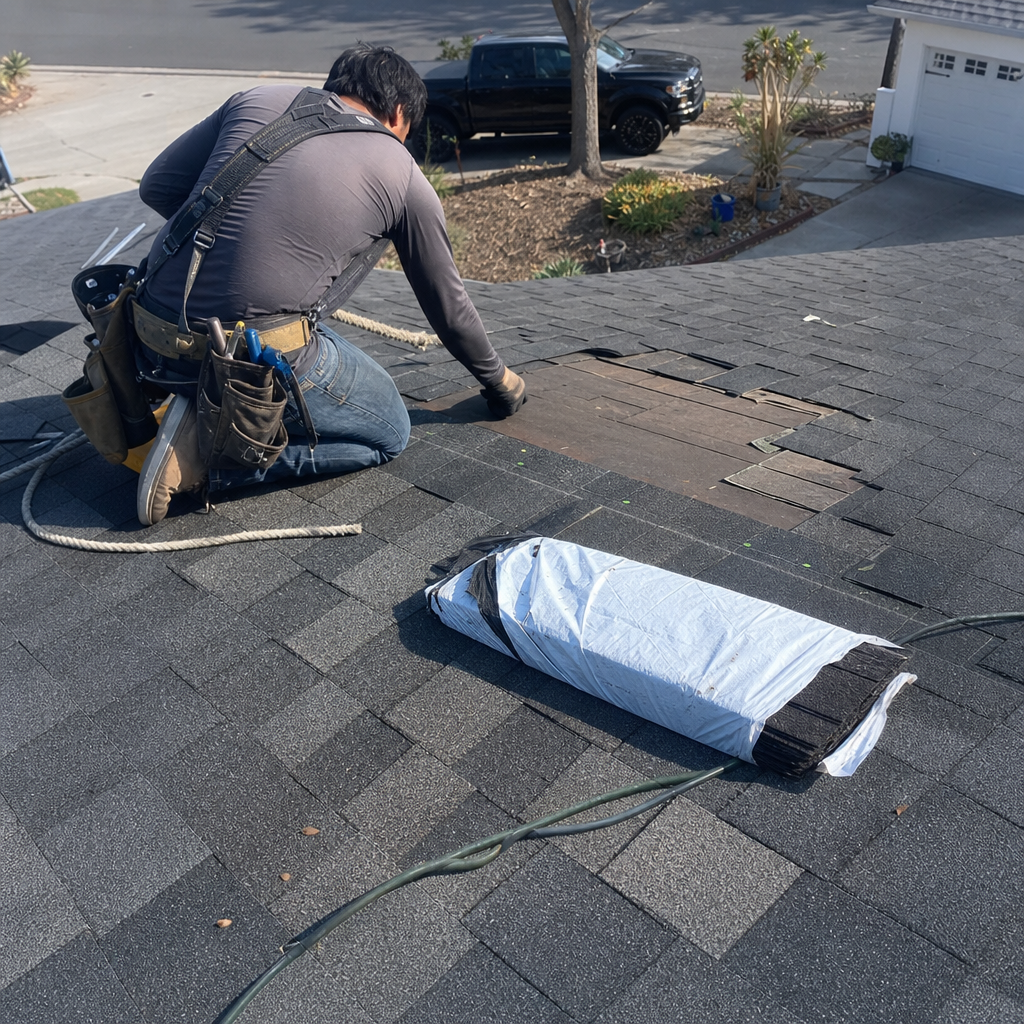
The Golden Gate gap funnels Pacific wind across Nob Hill and Russian Hill with surprising force, lifting inadequately fastened flashings on parapet walls that looked secure in calm weather. Victorian and Edwardian flats with flat roofs are especially vulnerable because the roof itself offers no aerodynamic relief - wind hits the parapet full-on. We inspect not just the obvious tear but the surrounding 20 feet of flashing, because wind load transfers stress in ways that show up six months later. Wind damage repairs on San Francisco flat roofs generally range $900-$2,400 for localized flashing work, $3,500-$7,500 if the parapet wall requires reconstruction.
What happens when you call
- 1
A real person answersNo phone trees - you reach a local pro.
- 2
You get an upfront price rangeHonest numbers before anyone is dispatched.
- 3
A background-checked tech heads outLicensed & insured, dispatched right away.
- 4
You approve before work beginsNothing starts until you say go.
Trusted Brands We Service in San Francisco
We are authorized installers for GAF, CertainTeed, Owens Corning, Atlas, Tamko, and Boral - and we stock membrane, flashing, and fastener inventory matched to San Francisco’s dominant flat-roof systems. For built-up roofing and modified bitumen, we source Atlas and Tamko products with proven performance in marine fog environments. When a Chinatown rowhouse needs matching tile for a parapet rebuild, or a SoMa live-work loft requires TPO with enhanced seam integrity, we don’t substitute. The material specified is the material installed. That keeps our turnaround tight and our warranties intact.
Common Emergency & Storm Damage Problems We See in San Francisco Homes
- Fog-wetted membrane seams delaminate weeks after a storm. Karl the Fog keeps roof surfaces damp for hours each morning even without rainfall, accelerating adhesive failure on BUR and modified bitumen seams that appeared intact during the initial inspection. The leak shows up as a slow ceiling stain in a Mission District flat, often mistaken for plumbing.
- Wind from the Golden Gate gap lifts loose parapet flashings on hillside homes. Nob Hill and Russian Hill properties catch the full force of funneled Pacific wind, peeling back metal flashings that were barely adequate in calm weather. The damage is invisible from street level until water enters the party wall.
- Unpermitted emergency tarps fail SFDBI inspection. Out-of-area crews unfamiliar with San Francisco’s Seismic Zone 4 requirements attach temporary flashing with standard fasteners that don’t accommodate structural movement. The tarp holds water temporarily, but the permit denial delays permanent repair and can void insurance coverage.
- Shared party walls transmit storm damage across entire rows. San Francisco’s zero-lot-line Victorian rowhouses have common flashing where roofs meet at the ridgeline or parapet. One lifted cap exposes the entire row to water intrusion, and neighbors may not discover the breach until mold appears in interior walls.
Pricing for Emergency & Storm Damage in San Francisco, CA
We’re plainspoken about numbers because San Francisco homeowners have dealt with enough contractors who bury the real cost in change orders. Here’s what we see in this market:
| Service | Typical Range in San Francisco |
|---|---|
| Emergency tarp (after-hours included) | $350 - $850 |
| Localized wind damage / flashing repair | $900 - $2,400 |
| Storm damage repair (membrane + decking) | $1,800 - $4,500 |
| Parapet wall reconstruction with seismic fasteners | $3,500 - $7,500 |
| Full flat-roof replacement (BUR tear-off, modified bitumen) | $8,500 - $18,000 |
These ranges reflect San Francisco’s specific conditions: the need for full BUR tear-offs before new membrane installation, SFDBI permit fees, and the seismic detailing that out-of-area crews often miss. The number on our estimate is the number on your invoice. Call (877) 367-1429 for a free, no-obligation assessment - we’ll photograph the damage, explain the repair path, and give you a written price before any work begins.
We Also Serve Cities Near San Francisco
Our Emergency & Storm Damage in San Francisco coverage extends throughout the dense urban core and into neighboring communities. We maintain fast response times to the Mission District, Noe Valley, Chinatown, and Visitacion Valley - each with its own building stock quirks, from Chinatown’s century-old masonry parapets to Visitacion Valley’s postwar tract homes with aging asphalt shingles. Wherever you are in the city, the same live-answer phone, same uniformed technicians, same 90-Day Done Right Promise applies.
Serving San Francisco, CA - Our Local Coverage Area
We’re based in the San Francisco area and know this community well. Use the map below to see our service coverage - if you’re nearby, we can almost certainly help.
FAQs - Emergency & Storm Damage in San Francisco
Yes, most re-roofing and parapet repair work in San Francisco requires a permit from the Department of Building Inspection, including like-for-like replacements on flat roofs. Emergency tarps are typically allowed as temporary weatherproofing without immediate permitting, but the permanent repair must comply with SFDBI’s Seismic Zone 4 flashing requirements. We handle permit applications as part of our standard workflow, and we design every repair to pass inspection the first time. Call (877) 367-1429 and we’ll walk you through the timeline.
We document the failure path with dated photos, moisture mapping, and membrane core samples that prove the storm initiated the damage, not maintenance neglect. San Francisco’s marine fog layer keeps roof surfaces damp year-round with no dry season for recovery, so adhesive failures and seam delamination often lag the actual wind event by weeks or months. Our inspection reports are structured specifically for insurance adjusters unfamiliar with this climate pattern. Call (877) 367-1429 for a free assessment - we’ll show you exactly what’s happening up there.
Flat roofs offer no aerodynamic relief - wind hits parapet walls full-on, and the Golden Gate gap accelerates that load across hillside neighborhoods like Nob Hill and Russian Hill. Unlike pitched roofs where wind flows over and away, flat roofs transfer lateral force directly to flashing attachments, which is why SFDBI requires seismically accommodating details that flex with structural movement. Out-of-area crews often miss this entirely, installing rigid flashing that fails in the next storm cycle.
Generally no - moss and algae accumulation from fog is considered a maintenance issue, not sudden storm damage. However, if a storm event compromises the roof membrane and fog-driven moisture then accelerates deterioration in the damaged area, the underlying storm damage is claimable and the secondary moss/algae impact becomes part of the repair scope. We document this distinction carefully during inspection. Call (877) 367-1429 and we’ll review your specific situation.
Daly City and Oakland’s flatlands are dominated by pitched asphalt shingle roofs with gravity-driven drainage, not the flat built-up roofing systems hidden behind San Francisco’s Victorian facades. The marine fog penetrates San Francisco’s dense urban core more persistently, and the city’s Seismic Zone 4 code creates flashing requirements that simply don’t exist elsewhere. An out-of-area roofer who works Daly City regularly will be unprepared for San Francisco’s parapet details and permit expectations.
Written by Cole Drummond, Owner at Ridgeline Roofing Co. of California, serving San Francisco since 1984.