
How to Choose the Right Roofing Company in Los Angeles
The right roofing company in Los Angeles is one you can find, reach, and hold accountable six months after the job is done. Look for a physical yard address held for years, a CSLB record with clean discipline history and active workers’ comp, written workmanship warranties with real terms, and photo-documented inspections that create a paper trail. If you’d rather not do the homework yourself, call Ridgeline Roofing Co. of California at (877) 367-1429 for a free estimate - we’ve been serving Los Angeles homeowners since 1984.
California’s CSLB database shows thousands of active C-39 roofing licenses in Los Angeles County. The license itself tells you almost nothing about whether the company will answer the phone after the first rain following your repair. We’ve been up on roofs in this city since 1984, and we’ve watched storm-chasing outfits roll through with fresh paint on their trucks and disappear before the paint dries. Here’s how to tell who’s built to stay.
How to Read a CSLB License Record Beyond “Active”
Every legitimate roofer in Los Angeles needs a C-39 license, but the green “Active” badge on the CSLB website is the floor, not the ceiling. Click through to the full record. Here’s what actually matters.
Bond amount: California requires a $25,000 contractor bond, but the record shows you when it was last verified. A bond that lapsed and reinstated recently can signal cash-flow trouble or a recent complaint payout.
Workers’ compensation exemption filings: If the license holder files an exemption claiming no employees, but shows up to your house with a five-man crew, that’s a misclassification that leaves you exposed if someone gets hurt on your property. In Los Angeles, where steep hillside lots and multi-story homes are common, this isn’t theoretical. We’ve seen homeowners learn the hard way.
Disciplinary actions: The full record shows suspensions, citations, and probation terms that the summary page hides. A roofer with a recent suspension for unlicensed work or contract violations is not a roofer who learned their lesson - they’re one who got caught.
At Ridgeline Roofing Co. of California home, we pull our own permits under our own license, carry active workers’ comp on every technician, and have kept the same CSLB record clean since 1984. We will show you the record ourselves if you ask.
The Questions That Separate Locals From Transients
Los Angeles is a magnet for high-volume roofing operations that chase hail, fire, and wind events across state lines. They rent a P.O. box, buy local phone numbers, and look indistinguishable from a company that’s been fixing roofs in Silver Lake for thirty years. These four questions cut through the facade.
- What is your physical yard address, and how long have you been there? A contractor with a leased yard, equipment stored on-site, and a sign that’s weathered five Los Angeles summers is not packing up overnight. Ask to drive by. A legitimate local has nothing to hide.
- Do you pull your own permits, or use a permit service? Permit services are not illegal, but they create distance between the contractor and the building department. A roofer who walks into the L.A. Department of Building and Safety themselves knows the inspectors, knows the local amendments, and has a reputation to protect.
- Who will be on my roof, and are they your employees? Subcontracted day laborers are common in storm-chasing operations. You want background-checked, uniformed technicians who the company trains and insures directly.
- Can I speak to a homeowner whose job you completed three or more years ago? Recent references are easy to manufacture. A roofer who’s been in Los Angeles long enough to have a 2021 customer still willing to vouch for them has passed the real test: time.
We hire local crews, train apprentices into journeymen, and have operated from the same Los Angeles-area yard for decades. Our technicians arrive in uniform with photo ID. The same standard we’d hold for work done in our own mother’s home.
Why Workmanship Warranties Beat Manufacturer Warranties for Repairs
Homeowners in Los Angeles often fixate on the 30-year or 50-year shingle warranty. For repair work, that misses the point. Manufacturer warranties cover defects in the shingle itself - they do not cover leaks caused by improper installation, inadequate flashing, or skipped underlayment. In our experience across Los Angeles neighborhoods from Venice to Eagle Rock, most repair callbacks trace to workmanship, not defective materials.
A real workmanship warranty should be written, specify the duration, define what “defect” means, and state who pays for the callback visit. Verbal promises like “we stand behind our work” are not enforceable. At Ridgeline, our 90-Day Done Right Promise is written: if it’s not right, we come back and make it right. No paperwork to file, no argument, no runaround.
When comparing estimates, ask to see the warranty document before you sign. If the contractor won’t produce it, they don’t have one.
Photo Documentation: The Accountability Signal
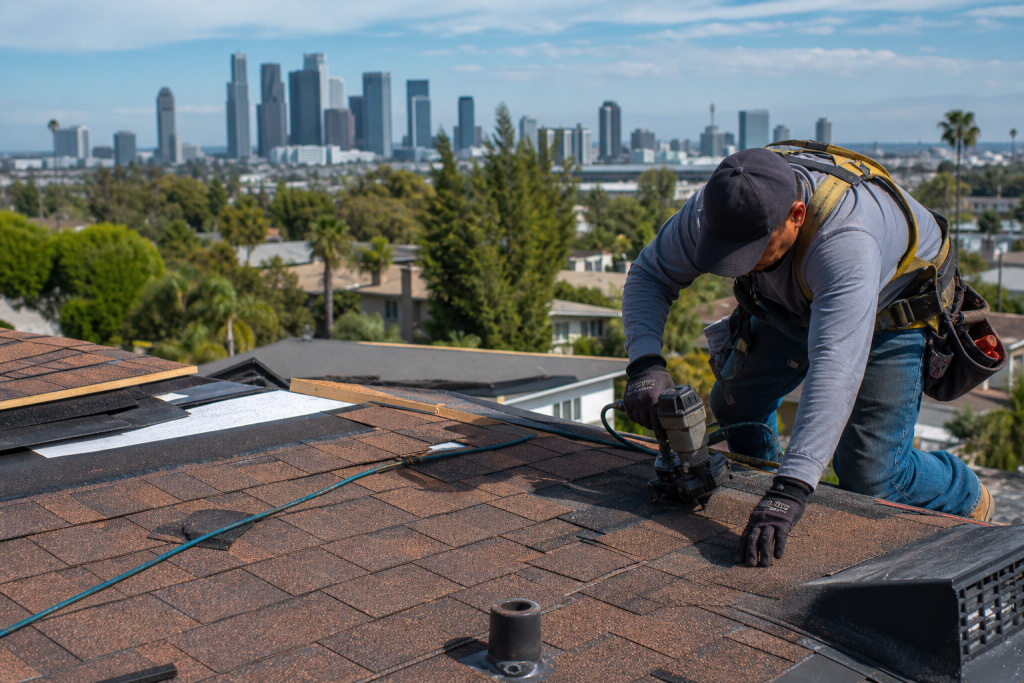
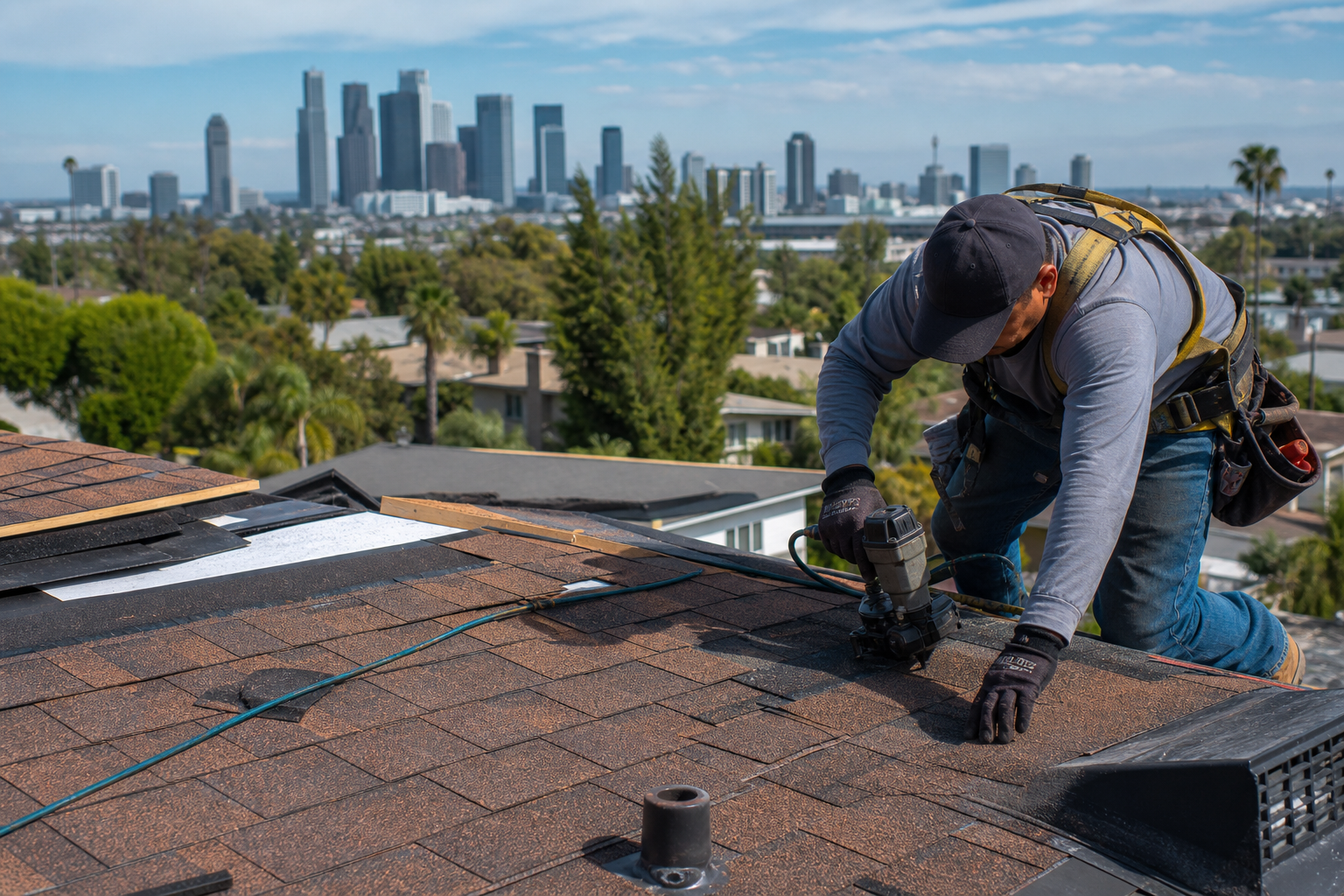
A contractor who shoots pre-job and post-job photos on a structured protocol is building a record they expect to stand behind, not one they expect you to forget. In Los Angeles, where tile roofs in the hills and flat roofs in the basin present completely different challenges, photos are how an honest company proves what they found and what they fixed.
Here’s what to look for:
- Date-stamped photos of the damage before any work begins
- Photos of the underlying deck and structure, not just the surface
- Documentation of materials used, including manufacturer labels
- Post-completion photos showing finished flashing, sealing, and cleanup
- A delivery method you can access later - email, cloud folder, or printed report
We document every inspection with photos taken from your actual roof, not a generic report pulled from a template. Last month in Los Feliz, we showed a homeowner time-stamped images of cracked underlayment beneath intact tiles that explained a leak no other contractor had traced. That record protects them, and it protects us. Named for the ridge - the line where a roof proves itself.
Los Angeles Post-Storm Red Flags
After every Santa Ana wind event, every hailstorm in the San Fernando Valley, every fire season that strips hillsides bare, the same pattern repeats. Out-of-state trucks with temporary magnetic signs. Door-to-door solicitors offering “free inspections” that always find damage. “Today only” pricing that pressures a decision before you’ve checked a single reference.
Here are the specific warning signs we’ve observed across four decades in Los Angeles:
- Out-of-state license plates on work trucks, especially combined with rental equipment
- Unsolicited door-knocking after weather events - legitimate roofers in Los Angeles do not need to hunt for work in your driveway
- Pressure to sign before insurance adjuster arrival - this often locks you into an assignment of benefits you don’t understand
- Demands for large upfront deposits - California limits down payments to $1,000 or 10% of the contract, whichever is less
- No local references from before the most recent storm - a telltale sign of a storm-chasing operation with no history in Los Angeles
We are not a storm-chasing outfit. We were here before the last fire season, and we’ll be here for the next thirty years. Roof Repair in Los Angeles is what we’ve done since 1984, and we plan to keep doing it.
When to call a pro: If your roof is leaking actively, if you notice sagging or daylight through the decking, or if a storm has dropped debris you can’t safely remove yourself, call a licensed roofer immediately. Water damage compounds fast in Los Angeles’s warm climate, and mold follows within 48 hours.
Related services in Los Angeles: For full roof replacement or new installation, see our Roof Replacement & Installation in Los Angeles page. For tile, slate, metal, or other non-standard systems, visit Specialty Roofing in Los Angeles.
Key Takeaways
- A CSLB license is the starting point - dig into bond history, workers’ comp status, and disciplinary records
- Verify physical yard address, permit-pulling practices, and employment structure to filter out transient operators
- Demand written workmanship warranties with defined terms; manufacturer warranties do not cover installation errors
- Photo documentation protocols signal a contractor who expects to be held accountable
- Post-storm pressure tactics, out-of-state vehicles, and “today only” pricing are reliable predictors of future unreachability
The Bottom Line
The hardest thing to verify about a roofing contractor in Los Angeles isn’t their license - it’s whether they’ll be reachable in six months if something fails. The vetting process above takes an afternoon, and it saves years of regret. A square deal means the price we quote is the price you pay, and the company you hire is the company that answers when you call.
If you’re in Los Angeles and need help cutting through the noise, Ridgeline Roofing Co. of California offers free estimates with no-hassle upfront pricing. A live person answers every call, 24 hours a day, including nights, weekends, and the middle of a storm. Call (877) 367-1429 and we’ll walk you through what your roof actually needs.
Frequently Asked Questions
Most reputable roofing companies in Los Angeles offer free inspections for standard residential roofs. If a contractor charges for an initial inspection, ask what it includes - some specialty assessments, like thermal imaging or structural engineering reviews, carry a fee. At Ridgeline, our standard inspections are free, and we include photo documentation. Call (877) 367-1429 to schedule.
Repair is the better choice when damage is isolated to less than 25% of the roof surface and the underlying structure is sound. Replacement makes sense when shingles are nearing end of life, when multiple leak points appear, or when repairs would cost more than half the price of a new roof over a five-year span. In Los Angeles, where sun exposure degrades asphalt faster than in cooler climates, age matters as much as visible damage. We offer a free second opinion on any written estimate to help you decide.
Verify any contractor through the CSLB website at cslb.ca.gov using their license number. Check that the license is active, the bond is current, and workers’ compensation coverage is in place unless the holder has a valid exemption. Cross-reference the business name and address against what the contractor gave you. Discrepancies are a reason to walk away.
A proper estimate lists materials by manufacturer and product line, labor scope, permit costs, start and completion dates, payment schedule, and warranty terms. It should specify who handles debris removal and who pulls permits. Vague line items like “roofing system” or “all necessary materials” are red flags. At Ridgeline, the number on the estimate is the number on the invoice - no surprises.
Written by the team at Ridgeline Roofing Co. of California, serving Los Angeles since 2014.
Need Roofing Help?
Call Ridgeline Roofing Co. of California - licensed & insured, here with fast after-hours help in Los Angeles.
(877) 367-1429