
Fast, Reliable Specialty Roofing Across Valley Village
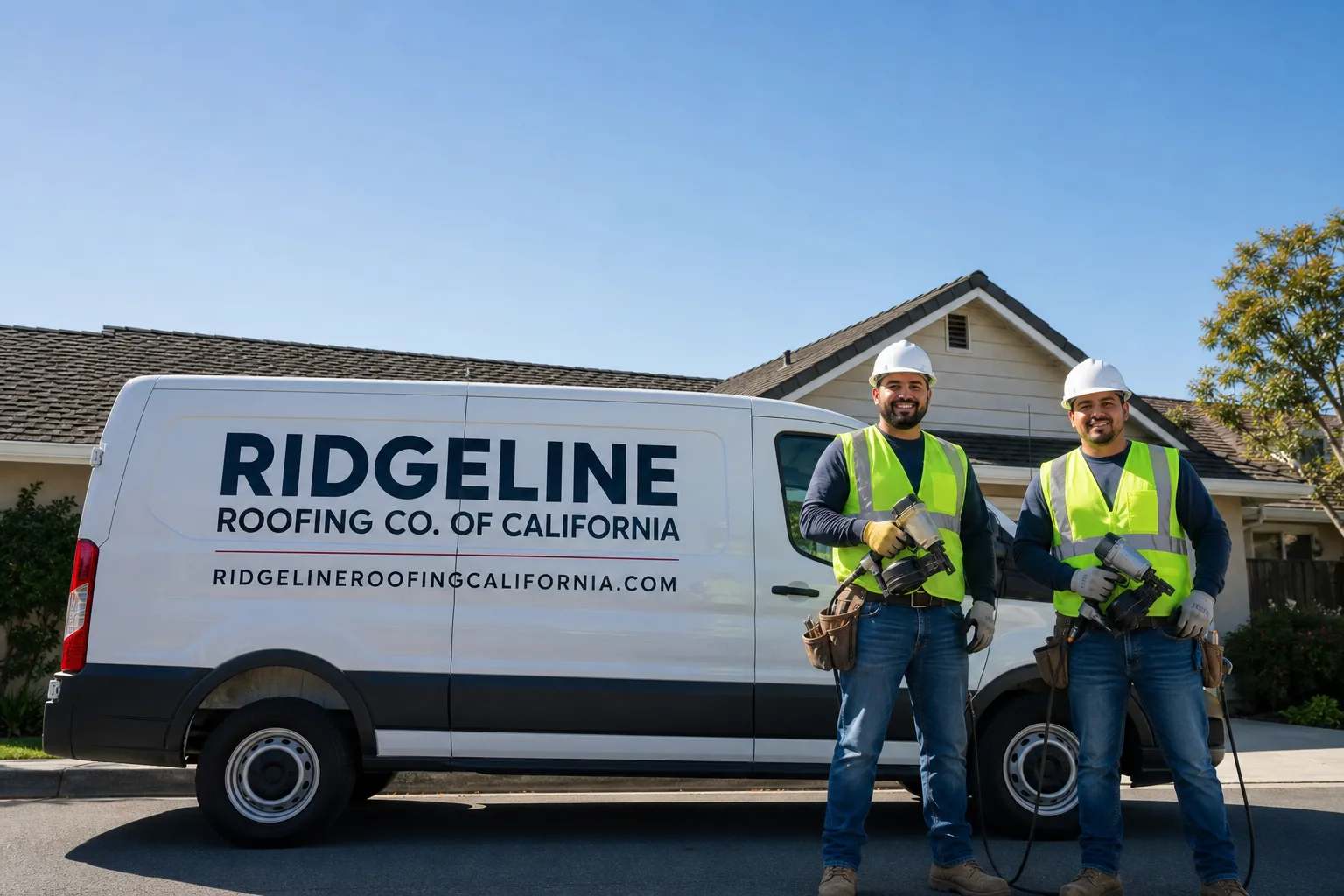
Valley Village homeowners with low-slope roofs on post-war ranches need a crew that understands what 105°F summers and three-layer layovers do to a roof. We’re Ridgeline Roofing Co. of California, and we’ve been serving the San Fernando Valley since 1984. Our technicians are on Valley Village roofs every week, from the original 1950s bungalows near Magnolia Boulevard to the stucco infill homes off Laurel Canyon. If you’ve got a flat patio cover that’s leaked since last winter, or you’re staring at bubbling shingles on a 4:12 pitch, call us at (877) 367-1429. A live person answers, day or night.
Why Ridgeline Roofing Co. of California Is Valley Village’s Preferred Specialty Roofing Company
We’ve been driving to Valley Village since the neighborhood was still considered part of North Hollywood. That matters because we know the housing stock here, the permit history, and the specific failures that repeat on the same street plans. Our Specialty Roofing in Valley Village work is backed by the same 90-Day Done Right Promise we’ve honored for over 42 years: if it’s not right, we come back and make it right, no paperwork, no arguing.
Our customers in Valley Village call us because we show up when we say we will, in uniform, with photo-documented inspections from your actual roof, not a sales pitch in the driveway. We’ve earned a strong local reputation here, built on repeat calls from neighbors who’ve seen our trucks on Colfax Street, Hartsook Street, and along the Burbank Boulevard corridor. Our phones are staffed by a live person 24 hours a day, including weekends and storm nights, because a roof that starts leaking at 2 a.m. doesn’t wait for business hours.
Our Specialty Roofing Services in Valley Village
TPO Roofing
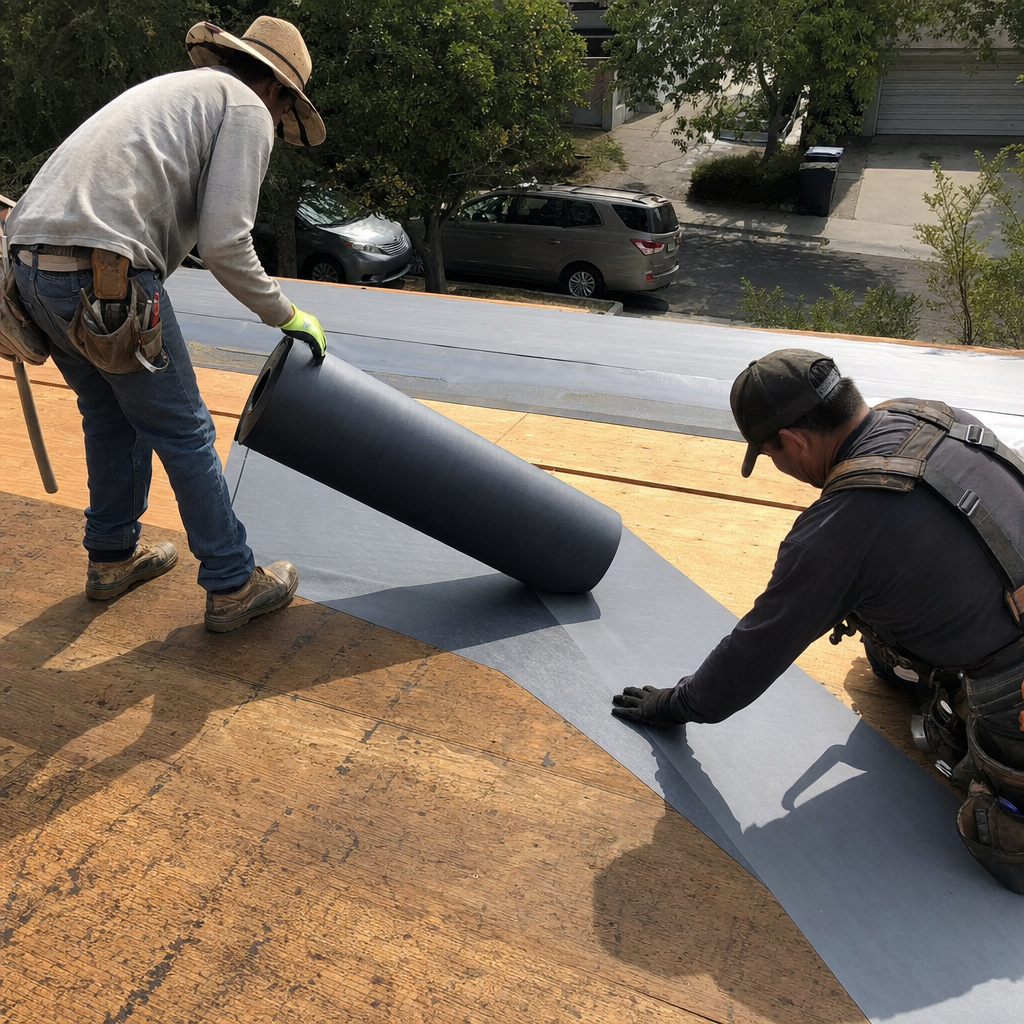
TPO, or thermoplastic polyolefin, is what we install most often on Valley Village’s low-slope ranch additions and patio covers. The white reflective surface fights the San Fernando Valley’s extreme heat, dropping roof surface temperatures significantly compared to black modified bitumen or improperly applied dark shingles. On that 1950s ranch on Colfax Street, we tore off an original built-up roof that had been covered with three layers of asphalt shingles, an improper prior layover that trapped moisture and rotted the plank sheathing. We replaced it with a fully adhered TPO membrane, adding a solar-ready collar for future panels, solving the chronic leaks that plagued the homeowner every winter rain. For a typical TPO installation on a Valley Village patio cover or low-slope section, expect $8,500-$14,000 depending on square footage and whether we need to replace heat-damaged sheathing underneath.
Modified Bitumen
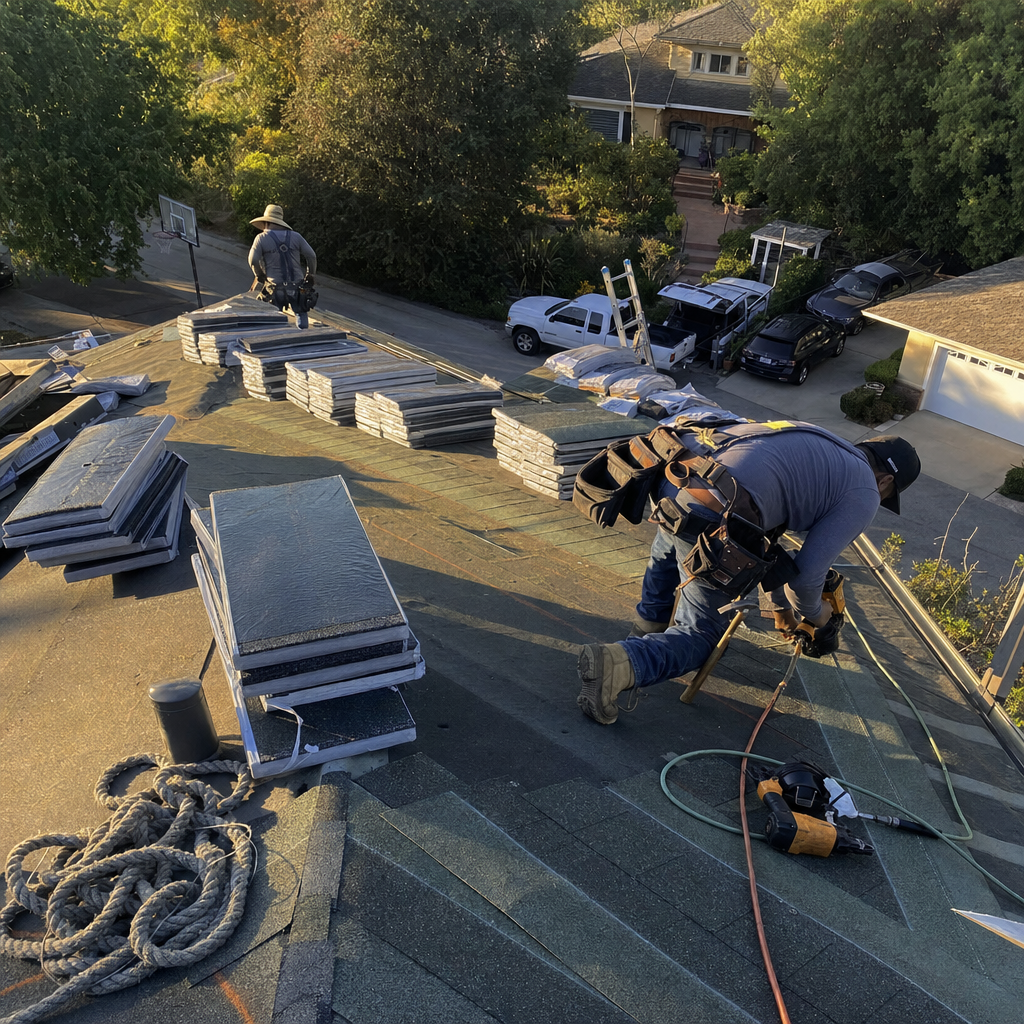
Modified bitumen remains a reliable choice for Valley Village’s 2:12 to 4:12 pitch roofs, especially where homeowners want the durability of asphalt-based materials with better heat flexibility than standard shingles can provide. The Valley’s temperature swings, 105°F afternoons dropping to 65°F after sunset, cause standard shingles to crack within 5-7 years when applied too flat. Modified bitumen’s SBS or APP modifiers let the membrane expand and contract without splitting. A typical modified bitumen installation on a Valley Village ranch home runs $7,000-$12,500, with tear-off and sheathing replacement adding $2,000-$4,500 if prior layovers have hidden rot.
Built-Up Roofing
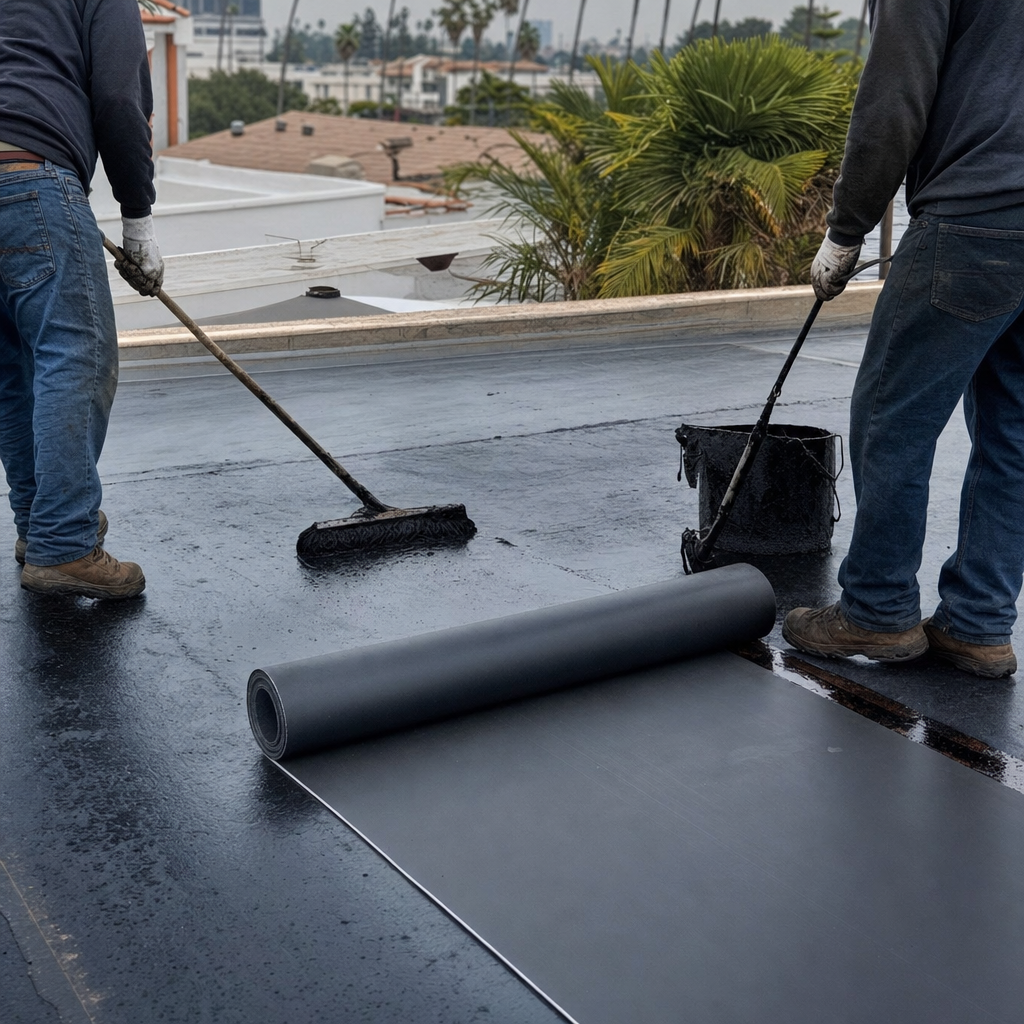
Built-up roofing, or BUR, is the original system on many of Valley Village’s 1945-1965 homes, layers of asphalt and felt built up into a monolithic surface. When we encounter a sound original BUR deck, we can sometimes restore it with a proper flood coat and reflective surfacing. More often, decades of Valley heat have baked the asphalt brittle, and the system needs complete replacement. Full BUR replacement on a Valley Village home typically costs $9,000-$16,000, with the higher end reflecting extensive sheathing replacement after moisture damage from leaf debris accumulation against parapet walls.
Solar Ready Roofing
Valley Village’s flat and low-slope roofs are ideal for solar panel arrays, but only if the roof beneath is designed for it. Our solar-ready installations integrate reinforced mounting points, proper conduit routing, and membrane collars that won’t compromise the waterproofing. Given the neighborhood’s mature liquid amber and ficus canopy, we also spec systems that allow for panel cleaning access without damaging surrounding tree limbs. Solar-ready TPO or modified bitumen installation adds roughly $1,500-$3,500 to a standard roof replacement, but eliminates the cost of cutting into a new membrane later.
What happens when you call
- 1
A real person answersNo phone trees - you reach a local pro.
- 2
You get an upfront price rangeHonest numbers before anyone is dispatched.
- 3
A background-checked tech heads outLicensed & insured, dispatched right away.
- 4
You approve before work beginsNothing starts until you say go.
Trusted Brands We Service in Valley Village
We don’t substitute materials. As an authorized installer for GAF, CertainTeed, Owens Corning, Atlas, Tamko, and Boral, we order exactly what your roof needs and keep common Valley Village profiles in regional stock for faster turnaround. For TPO and modified bitumen work, we work with manufacturer-certified membrane systems rated for the San Fernando Valley’s UV exposure and Santa Ana wind uplift. The materials arrive with the job, not after a delay that leaves your roof open to the next heat wave.
Common Specialty Roofing Problems We See in Valley Village Homes
- Heat-accelerated granule loss on low-slope roofs. Standard shingles applied at 2:12 or 3:12 in Valley Village lose protective granules to UV oxidation twice as fast as manufacturer projections predict. The asphalt underneath cracks within 5-7 years, and the homeowner calls us wondering why a “20-year roof” failed in half that time. The answer is almost always improper material selection for the pitch and climate.
- Moisture trapping from tree debris on flat patio covers. Valley Village’s signature street trees are beautiful, but their leaves and seed pods accumulate against parapet walls and around HVAC curbs on the flat add-on covers common to 1950s ranches. The debris holds moisture through seven dry months, then the first winter rain soaks it against the roof surface. By the time leaks appear inside, the original plank sheathing is often rotted through.
- Improper prior layovers adding hidden structural stress. We regularly encounter Valley Village homes with two, three, even four layers of shingles stacked over original built-up roofing. Each layer adds weight the post-war framing wasn’t designed for, and every layer traps more heat. When we tear off, we frequently find heat-split board sheathing and moisture rot that was invisible from the surface.
- Santa Ana wind uplift on poorly secured low-slope membranes. Fall wind events in the San Fernando Valley generate sustained gusts that test every seam and penetration. Membranes that weren’t fully adhered or properly mechanically fastened lift at the edges, creating channels for water intrusion that may not leak until the first significant rain.
Pricing for Specialty Roofing in Valley Village, CA
Here’s what we’ve actually quoted on Valley Village homes in the past 18 months. These are real ranges, not teaser prices that change once we’re on your roof.
| Service | Typical Range in Valley Village |
|---|---|
| TPO membrane (low-slope, full replacement) | $8,500 - $14,000 |
| Modified bitumen (low-slope, full replacement) | $7,000 - $12,500 |
| Built-up roofing (BUR, full replacement) | $9,000 - $16,000 |
| Solar-ready upgrade (added to membrane roof) | $1,500 - $3,500 |
| Tear-off with sheathing replacement (per 100 sq ft) | $2,000 - $4,500 |
| Seasonal inspection and tune-up | $89 |
What moves you within these ranges? Square footage is obvious, but in Valley Village the bigger variables are sheathing condition after tear-off and whether we need to reframe for proper drainage on flat additions that were originally built without adequate slope. We quote upfront, the number on the estimate is the number on the invoice, and estimates are free. Call (877) 367-1429 to schedule.
We Also Serve Cities Near Valley Village
Our crews work throughout the central San Fernando Valley, including Valley Village, North Hollywood, Studio City, Sherman Oaks, and Valley Glen. If you’re near the border, call us, we’ll tell you honestly whether you’re in our daily rotation or whether a trusted colleague is closer.
Serving Valley Village, CA - Our Local Coverage Area
We’re based in the Valley Village area and know this community well. Use the map below to see our service coverage - if you’re nearby, we can almost certainly help.
FAQs - Specialty Roofing in Valley Village
No, and doing so would likely violate Los Angeles building code, which limits residential roofs to two layers maximum. More importantly, your post-war ranch framing wasn’t designed for the dead load of three or four shingle layers, and each layer traps more heat against the original sheathing. We tear off to bare sheathing on every Valley Village job, inspect for heat splits and moisture rot, and install the proper low-slope membrane your pitch requires. Call (877) 367-1429 for a free tear-off assessment.
Because flat patio covers on Valley Village’s 1950s ranches were often built with minimal slope, original built-up roofing, and no parapet flashing details that can handle seven dry months followed by intense winter rain. The mature liquid amber and ficus trees that define the neighborhood’s character drop debris that traps moisture against walls and curbs. By the time water shows inside, the plank sheathing is often rotted. We solve this with properly sloped substrates, TPO or modified bitumen membranes, and debris-clear detailing. Call us for an inspection that includes photos from your actual roof.
You need a roof designed for the additional penetrations and load, installed by a crew that understands both roofing and solar integration. Our solar-ready TPO and modified bitumen systems include reinforced mounting zones, conduit sleeves, and membrane collars that maintain waterproofing integrity. Given Valley Village’s extreme heat, we also spec lighter-colored reflective membranes that improve panel efficiency by reducing ambient roof temperature. Most solar-ready roof replacements run $1,500-$3,500 above standard membrane costs. Call (877) 367-1429 to discuss your panel plans before you sign with an installer.
No, bubbling or blistering shingles are never normal, but they’re especially common in Valley Village’s climate when standard shingles are applied to low pitches or without adequate attic ventilation. The San Fernando Valley floor traps heat that bakes shingles from above while trapped attic air cooks them from below. On 4:12 pitches common to 1980s stucco infill homes, we often recommend upgrading to a proper low-slope membrane or, if the pitch allows, a steep-slope shingle rated for extreme UV exposure with enhanced ventilation. A free inspection will tell us which path makes sense for your specific roof.
For a true 4:12 pitch in Valley Village’s climate, we typically recommend modified bitumen or a high-quality TPO membrane over standard asphalt shingles. The heat cycling here, 105°F days and rapid evening drops, causes shingles to lose flexibility and crack far faster than manufacturer warranties predict. Modified bitumen’s rubberized asphalt handles the expansion and contraction; TPO’s white reflective surface reduces thermal load on both the membrane and your home’s cooling system. Either system, properly installed, will outlast a shingle roof in this climate by a decade or more. Call (877) 367-1429 for a free estimate on the right system for your specific roof.
Written by Cole Drummond, Owner at Ridgeline Roofing Co. of California, serving Valley Village since 1984.