
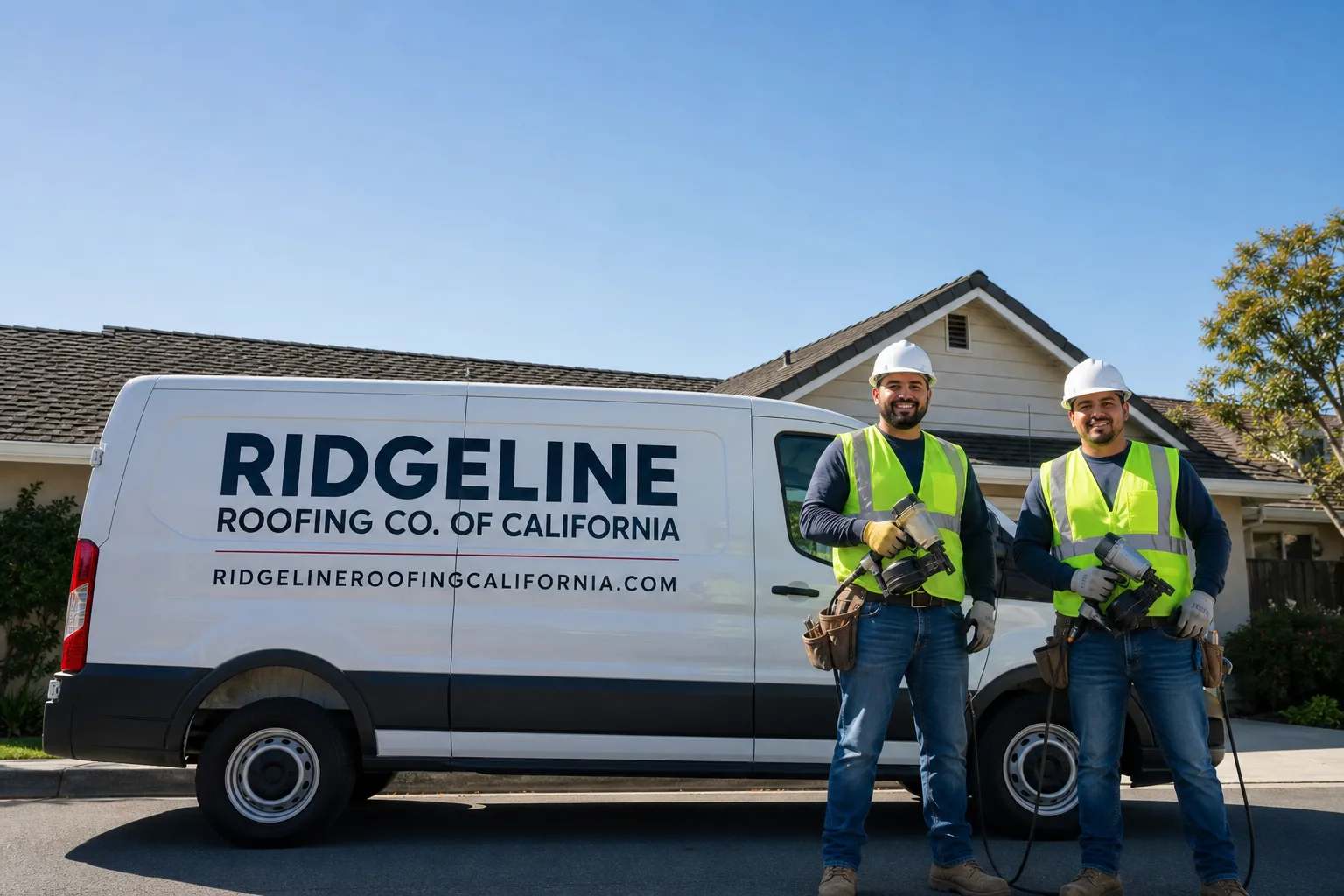
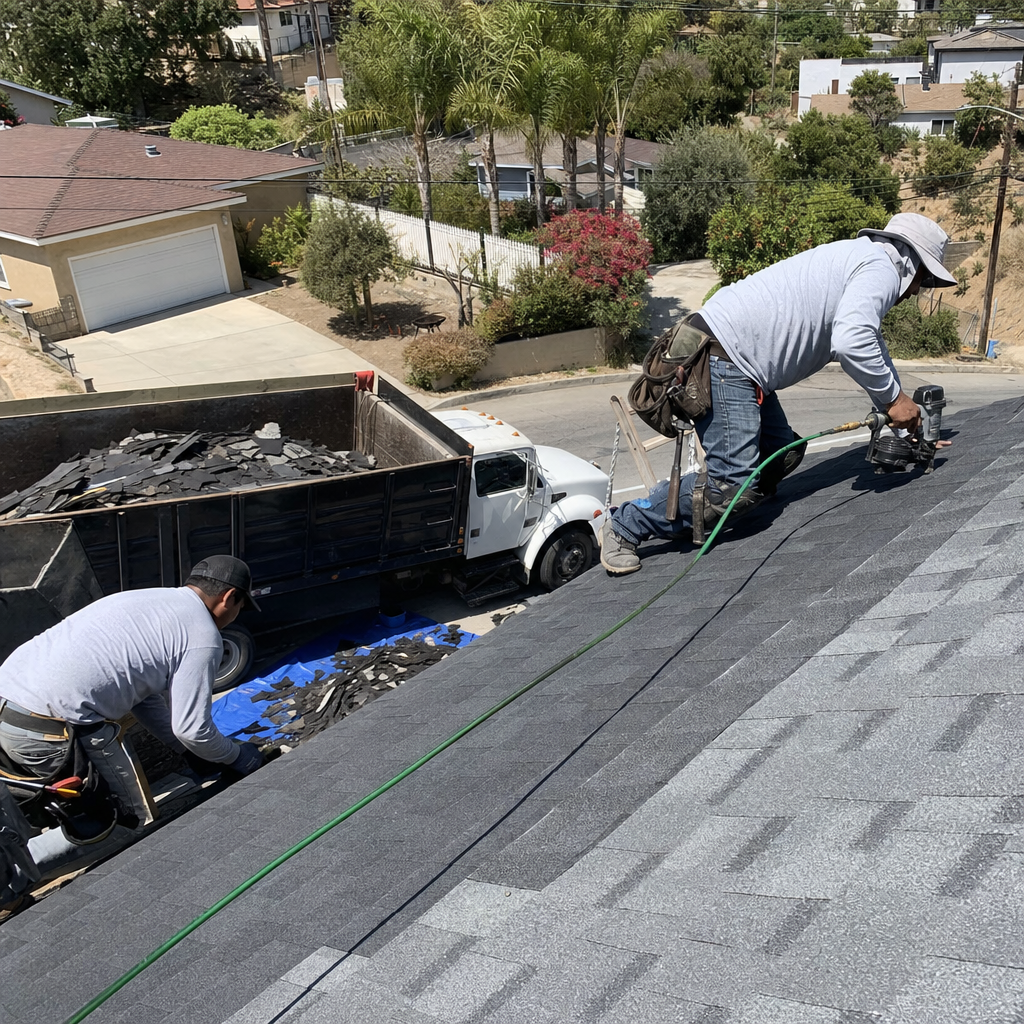
Fast, Reliable Specialty Roofing Across Topanga
Specialty roofing in Topanga, California typically costs between $12,500 and $38,000 depending on material and access complexity, with most fire-code-compliant installations completed in 5-10 working days. Our crews have been climbing Topanga’s steep canyon slopes since 1984, and we know the difference between a roof that merely covers and one that holds against Santa Ana winds, coastal fog, and the fire inspector’s tape measure.
We answer our phones live, 24 hours a day, at (877) 367-1429. A real person, not a menu tree. If you’re in the 90290 ZIP, off Topanga Canyon Boulevard, up on Saddle Peak Road, or tucked behind Entrada Road, we’ll get there. The canyon’s narrow roads and steep driveways slow everyone down, but they don’t stop us. We’ve hand-carried roofing materials up dirt switchbacks, navigated permits for artist-built structures that predate modern codes, and replaced fire-illegal wood shakes with Class A-rated systems that keep insurance policies intact. That’s the work we do here.
Why Ridgeline Roofing Co. of California Is Topanga’s Preferred Specialty Roofing Company
We’ve been serving Los Angeles County homeowners for over 42 years, and Topanga has always been a distinct market in our schedule. Not a suburb we pass through on the way somewhere else. The canyon’s VHFHSZ fire zone status, its non-standard housing stock, and its brutal access logistics have taught us what flatland contractors learn the hard way, or never learn at all.
Our technicians are background-checked, uniformed, and trained to document every inspection with photos from your actual roof, not the driveway. We back every specialty roofing job with our written 90-Day Done Right Promise: if it’s not right, we come back and make it right. No paperwork to file, no argument, no runaround. The price we quote is the price you pay. A square deal, plain and simple.
We are authorized installers for GAF, CertainTeed, Owens Corning, IKO, Atlas, Tamko, and Boral. That means proper materials specified to code, no substitutions pulled from a leftover pile. In a fire zone where the wrong membrane grade can void your coverage, that matters.
Our Specialty Roofing Services in Topanga
TPO Roofing
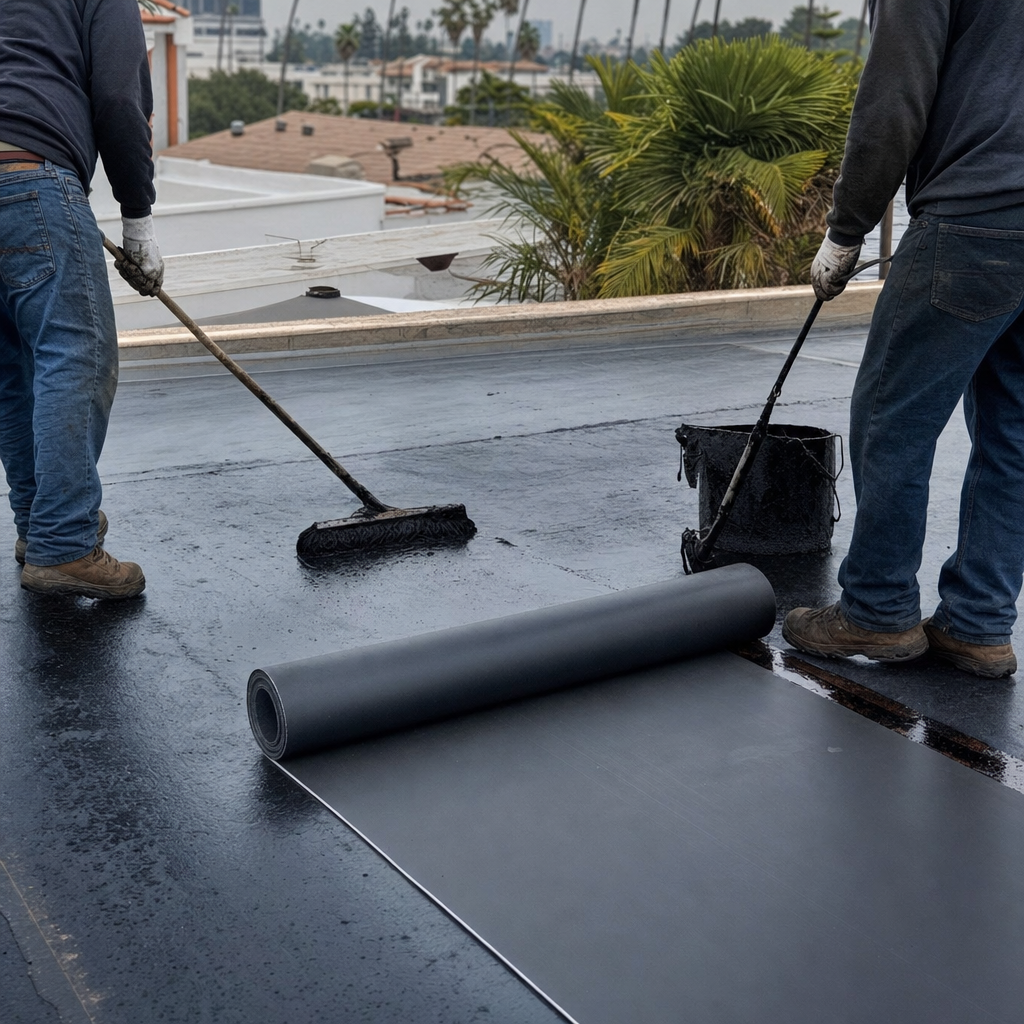
TPO single-ply membrane has become our most-specified specialty system for Topanga’s flat and low-slope roofs, especially on the 1960s-70s hillside retreats with irregular additions. The white reflective surface cuts cooling loads on south-facing planes that bake above the canyon fog line, and fully adhered seams withstand Santa Ana wind uplift better than mechanically attached systems in exposed ridge locations. A typical TPO installation on a Topanga cabin runs $14,000-$22,000, though steep access can push labor higher. On a recent job off Entrada Road, we found existing modified-bitumen membrane cracked from wind uplift and deck moisture from trapped coastal fog. We installed new TPO with fully adhered seams and stainless steel fasteners, then hand-carried all 48 rolls up a narrow dirt switchback because the delivery truck couldn’t navigate the driveway. That’s standard practice here, not an exception.
EPDM Roofing
EPDM rubber membrane remains a cost-effective choice for detached studios, guest houses, and the flat roof sections common on Topanga’s post-WWII rustic cabins. The material handles thermal cycling well, but in this canyon it demands specific attention: standard black EPDM absorbs heat that accelerates degradation on unshaded planes, while white-on-black laminated products perform better. More critically, Santa Ana winds will lift improperly fastened EPDM at eaves and ridges, creating entry points for embers during fire season. We specify ballasted or fully adhered installation with reinforced perimeter fastening, not the shortcut mechanical attachment some crews use. Typical EPDM work in Topanga ranges $12,500-$18,500. Every installation we do meets Class A fire-rating requirements, no exceptions.
Modified Bitumen
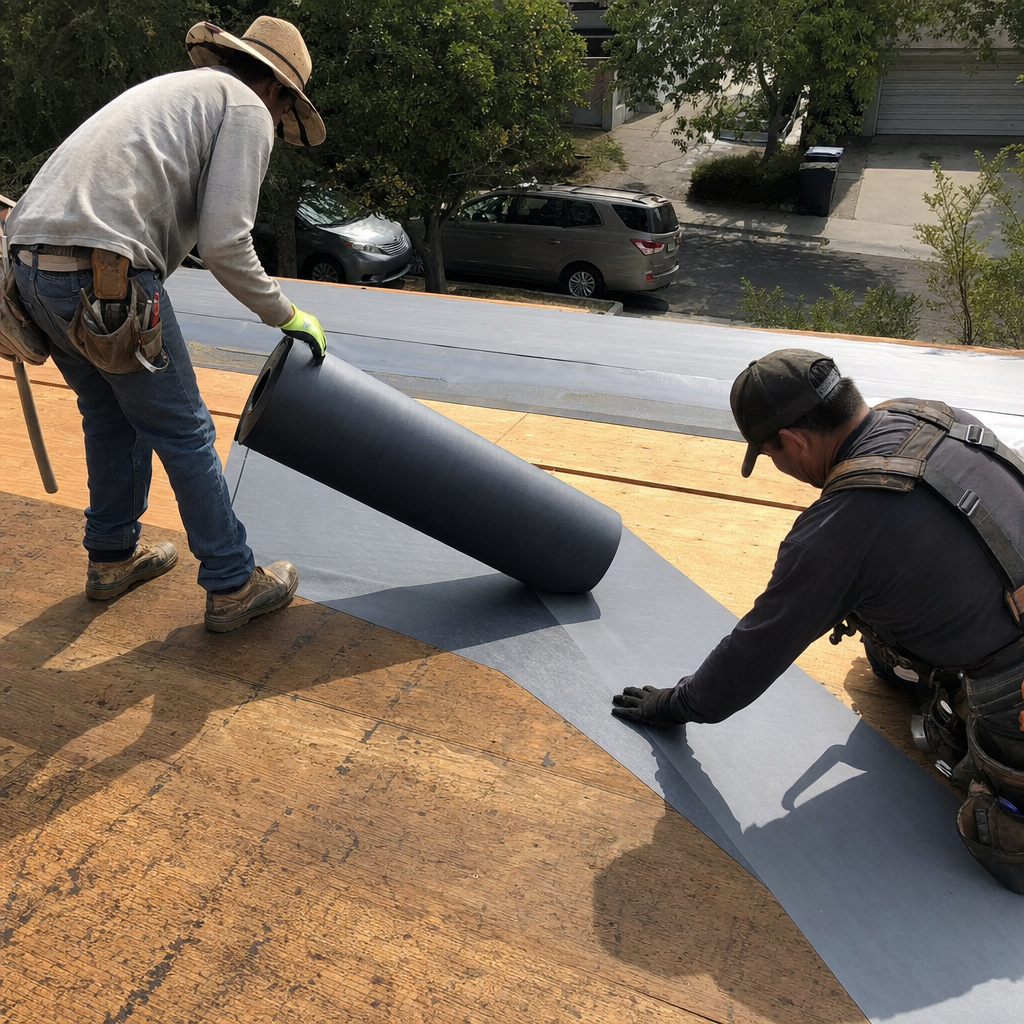
Modified bitumen still covers many older Topanga structures, and we replace more of it than we install new. The material cracks from thermal stress and wind fatigue faster here than inland, and the torch-applied installation method carries obvious risks in a Very High Fire Hazard Severity Zone. When we do specify modified bitumen, it’s cold-applied or self-adhering products only, with enhanced fire-resistant mineral surfacing. For homeowners with existing modified bitumen showing alligator cracking or seam separation, we typically recommend upgrading to TPO or a multi-ply built-up system with fire-rated cap sheet. Replacement costs run $13,000-$20,000 depending on deck condition and access difficulty.
Solar Ready Roofing
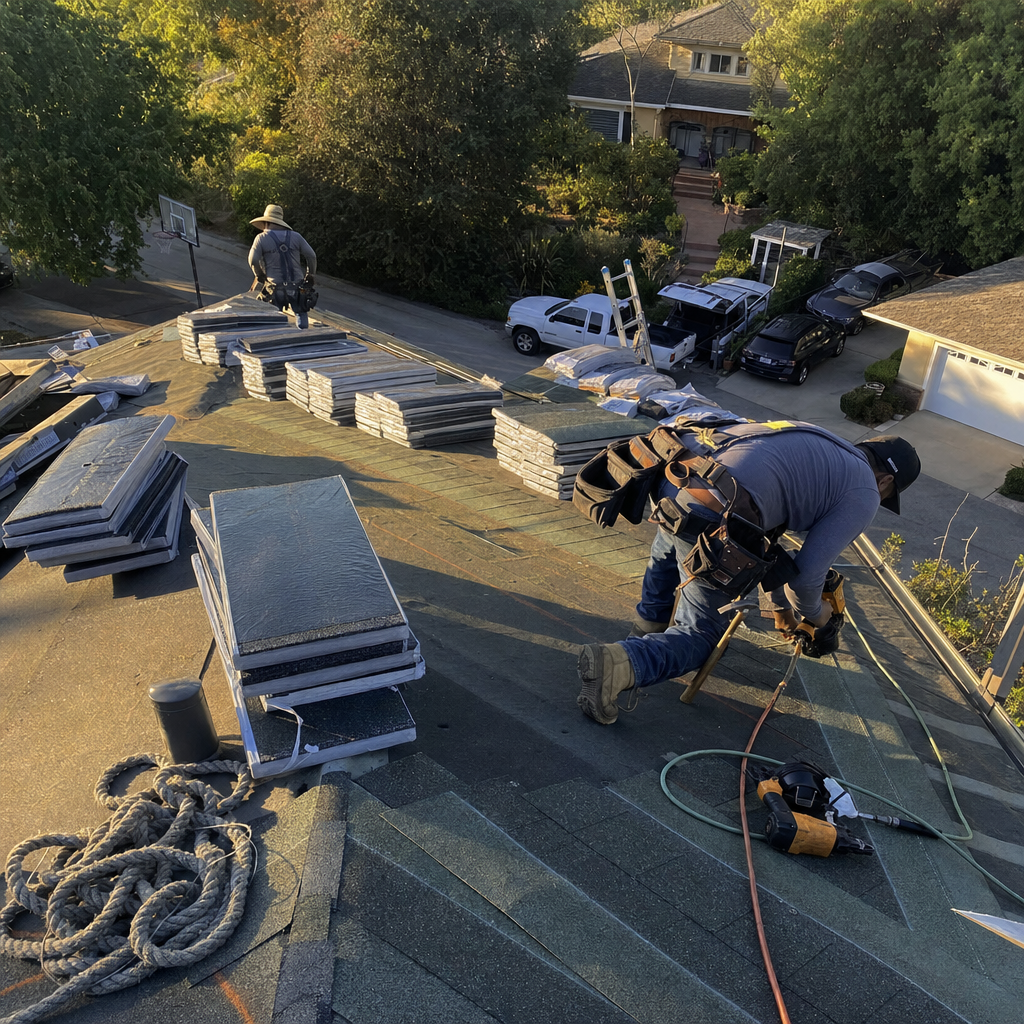
Topanga’s south-facing canyon slopes get excellent solar exposure, but installing panels over a roof that won’t outlast them is false economy. Our solar-ready specialty roofing integrates structural reinforcement, leak-proof penetrations, and Class A fire-rated decking into one system. We coordinate with your solar contractor or can recommend partners we’ve worked with on previous Topanga installations. The upfront investment runs $16,000-$28,000 for the roofing substrate alone, but it eliminates the $8,000-$15,000 cost of removing and replacing panels when the underlying roof fails prematurely.
Built-Up Roofing and Green Roof Systems
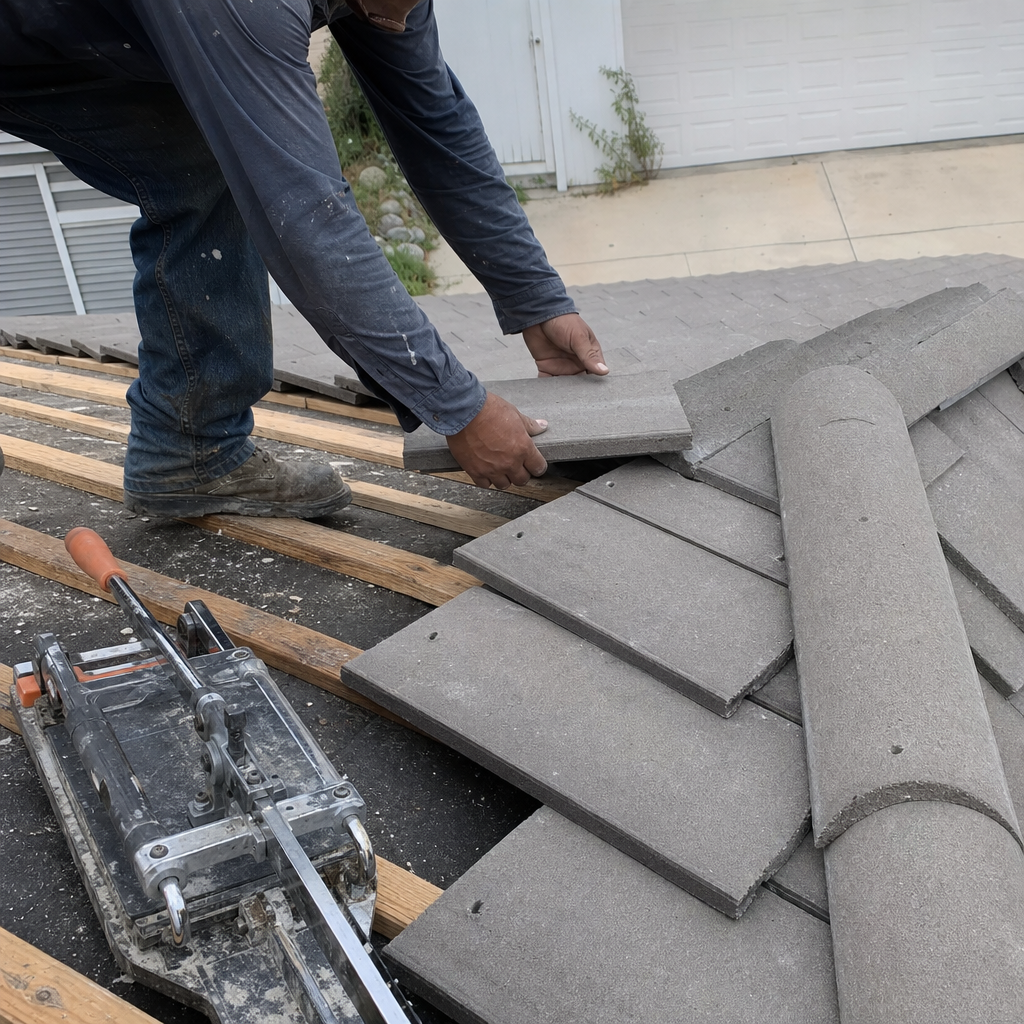
Built-up roofing with fire-rated gravel surfacing still serves certain commercial and mixed-use structures in Topanga, though residential applications have declined. Green roof systems, while appealing for stormwater management and insulation, face practical constraints on steep canyon lots where structural load limits, irrigation access, and fire-code vegetation restrictions make implementation complex. We’ve evaluated several Topanga properties for green roof feasibility and found most hillside sites unsuitable without major structural reinforcement. Where conditions permit, we partner with specialized structural engineers familiar with Santa Monica Mountains geology. Honest assessment, not optimistic salesmanship.
What happens when you call
- 1
A real person answersNo phone trees - you reach a local pro.
- 2
You get an upfront price rangeHonest numbers before anyone is dispatched.
- 3
A background-checked tech heads outLicensed & insured, dispatched right away.
- 4
You approve before work beginsNothing starts until you say go.
Trusted Brands We Service in Topanga
We stock and install GAF, CertainTeed, Owens Corning, Atlas, Tamko, and Boral products, with most common membrane rolls, flashing components, and fasteners available without the two-week lead times that plague specialty orders. For Topanga’s fire-code environment, we specify GAF’s EverGuard and CertainTeed’s Flintlastic lines most frequently, both carrying the Class A ratings required under California law for re-roofs in VHFHSZ zones. We don’t substitute. The brand on your estimate is the brand on your roof. Our warehouse in the greater Los Angeles area maintains inventory specifically for coastal fire-zone applications, so we’re not waiting on a truck from Fresno while your exposed decking takes another week of fog and wind.
Common Specialty Roofing Problems We See in Topanga Homes
- Coastal salt fog corrosion. Marine moisture funneled up the canyon accelerates galvanized metal flashing and fastener head corrosion within 5-7 years, causing premature failure at roof penetrations and valleys. We specify stainless steel fasteners and coated flashing in every Topanga specification.
- Santa Ana wind uplift. Fall wind events in the Santa Monica Mountains lift improperly fastened EPDM and modified-bitumen membranes at eaves and ridges, creating tear-offs and water intrusion during the most dangerous fire season. Our crews test every seam and specify enhanced perimeter fastening.
- Persistent damp on north-facing planes. Canyon walls shade north-facing roof sections that never fully dry, promoting mold and algae growth that degrades asphalt shingle granules and reduces fire resistance. We recommend TPO or coated metal for these exposures, not standard composite shingles.
- Non-compliant legacy roofing. Many original wood shakes and cedar shingles on 1940s-60s cabins remain in place despite California’s Class A mandate for re-roofs. We document existing conditions, navigate permit requirements with LA County, and specify replacement systems that satisfy both code and insurance underwriters.
Pricing for Specialty Roofing in Topanga, CA
| Service | Typical Range in Topanga | Notes |
|---|---|---|
| TPO Roofing (residential) | $14,000 - $22,000 | Fully adhered; stainless fasteners; access-dependent |
| EPDM Roofing | $12,500 - $18,500 | Ballasted or adhered; fire-rated surfacing |
| Modified Bitumen Replacement | $13,000 - $20,000 | Cold-applied only; no torch in fire zone |
| Solar Ready Roofing | $16,000 - $28,000 | Structural reinforcement; leak-proof penetrations |
| Built-Up Roofing | $15,000 - $24,000 | Fire-rated gravel or cap sheet surfacing |
| Green Roof (where feasible) | $28,000 - $45,000+ | Requires structural engineering; limited applicability |
Three factors push Topanga pricing above comparable work in Woodland Hills or Calabasas: the Class A fire-rated materials required by law, the labor-intensive material handling on narrow canyon roads, and the non-standard roof geometries common on hillside construction. Topanga Canyon Boulevard’s constrained width blocks large flatbed deliveries on most jobs, forcing our crews to shuttle materials in pickup loads or carry them by hand. That adds labor hours to every project, but it’s unavoidable if the work is going to get done right.
We provide no-hassle upfront pricing: the number on your written estimate is the number on your invoice. No surprises, no add-ons discovered mid-job. Estimates are free. Call (877) 367-1429 to schedule.
We Also Serve Cities Near Topanga
Our Specialty Roofing crews regularly work throughout the Santa Monica Mountains and adjacent communities, including Topanga, Las Flores, Calabasas, Woodland Hills, and Pacific Palisades. Each area presents distinct conditions, from Calabasas’s suburban tract roofing to Pacific Palisades’s coastal exposure, but Topanga’s combination of fire-zone restrictions, canyon access constraints, and non-standard housing stock remains uniquely demanding. We adjust our materials, our labor planning, and our delivery logistics for each location rather than applying a one-size-fits-all approach.
Serving Topanga, CA - Our Local Coverage Area
We’re based in the Topanga area and know this community well. Use the map below to see our service coverage - if you’re nearby, we can almost certainly help.
FAQs - Specialty Roofing in Topanga
Yes. California law requires Class A fire-rated roofing on all re-roofs in Topanga’s Very High Fire Hazard Severity Zone, effectively banning wood shakes, cedar shingles, and certain lower-rated composite products still found on older canyon cabins. We specify only Class A membranes, metal, or tile systems, and we handle permit documentation to prove compliance for your insurance underwriter. Non-compliant materials can trigger policy cancellation in a market where homeowners’ insurance in this canyon is already increasingly difficult to retain. Call (877) 367-1429 and we’ll review your existing roof and specify compliant replacement options.
Coastal salt fog funneled up the canyon accelerates galvanized metal corrosion by 40-60% compared to inland LA conditions, attacking flashing and fastener heads within 5-7 years instead of the 12-15 years typical in Calabasas or Woodland Hills. We specify stainless steel fasteners and coated aluminum or copper flashing on every Topanga job, even where standard galvanized would technically meet code. The incremental material cost pays for itself in longevity. If your flashings are showing orange streaks or lifting at seams, call for a free inspection.
Probably not. Green roofs require flat or gently sloped structural decking, substantial load-bearing capacity, and reliable irrigation access. Most Topanga hillside lots exceed slope limits, lack the structural reinforcement for saturated growing medium, and present fire-code vegetation restrictions that complicate plant selection. We’ve evaluated multiple canyon properties and found green roof implementation feasible on only one, which required $18,000 in structural engineering and reinforcement before planting began. We’ll assess your site honestly rather than selling an impractical system. Call for a realistic evaluation.
Topanga Canyon Boulevard’s narrow width near most residential driveways blocks large flatbed deliveries, so we plan every job assuming shuttle logistics. Our crews transfer materials to pickup trucks at staging areas, then carry bundles by hand up steep dirt paths when necessary. On the Entrada Road TPO job, we moved 48 membrane rolls up a dirt switchback in 80-pound loads. This adds labor time and cost to nearly every Topanga project, but it’s the only way to get proper materials to the roof. We build this into our upfront pricing, not as a surprise add-on.
TPO single-ply membrane with fully adhered seams performs best on persistently damp north-facing planes in Topanga’s canyon environment. The material doesn’t rely on granular surfacing that mold and algae degrade, and the white reflective surface sheds moisture faster than absorptive alternatives. We avoid standard asphalt shingles on these exposures, even Class A-rated products, because biological growth compromises both appearance and fire performance over time. For a specific recommendation on your roof’s orientation and shading, call (877) 367-1429 for a free inspection and written estimate.
Ready to protect your Topanga home with specialty roofing built for fire zone, wind, and coastal exposure? Call Ridgeline Roofing Co. of California at (877) 367-1429. A live person answers 24 hours a day, including nights, weekends, and the middle of a storm. We’ll schedule your free estimate, provide upfront pricing with no surprises, and back every job with our written 90-Day Done Right Promise. Done right - and if it’s not, we make it right.
Written by Cole Drummond, Owner at Ridgeline Roofing Co. of California, serving Topanga and Los Angeles County since 1984.