
Fast, Reliable Specialty Roofing Across Pleasanton
Specialty roofing in Pleasanton, CA typically costs $8,500-$24,000 depending on system type, with most inspections scheduled same-day and repairs completed within 48 hours. Our Specialty Roofing team has worked on homes from downtown’s Craftsman-era streets to the concrete-tile neighborhoods of Birdland and Vintage Hills, and we understand the specific failures this valley climate produces.
We’re Ridgeline Roofing Co. of California, and we’ve been climbing Pleasanton roofs since 1984. Our office fields live calls 24/7 at (877) 367-1429, and our crews know the difference between a roof that looks sound and one that actually is. In Pleasanton, those are often two different things.
The Livermore Valley heat, the Altamont Pass winds, and that wave of 1980s-1990s tract construction have created a roofing environment you won’t find in Dublin or San Ramon. We’ve learned to read the signs.
Why Ridgeline Roofing Co. of California Is Pleasanton’s Preferred Specialty Roofing Company
We’ve been serving Pleasanton homeowners for over 42 years, long enough to have re-roofed the same house twice for families who planned to stay forever. That’s the customer we built this company for: the homeowner who remembers the last contractor who cut corners, who wants the job done once, and who values a square deal over a low bid from a truck that won’t be in town next spring.
Our reputation here is local and specific. We’ve worked on concrete tile roofs in Vintage Hills where the tiles outlasted three generations of underlayment. We’ve replaced TPO systems in Hacienda Business Park that were original to the 1989 building shell. Our technicians are background-checked, uniformed, and trained to document every inspection with photos from your actual roof - not a sales speech in your driveway.
When you call (877) 367-1429, a live person answers. Nights, weekends, the middle of a January windstorm - no voicemail trees, no callback windows. We know that a leak doesn’t wait for business hours, and neither do we.
Every job carries our 90-Day Done Right Promise: written, no paperwork runaround, no arguing. If it’s not right, we come back and make it right. That’s been our standard since 1984, and it’s why Pleasanton homeowners still call us.
Our Specialty Roofing Services in Pleasanton
TPO Roofing for Pleasanton Commercial and Residential Flat Roofs
TPO single-ply membrane has become the standard for low-slope roofs across Hacienda Business Park and the commercial corridors along Stoneridge Drive. The reflective white surface handles Pleasanton’s 95-105°F summer days better than dark built-up systems, cutting attic and plenum temperatures significantly. We install TPO from GAF and CertainTeed with mechanically attached or fully adhered systems, depending on wind exposure.
Here’s the local factor most contractors miss: the sustained afternoon westerlies funneling through the Altamont Pass gap create real uplift stress on west- and southwest-facing flat roofs. A TPO system in Pleasanton needs proper fastening patterns and perimeter securement designed for that wind load, not just a generic California install. We’ve replaced too many prematurely failed TPO roofs where the membrane was fine but the attachment was underspecified for valley conditions.
EPDM Roofing for Pleasanton’s Low-Slope Applications
EPDM rubber membrane remains a proven choice for certain commercial applications and residential additions in 94566 and 94588. The black surface absorbs heat, which can be an advantage in winter but demands careful insulation design in Pleasanton’s summer intensity. We install both ballasted and mechanically attached EPDM systems, with seam tapes and flashings rated for the thermal cycling this climate produces.
For buildings near the 680 corridor or exposed hilltop sites, we specify reinforced EPDM with polyester scrim to resist the wind fatigue that standard membranes can’t handle long-term.
Green Roof Systems in Pleasanton
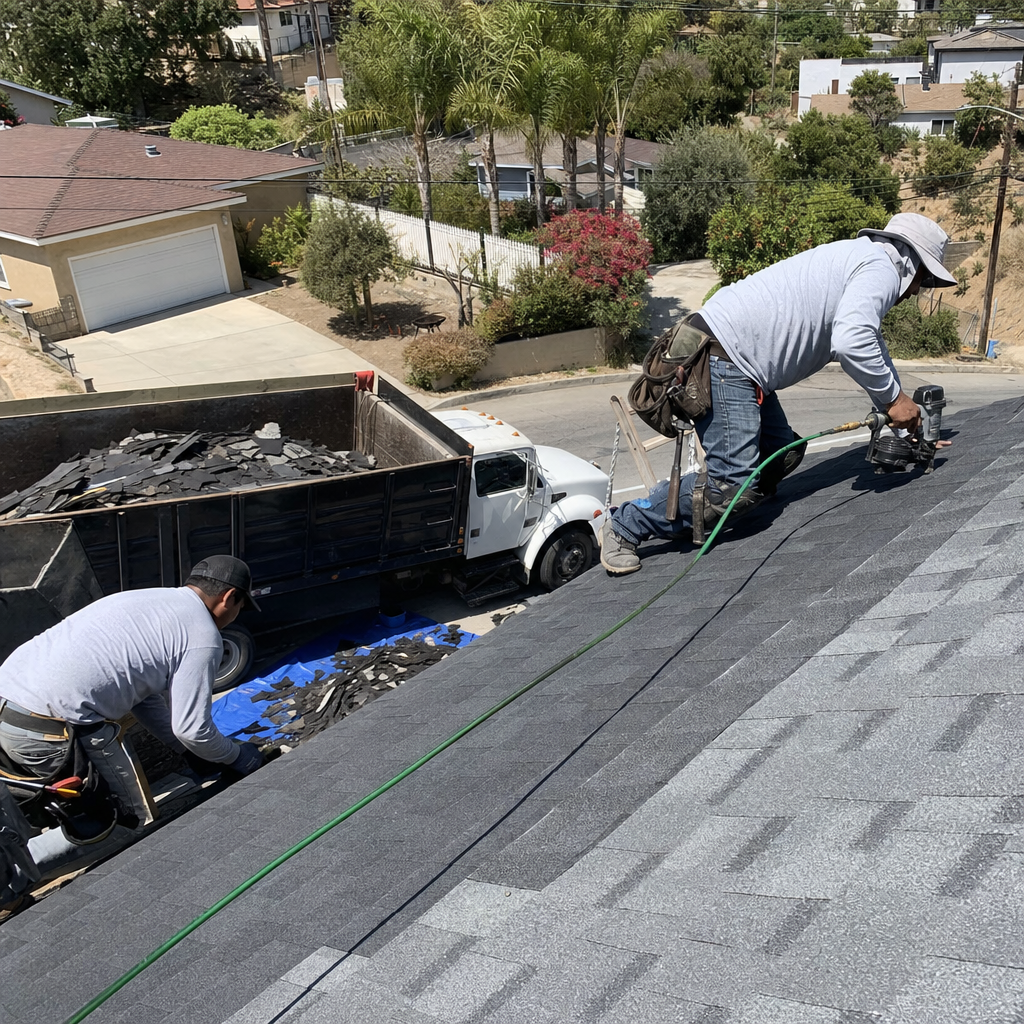
Green roofs - vegetated assemblies with engineered growing media - are still uncommon in Pleasanton’s Mediterranean-climate tract neighborhoods, but they’re gaining traction on custom homes and commercial retrofits where stormwater management or thermal performance matters. The load-bearing requirements are substantial: a fully saturated extensive green roof adds 15-25 pounds per square foot, which many 1980s truss systems weren’t designed to carry.
We assess structural capacity, design drainage and irrigation for drought-tolerant native plantings suited to the valley’s dry summers, and specify root-barrier membranes that won’t degrade in UV exposure that runs 10-15°F hotter than coastal Alameda County. For the right building, a green roof can cut summer cooling loads by 30% or more. For the wrong building, it’s a structural liability. We’ll tell you which one you have.
Modified Bitumen and Built-Up Roofing
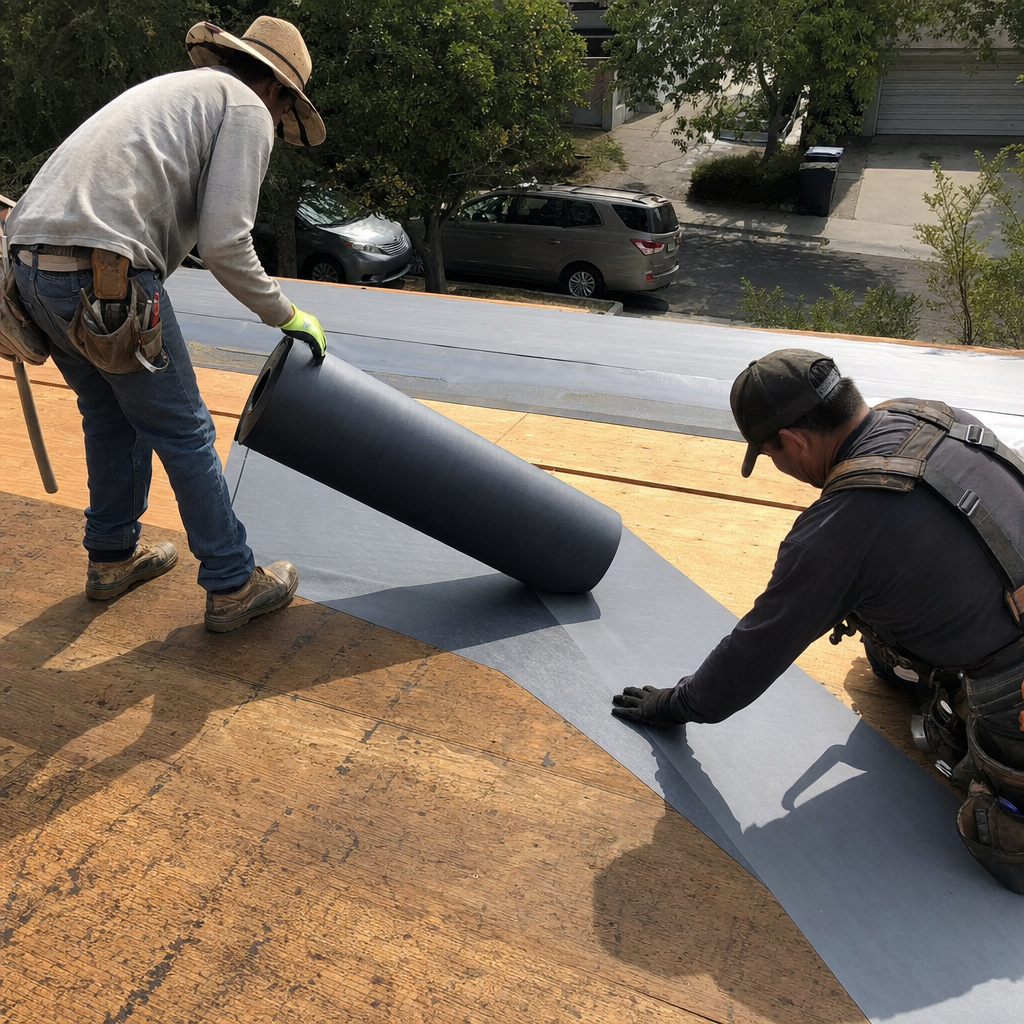
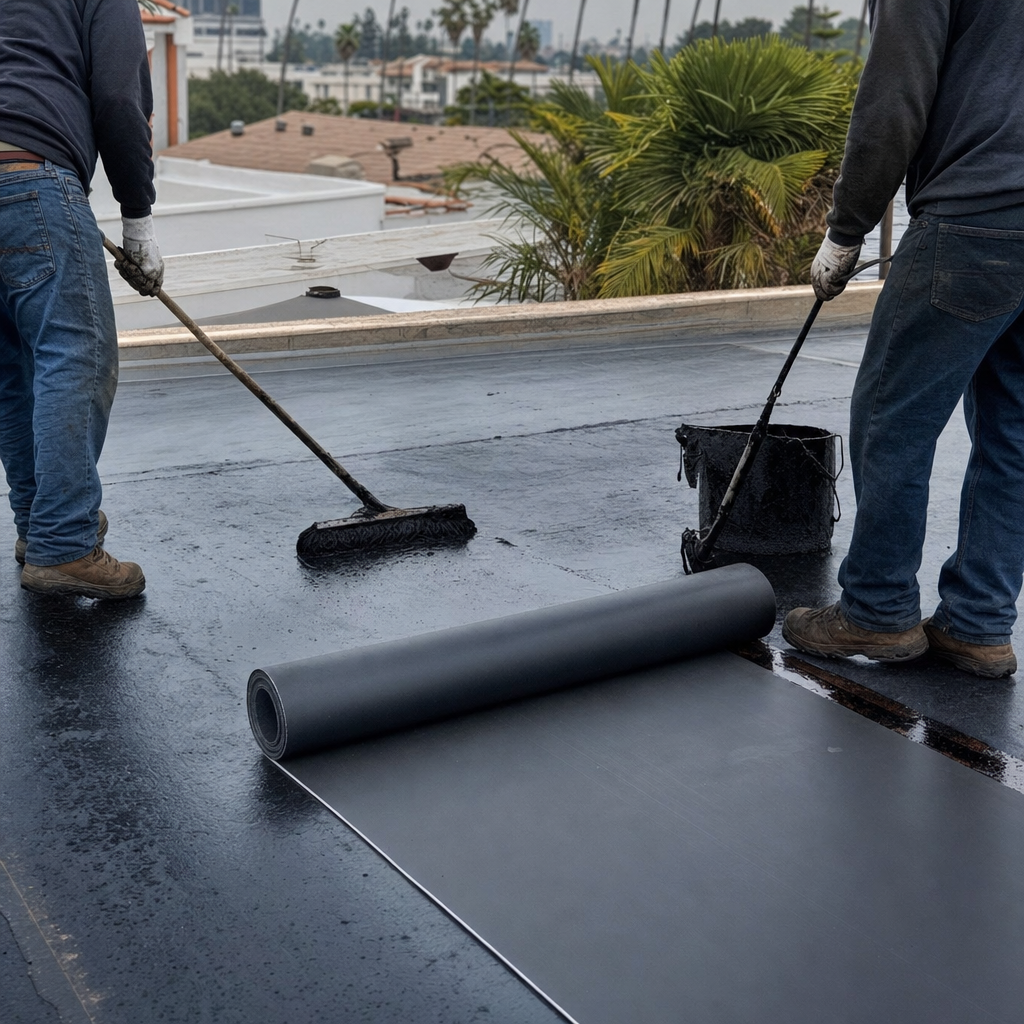
Modified bitumen remains relevant for certain commercial recoveries and residential built-up replacements in Pleasanton’s older commercial pockets. We install torch-applied and self-adhering SBS modified systems, typically as a two-ply assembly over proper insulation. For buildings with existing built-up roofing that’s reached the end of its service life, modified bitumen offers a faster, lower-odor alternative to full tear-off in occupied buildings.
The key in Pleasanton is specifying cap sheets with granulated surfaces rated for high-UV exposure. Standard-grade modified bitumen degrades faster here than in coastal cities. We use Owens Corning and CertainTeed products with enhanced UV stabilizers for valley installations.
Solar Ready Roofing
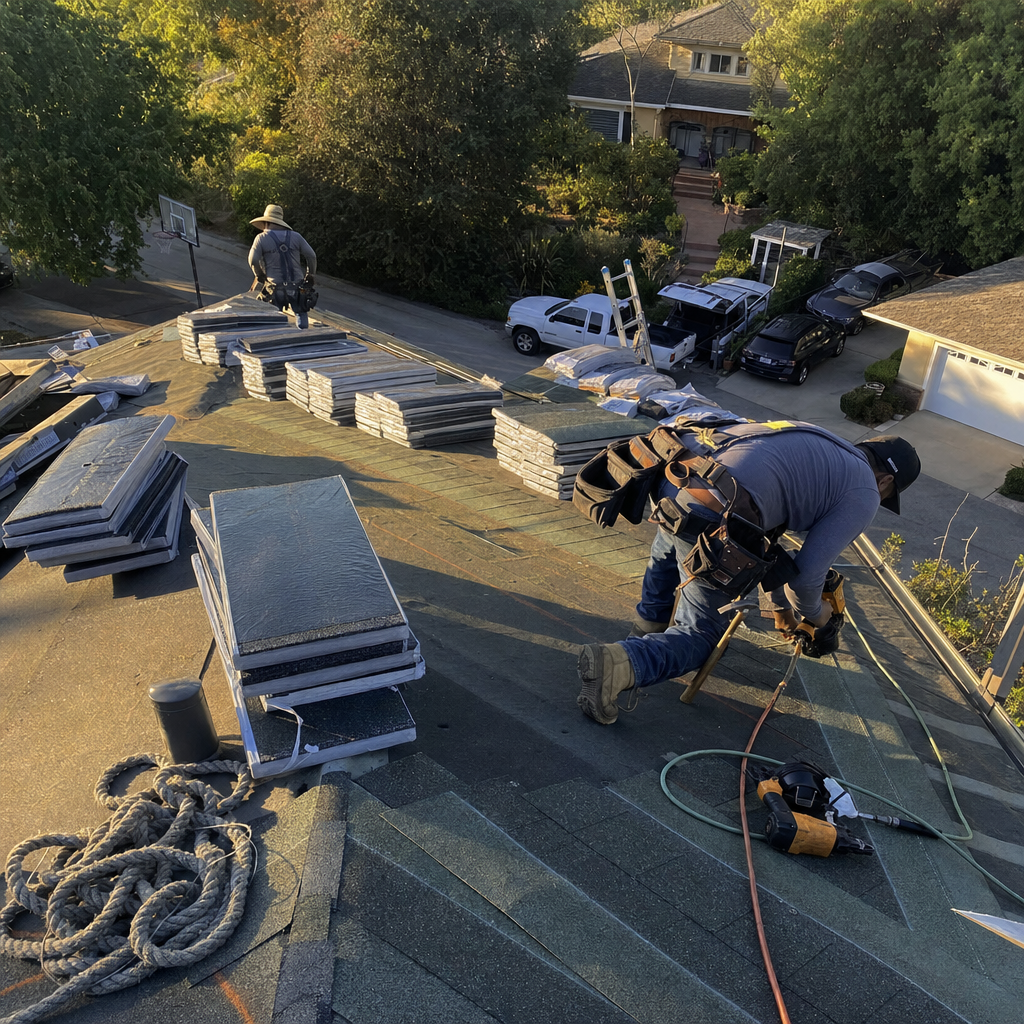
Pleasanton’s combination of high solar irradiance and rising utility rates makes solar readiness a smart specification on any new specialty roof. We design standing-seam metal, TPO, and certain modified bitumen assemblies with integrated attachment points, conduit pathways, and load calculations for future panel installation. Doing this during the roofing phase costs a fraction of retrofitting later and eliminates the leak risks of post-install penetration.
What happens when you call
- 1
A real person answersNo phone trees - you reach a local pro.
- 2
You get an upfront price rangeHonest numbers before anyone is dispatched.
- 3
A background-checked tech heads outLicensed & insured, dispatched right away.
- 4
You approve before work beginsNothing starts until you say go.
Trusted Brands We Service in Pleasanton
We’re authorized installers for seven manufacturer lines: GAF, CertainTeed, Owens Corning, IKO, Atlas, Tamko, and Boral. For Pleasanton customers, that means we stock common membrane rolls, flashings, and repair materials locally rather than ordering from a central warehouse and waiting a week. A TPO seam repair in Hacienda Business Park or a tile-underlayment job in Birdland doesn’t get delayed because we’re waiting on parts.
We don’t substitute materials. The brand specified in your estimate is the brand on your roof. No bait-and-switch, no “equivalent” products that void your warranty. That’s part of the square deal.
Common Specialty Roofing Problems We See in Pleasanton Homes
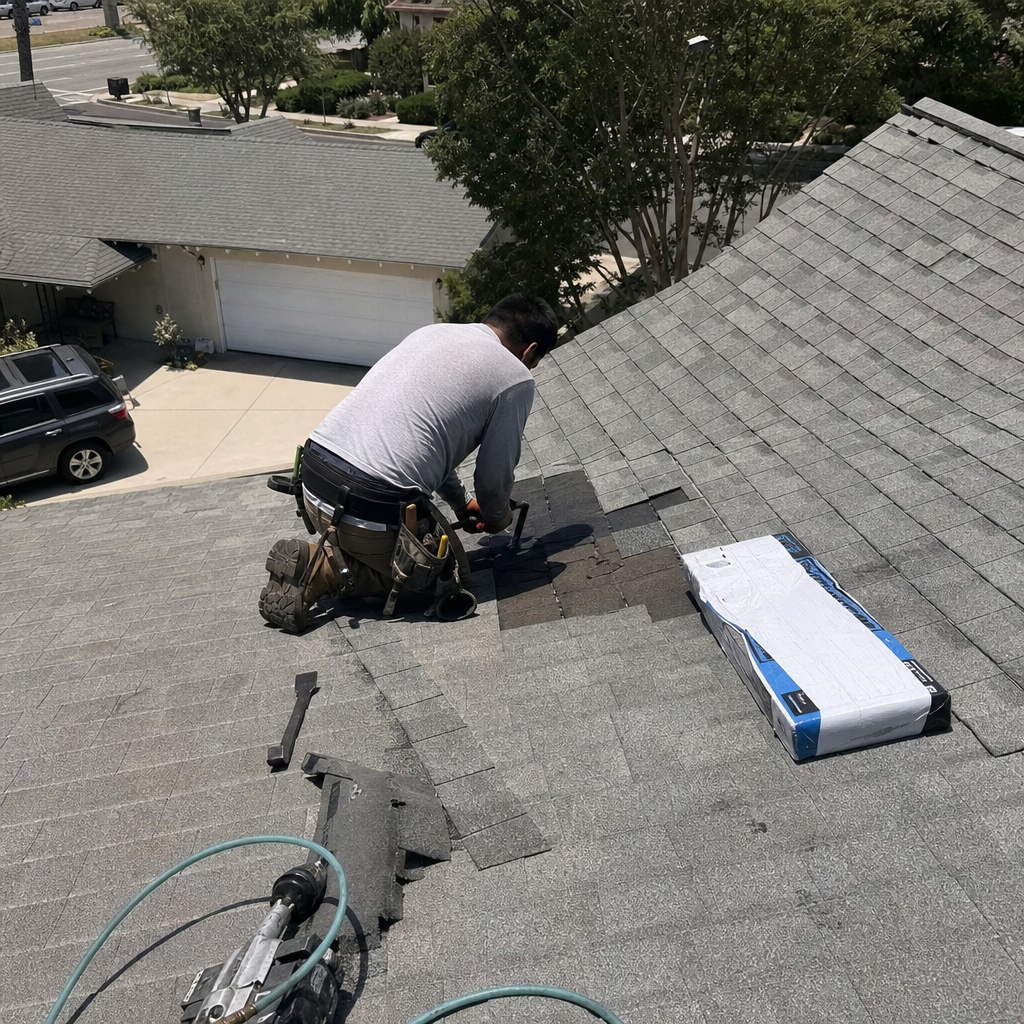
- “Mysterious leaks” on concrete tile roofs with intact tiles. The tiles look perfect from the curb, but the 1988-1995 felt underlayment underneath has dried to parchment. Water enters at cracked valleys or nail penetrations, runs the underlayment, and exits somewhere inside. We’ve found this in dozens of Vintage Hills and Birdland homes. The fix is removing tiles, replacing underlayment with modern synthetic material, and relaying the original tiles.
- Wind-uplift damage on west- and southwest-facing roof planes. The Altamont Pass westerlies don’t gust; they blow sustained for hours. On exposed roofs, that loosens tiles, peels membrane flashings, and fatigues TPO seams over time. We inspect for wind damage differently here than in sheltered cities like Fremont.
- UV degradation of composition shingles on older downtown homes. The late-Victorian and Craftsman-era houses near Main Street often carry wood shake or early asphalt shingle roofs that have endured 20-30% more thermal stress than identical materials in Oakland or Berkeley. Granule loss, cupping, and brittle fracture show up earlier here.
- Failed flat-roof drains and scuppers on 1980s-1990s commercial buildings. Hacienda Business Park structures from that era often have original roof drains with corroded clamping rings or scuppers blocked by degraded sealant. Standing water accelerates membrane failure. We clean, reflash, or replace drainage components as part of any flat-roof service.
Pricing for Specialty Roofing in Pleasanton, CA
Here’s what specialty roofing costs in Pleasanton’s current market:
| Service | Typical Range in Pleasanton |
|---|---|
| TPO membrane installation (low-slope, per sq ft) | $7.50-$12.00 |
| EPDM membrane installation (per sq ft) | $6.50-$10.50 |
| Modified bitumen two-ply system (per sq ft) | $8.00-$13.00 |
| Concrete tile underlayment replacement (relay existing tiles) | $8,500-$15,000 |
| Green roof assembly (extensive, per sq ft installed) | $18.00-$35.00 |
| Solar-ready roof design and prep | $1,200-$3,500 add-on |
| Emergency leak repair (after-hours) | $350-$650 |
| Seasonal roof tune-up and inspection | $89 |
What moves the number: roof accessibility, existing material removal requirements, structural modifications for green roofs, and whether we’re working around active HVAC or solar equipment. We provide upfront pricing - the estimate number is the invoice number. No surprises, no change orders unless you add scope.
We recently worked on a Vintage Hills home where the homeowner had lived with a mysterious drip in the master bath for months. The concrete tiles looked pristine, but when we pulled them, the 1988 felt underlayment crumbled like parchment. We relayed the original tiles over new synthetic underlayment, fixing the leak and extending the roof’s life another 20 years. Total cost: $11,400. The homeowner told us she’d gotten three other quotes; two contractors wanted to sell her a full tile replacement she didn’t need, and one never called back.
Call (877) 367-1429 for a free estimate. We’ll inspect, photograph what we find, and give you the straight story.
We Also Serve Cities Near Pleasanton
Our crews work throughout the Tri-Valley and southern Alameda County, including Pleasanton and neighboring Dublin, San Ramon, Livermore, and Hayward. The same valley wind and heat patterns affect roofs across this corridor, though each city has its own housing stock signatures. We know the difference between a 1995 Dublin ranch and a 1985 Pleasanton tract home, and we adjust our recommendations accordingly.
Serving Pleasanton, CA - Our Local Coverage Area
We’re based in the Pleasanton area and know this community well. Use the map below to see our service coverage - if you’re nearby, we can almost certainly help.
FAQs - Specialty Roofing in Pleasanton
Yes, and in Pleasanton it’s the most likely cause. The 1980s-1990s tract construction boom used 30-lb felt underlayment with a 20-25 year service life, but the concrete tiles on top last 50+ years. That underlayment is now 30-40 years old, dried and cracked, while your tiles still look perfect from the street. Water enters at valleys or fastener penetrations, runs across the compromised felt, and exits wherever it finds a path inside. We see this constantly in Birdland and Vintage Hills. Call (877) 367-1429 and we’ll pull a few tiles to confirm - estimates are free.
The sustained westerlies through the Altamont Pass gap create wind-uplift stress that intermittent gusts don’t. Over time, that fatigue loosens mechanical attachments, peels flashings at perimeters, and can create billowing in poorly adhered sections. TPO roofs in Hacienda Business Park need fastening patterns designed for this specific wind exposure, not generic Bay Area specifications. We inspect for membrane movement, seam integrity, and perimeter securement - and we specify accordingly on new installs. If your roof is 15+ years old, it’s worth a look.
Usually not without structural modification. Most Pleasanton tract homes from the 1975-2000 building wave were engineered for standard roof loads of 15-20 pounds per square foot. A saturated extensive green roof runs 25-40 psf. That doesn’t mean it’s impossible - we’ve designed green roof retrofits with structural reinforcement for custom homes in the Foothill Road corridor - but it’s not a bolt-on solution. For most tract homes, cool-roof TPO or reflective tile coatings deliver similar thermal benefits without the structural question. We can assess your specific framing and give you real numbers.
Not necessarily. Downtown Pleasanton’s late-Victorian and Craftsman homes carry wood shake or early composition roofs that suit the architectural character. Modern Class-A fire-rated composition shingles from CertainTeed or GAF can replicate the shake aesthetic without the maintenance burden or fire risk. Concrete tile is heavy - 900-1,200 pounds per square - and many downtown-era structures weren’t framed for that load. We evaluate structural capacity, historic appropriateness, and your long-term plans before recommending. Sometimes the right material isn’t the obvious one.
For low-slope or flat applications, white TPO reflective membrane typically cuts surface temperatures by 50-70°F versus black EPDM or built-up roofing. For pitched roofs, light-colored concrete tile with proper underlayment and ventilation performs well in this climate. The critical factor most contractors skip: ventilation design. A reflective surface helps, but without adequate intake and exhaust airflow, attic heat still builds. We specify ridge vents, soffit ventilation, and in some cases powered attic fans sized to your footprint. The material matters; the system matters more.
Written by Cole Drummond, Owner at Ridgeline Roofing Co. of California, serving Pleasanton since 1984.