
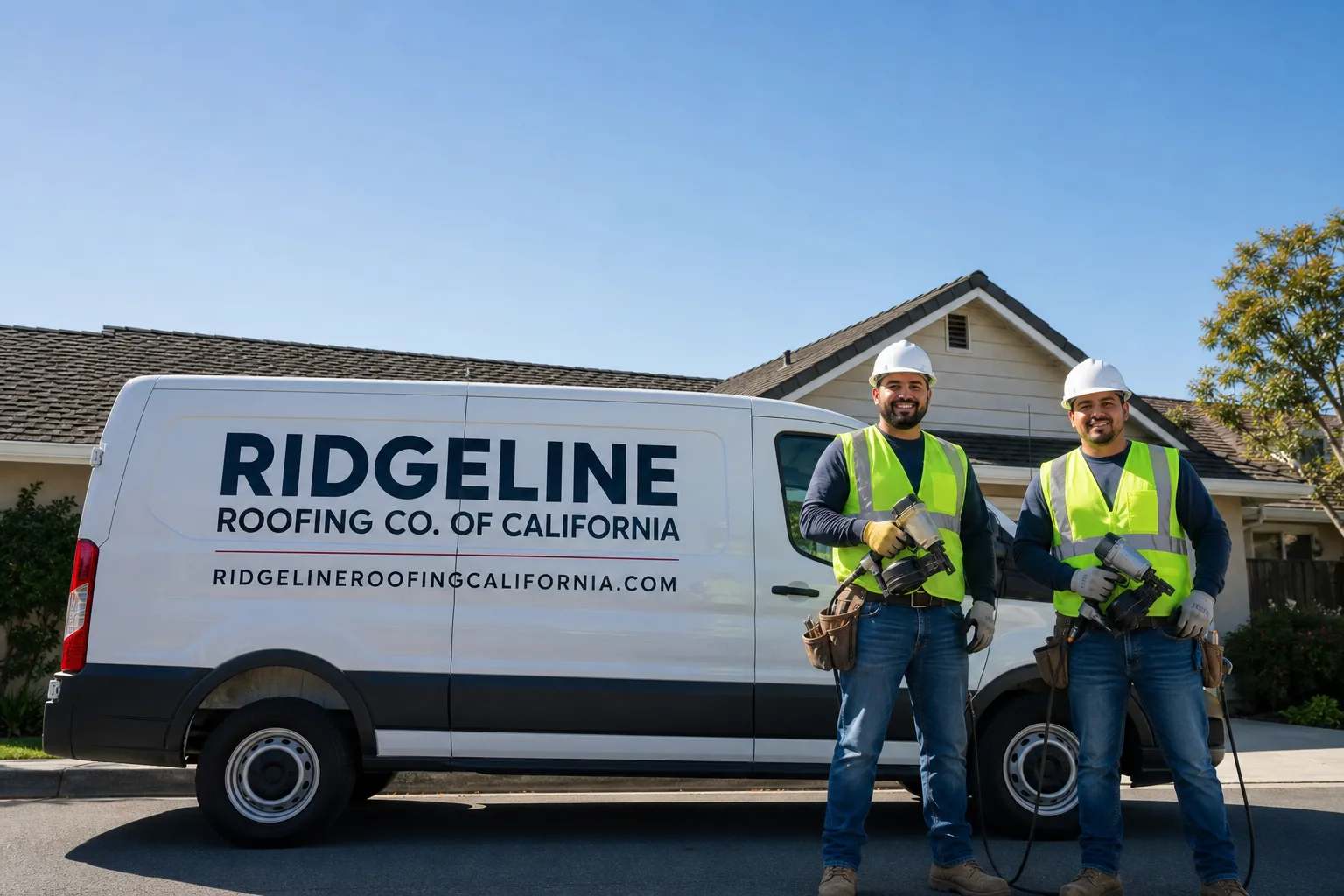
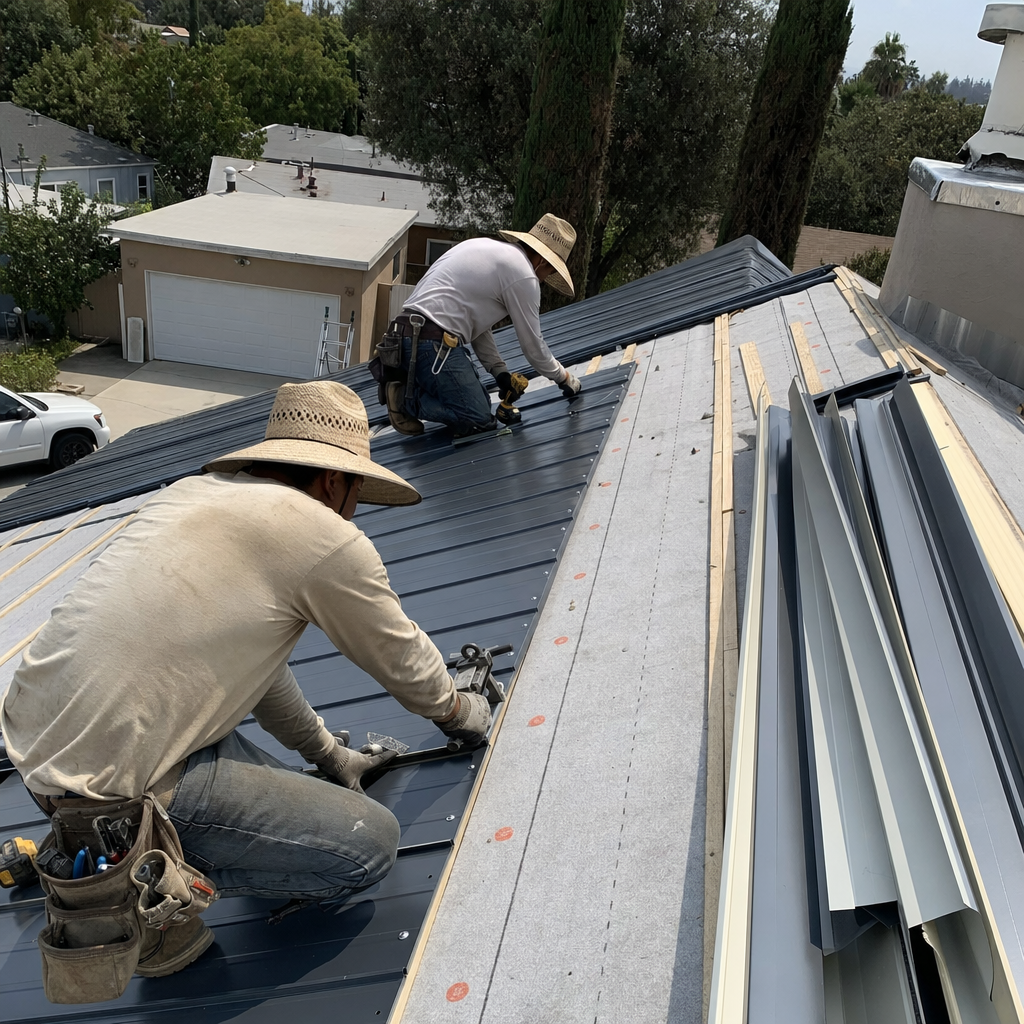
Fast, Reliable Specialty Roofing Across Koreatown
Specialty roofing in Koreatown runs $8,500-$22,000 depending on system type and building access, with most flat-roof replacements on the neighborhood’s aging apartment stock taking 3-5 days once LADOT street-closure permits are secured. Our crews know the 90005 ZIP well - from the courtyard buildings along S Kenmore Ave to the dingbat walk-ups near Wilshire and Vermont - and we typically arrive within 45 minutes of your call. You can reach a live person at Ridgeline Roofing Co. of California 24 hours a day at (877) 367-1429.
Koreatown’s density changes everything about how a roof gets replaced. Zero-lot-line construction and street-facing parking podiums mean every flat-roof re-roof requires a LADOT-permitted lane or parking closure just to stage a dumpster or crane, a logistical cost that sets roofing bids here apart from neighborhoods even a mile away. We’ve been navigating these constraints since 1984, and our Specialty Roofing team handles the permitting, the staging, and the inspection scheduling so you don’t have to chase paperwork between the city and your tenants.
Why Ridgeline Roofing Co. of California Is Koreatown’s Preferred Specialty Roofing Company
We’ve worked on Koreatown roofs for over four decades - long enough to know which 1950s dingbat apartments still carry original BUR that failed ten years ago, and which 1940s courtyard buildings near Beverly and Normandie need cool-roof upgrades before the next inspection cycle. Our reputation here is built on showing up when we say we will, finishing in the timeframe promised, and leaving the job site cleaner than we found it.
Homeowners and property managers across Koreatown have left us reviews mentioning specifically our photo-documented inspections and our willingness to explain why a repair won’t hold before quoting replacement. Our response time to Koreatown averages under 45 minutes during business hours, and our 24/7 live phone means you’re never waiting for a callback while water stains spread across a lobby ceiling. We know the local inspector schedules, the Title 24 compliance thresholds, and the LADOT permitting timelines that determine whether your project starts next week or next month.
Every technician we send to Koreatown is background-checked, uniformed, and trained to document every inspection with photos taken from your actual roof - not a scary speech in the driveway. Our 90-Day Done Right Promise applies to every job: if it’s not right, we come back and make it right, no paperwork, no arguing.
Our Specialty Roofing Services in Koreatown
TPO Roofing
TPO is the workhorse of Koreatown flat-roof replacement, and for good reason. Los Angeles City’s Title 24 energy code mandates cool-roof-compliant reflective materials on virtually all low-slope re-roofs, so white TPO isn’t an upsell here - it’s the legal baseline, and inspectors on the dense apartment stock enforce it closely. A typical TPO installation on a Koreatown dingbat or courtyard building runs $8.50-$12.50 per square foot, with full building wraps on larger structures reaching the upper end. The reflective surface also cuts cooling loads measurably in Koreatown’s urban heat island, where rooftop temperatures push well above LA’s already-intense baseline.
Built-Up Roofing (BUR)
Original built-up roofing from the 1950s-1970s dingbat apartments dominates Koreatown’s housing stock, and it’s almost universally past service life. We still install modern BUR systems where building structure or owner preference calls for it - typically $9-$14 per square foot - but we also advise honestly when a BUR repair is throwing good money at a substrate that’s too far gone. On a 1940s courtyard apartment at S Kenmore Ave, we found the original built-up roof had delaminated over the entire low-slope surface, with ponding water seeping through the lobby ceiling. We removed the failed BUR in sections using a permitted street closure, then installed a white TPO cool-roof membrane compliant with LA’s Title 24 reflective requirements - no more leaks, and the owner’s evaporative cooling load dropped noticeably.
Modified Bitumen
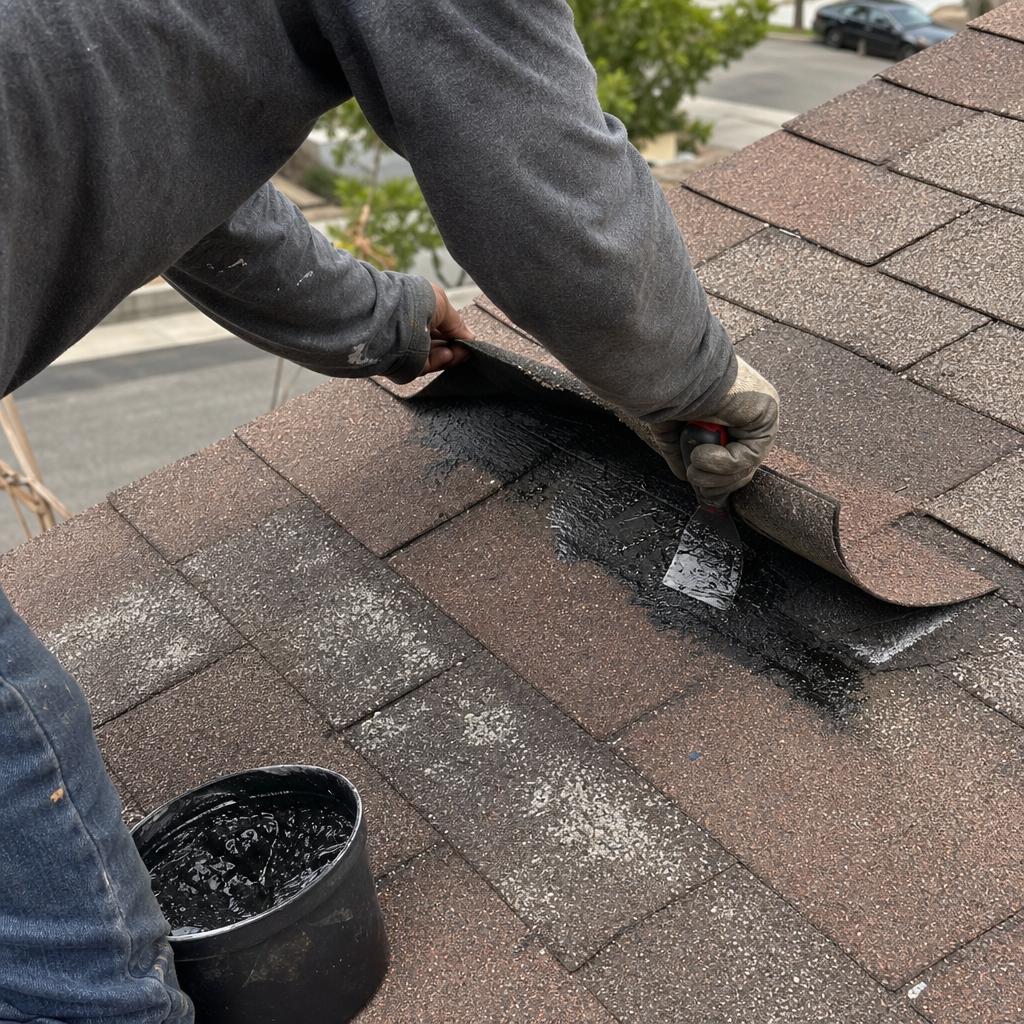
Modified bitumen bridges the gap between traditional BUR and single-ply membranes, and it performs well on Koreatown’s low-slope roofs where foot traffic or equipment access is common. At $7.50-$11 per square foot, it’s often the right choice for parking podiums and secondary roofs that don’t qualify for full TPO replacement but need more than another patch. We install both torch-applied and self-adhering systems, selecting based on your building’s fire-safety requirements and our assessment of the existing substrate.
Solar Ready Roofing
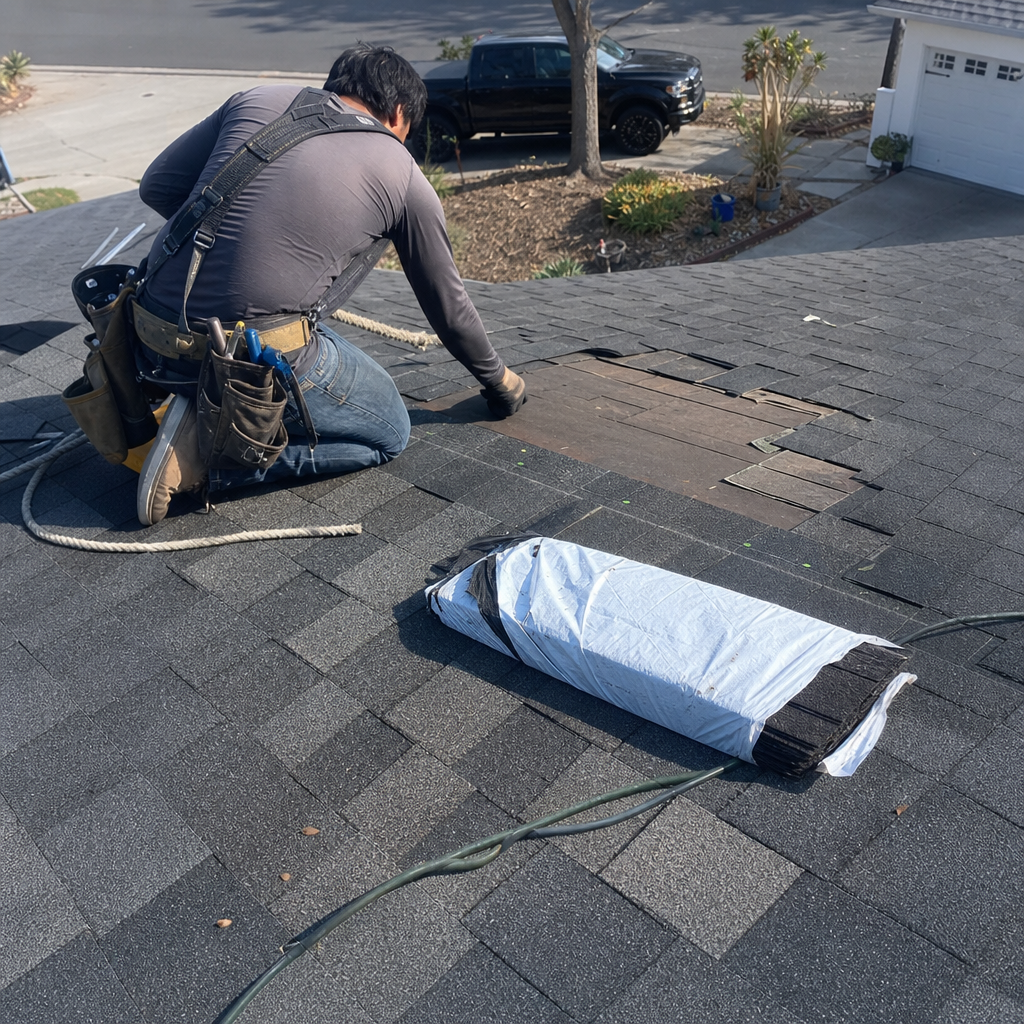
Koreatown’s older flat roofs weren’t designed for photovoltaic loads, but many property owners are adding solar to offset rising utility costs. Our solar-ready installations reinforce structural capacity, integrate proper flashing and penetration sealing, and specify membranes rated for the thermal cycling that panels create. A solar-ready TPO or modified bitumen system in Koreatown typically adds $1.50-$3 per square foot to the base roofing cost, but it eliminates the expensive tear-off that happens when panels are installed on a roof that should have been replaced first.
What happens when you call
- 1
A real person answersNo phone trees - you reach a local pro.
- 2
You get an upfront price rangeHonest numbers before anyone is dispatched.
- 3
A background-checked tech heads outLicensed & insured, dispatched right away.
- 4
You approve before work beginsNothing starts until you say go.
Trusted Brands We Service in Koreatown
We are authorized installers for GAF, CertainTeed, Owens Corning, IKO, Atlas, Tamko, and Boral - and we stock the membranes, adhesives, and flashing details that Koreatown’s older buildings need, locally, so we’re not waiting on freight while your roof leaks. For Koreatown’s Title 24 compliance requirements, we specify GAF EverGuard TPO white membranes and Atlas ACFoam polyiso insulation boards that meet or exceed the city’s reflective and R-value thresholds. Our relationships with these manufacturers mean warranty coverage transfers properly to building owners, and replacement materials match exactly when future repairs are needed.
Common Specialty Roofing Problems We See in Koreatown Homes
- Original BUR delamination on 1950s-1970s dingbat apartments. The asphalt plies separate, creating channels where water migrates laterally across the entire roof surface before showing as interior stains. By the time you see ceiling damage, the substrate is often compromised far from the visible leak point.
- Ponding from failed drains and sagging structural decks. Koreatown’s flat roofs were designed with minimal slope and drains that clog with urban debris. Standing water accelerates UV degradation and adds structural load that older framing wasn’t engineered to carry indefinitely.
- Temporary patch failures after El Niño surge demand. Rare but intense El Niño rain events concentrate deferred flat-roof repairs into a few weeks, overwhelming local crew capacity and leading to temporary patch failures. We’ve been called to re-do emergency patches that lasted one storm cycle because the original contractor used incompatible materials or didn’t address the underlying substrate.
- Non-compliant legacy materials flagged at re-roof inspection. Title 24 cool-roof compliance is enforced strictly on dense apartment stock, so non-reflective legacy materials fail inspection and must be replaced with TPO or elastomeric coatings. We see this most often when out-of-area contractors quote Koreatown jobs without accounting for LA’s specific energy code requirements.
Pricing for Specialty Roofing in Koreatown, CA
A typical TPO flat-roof replacement in Koreatown runs $8,500-$16,000 for a standard dingbat or small courtyard building, with larger structures or those requiring structural deck repair reaching $18,000-$22,000. Built-up roofing replacement falls in a similar range, $9,000-$17,000, while modified bitumen systems typically cost $7,500-$14,000. Street closure permits through LADOT add $800-$2,500 depending on lane width, duration, and whether parking podium access requires full street blocking.
What drives cost up: multiple layers of existing roofing requiring tear-off, structural deck repair or replacement, after-hours work to minimize tenant disruption, and complex staging on zero-lot-line sites. What keeps cost predictable: our upfront pricing model - the number on the estimate is the number on the invoice - and our experience quoting Koreatown jobs accurately the first time. We offer free estimates with photo documentation, and our $89 Seasonal Tune-Up can catch problems before they require full replacement. Call (877) 367-1429 for an exact quote on your building.
We Also Serve Cities Near Koreatown
Our crews work throughout central Los Angeles, including Koreatown and the surrounding communities of Los Angeles proper, Echo Park, Silver Lake, and Hollywood. Each neighborhood has its own roofing character - Echo Park’s hillside drainage challenges, Silver Lake’s mixed vintage of flat and pitched roofs - but our Specialty Roofing expertise and permitting experience travel with us. If you manage properties across multiple ZIP codes, we can coordinate inspection and maintenance schedules to keep your portfolio current.
Serving Koreatown, CA - Our Local Coverage Area
We’re based in the Koreatown area and know this community well. Use the map below to see our service coverage - if you’re nearby, we can almost certainly help.
FAQs - Specialty Roofing in Koreatown
Yes, virtually every flat-roof replacement in Koreatown requires an LADOT street closure or lane reduction permit because zero-lot-line construction leaves no staging area on the property itself. The permit process typically takes 2-4 weeks, and we handle the application, traffic control plan, and on-site flagging as part of our project management. Call (877) 367-1429 and we’ll check your specific site access - estimates are free.
Sometimes, but rarely on Koreatown’s original 1950s-1970s BUR that’s past service life. If the substrate is dry and the delamination is localized, a targeted repair with compatible modified bitumen may buy 2-5 years. If water has migrated beneath multiple ply layers, continuing to patch is throwing money at a roof that will fail comprehensively within 18 months. We photograph the substrate during inspection and show you exactly what we’re seeing - then you decide. Call (877) 367-1429 for a free assessment.
Los Angeles City enforces California Title 24, which mandates minimum solar reflectance and thermal emittance values on low-slope re-roofs - effectively requiring white or light-colored TPO, PVC, or elastomeric coatings rather than dark BUR or modified bitumen. Inspectors in Koreatown’s dense apartment zones enforce this strictly, and non-compliant materials will fail final inspection. We specify only Title 24-compliant systems, and our estimates include the documentation your inspector will need. Call (877) 367-1429 for compliance details on your specific building.
We can, but we typically recommend integrating proper solar mounting and flashing during re-roof rather than working around aging penetrations. Solar tubes and older panel mounts create thermal bridges and penetration points that are the most common leak sources on retrofitted flat roofs. Our solar-ready roofing packages specify manufacturer-approved flashing systems that maintain membrane warranty coverage. Call (877) 367-1429 and we’ll assess your current setup during a free inspection.
LADOT street closure permits add $800-$2,500 to a typical Koreatown flat-roof project, depending on whether you need a single lane reduction or full street blocking, and for how many days. Parking podium buildings on Wilshire or Vermont corridors often require the higher end due to traffic volume and extended staging needs. We include permit costs upfront in every estimate - no surprises when the invoice arrives. Call (877) 367-1429 for a line-item quote on your building.
Written by Cole Drummond, Owner at Ridgeline Roofing Co. of California, serving Koreatown and Los Angeles since 1984.